Will AI-Powered Technology Replace Human Decisions? 9 Critical Limits Explained
AI-powered technology replace human decisions is a question that now dominates discussions around artificial intelligence, automation, and smart technology. As AI systems become more capable and increasingly embedded in smartphones, workplaces, vehicles, and digital platforms, many assume that human decision-making will eventually become obsolete.
This assumption oversimplifies both artificial intelligence and human judgment. While AI can process vast amounts of data and identify patterns at remarkable speed, decision-making involves ethics, accountability, emotion, and context—elements that remain uniquely human. Understanding these limitations is essential for realistic expectations about AI’s role in the future.
Why the Debate Around AI-Powered Technology Replace Human Decisions Exists?
Modern AI systems already influence everyday choices. Navigation apps suggest routes, recommendation engines curate content, financial systems flag risks, and smart devices optimize performance automatically. These behaviors look like independent decisions, which fuels the belief that AI-powered technology replace human decisions entirely.
In reality, most of these systems operate within defined objectives and constraints. This confusion mirrors the broader misunderstanding between intelligence and automation, a distinction explored in depth in AI vs Smart Automation, which explains why automated systems should not be mistaken for autonomous decision-makers.
Limit 1: AI-Powered Technology Cannot Understand Human Context
One of the most important reasons AI-powered technology cannot replace human decisions is the lack of contextual understanding. Humans interpret situations using social cues, cultural norms, emotions, and intent simultaneously.
AI systems evaluate patterns based on historical data. When circumstances change or involve subjective judgment—such as personal safety, emotional well-being, or ethical trade-offs—AI lacks the ability to reason beyond statistical probability.
Limit 2: AI Decisions Are Bound by Training Data
Every AI model is shaped by the data it learns from. If the data is incomplete, outdated, or biased, the resulting decisions reflect those limitations.
This constraint is visible in consumer devices, where on-device learning systems—similar to those used in mobile platforms discussed in AI Inside Smartphones—can optimize battery life, photography, or security, but cannot anticipate every real-world scenario users encounter.
Limit 3: AI Lacks Ethical Reasoning
Ethical judgment cannot be reduced to code alone. While AI can be programmed to follow rules, it does not understand morality, values, or consequences.
In sectors such as healthcare, law, and public policy, decisions require weighing human impact, long-term outcomes, and moral responsibility. This ethical dimension is one of the clearest boundaries preventing AI from fully replacing human decision-makers.
Limit 4: AI Cannot Be Held Accountable
Decision-making authority requires accountability. When an AI system produces a harmful outcome, responsibility does not lie with the machine—it lies with humans.
Because AI cannot accept legal, moral, or social responsibility, it cannot independently replace humans in decisions where accountability is essential. This limitation alone prevents full autonomy in critical systems.
Limit 5: AI Struggles With Unprecedented Situations
AI performs best in environments similar to its training data. When faced with rare or unprecedented events—economic crises, natural disasters, or unexpected system failures—human adaptability becomes crucial.
Humans can reason abstractly, apply principles, and adjust strategies in real time. AI systems, by contrast, depend on pattern similarity and historical reference points.
Limit 6: AI Outputs Require Human Interpretation
Even when AI produces accurate predictions, humans must decide how to act on them. Risk scores, forecasts, and recommendations do not translate automatically into decisions without contextual evaluation.
Global governance frameworks emphasize this human-in-the-loop approach. International guidance on responsible AI development highlights that AI should support human judgment rather than replace it.
https://www.unesco.org/en/legal-affairs/recommendation-ethics-artificial-intelligence
Limit 7: AI Cannot Understand Human Emotion and Intent
Decision-making often depends on empathy, trust, and emotional awareness. AI can analyze sentiment indicators, but it cannot genuinely understand human motivation, fear, or intention.
In leadership, education, negotiation, and caregiving, emotional intelligence frequently outweighs analytical optimization—making full replacement unrealistic.
Limit 8: Over-Reliance on AI Weakens Human Judgment
If AI-powered technology replace human decisions entirely, human decision-making skills would gradually deteriorate. Judgment improves through experience, responsibility, and reflection.
For this reason, many organizations intentionally limit automation depth to ensure humans remain actively engaged rather than passively accepting AI outputs.
Limit 9: AI Is Designed to Assist, Not Replace
The final and most practical limitation is design intent. Modern AI systems are built to augment human capability, not eliminate it.
Across smart homes, enterprise software, and consumer technology, AI performs best as a decision-support layer—handling scale and complexity—while humans retain authority and responsibility.
Will AI-Powered Technology Replace Human Decisions in the Future?
In realistic terms, AI-powered technology will not replace human decisions completely. The future lies in collaboration, where AI enhances efficiency and insight while humans provide judgment, ethics, and accountability.
This balance ensures progress without surrendering control.
Key Takeaways:
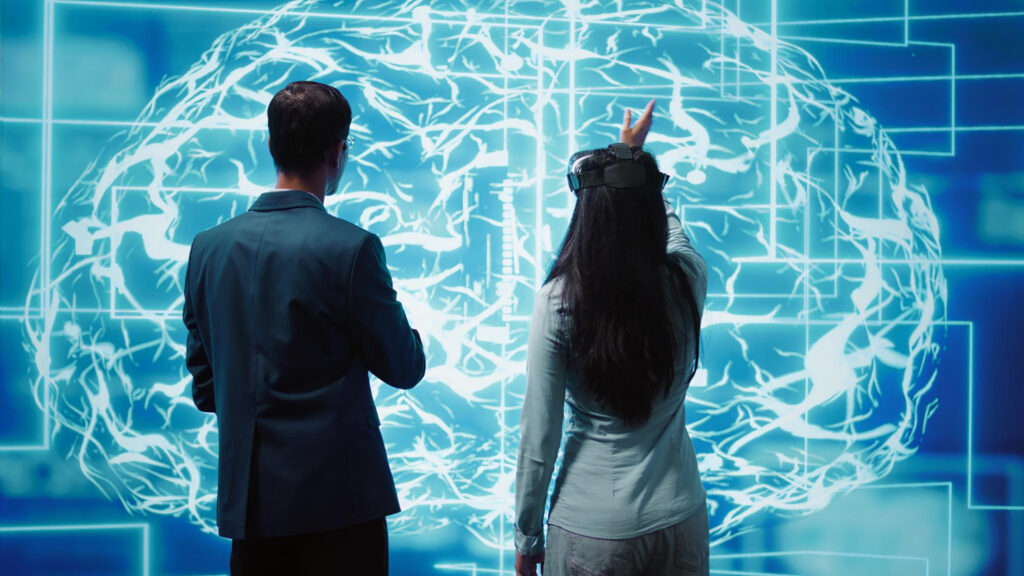
AI-powered technology replace human decisions is a compelling question, but the answer becomes clear when examined closely. AI lacks contextual understanding, ethical reasoning, accountability, emotional intelligence, and adaptability. Its true role is to support humans, not replace them. Organizations that understand these limits will use AI more effectively and responsibly.