Fast Charging vs Slow Charging: When to Use Each and What Actually Damages Your Battery
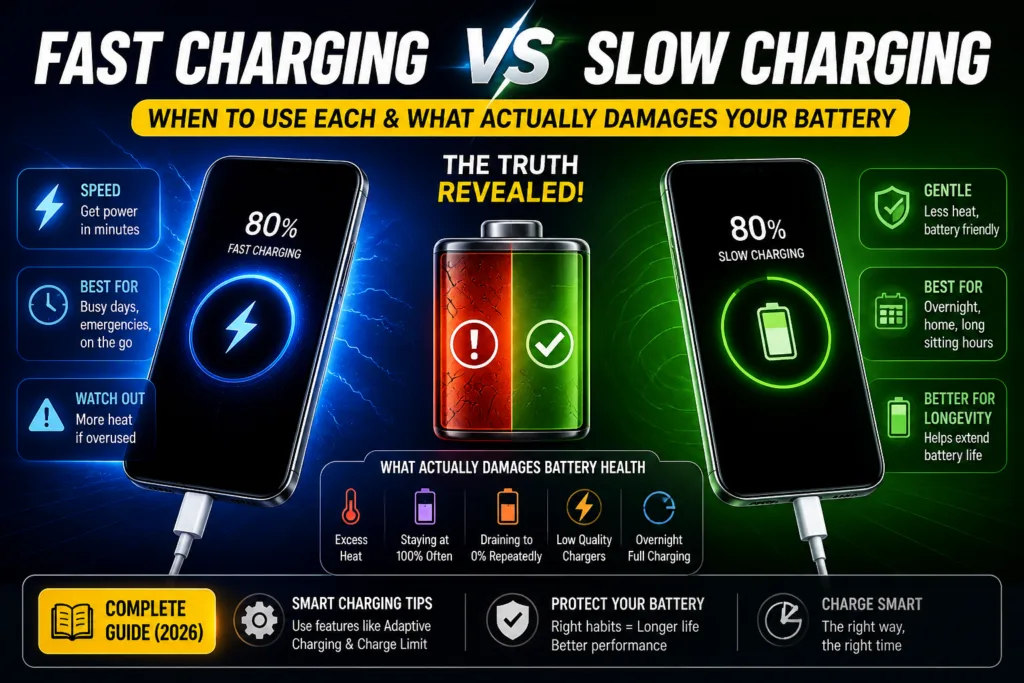
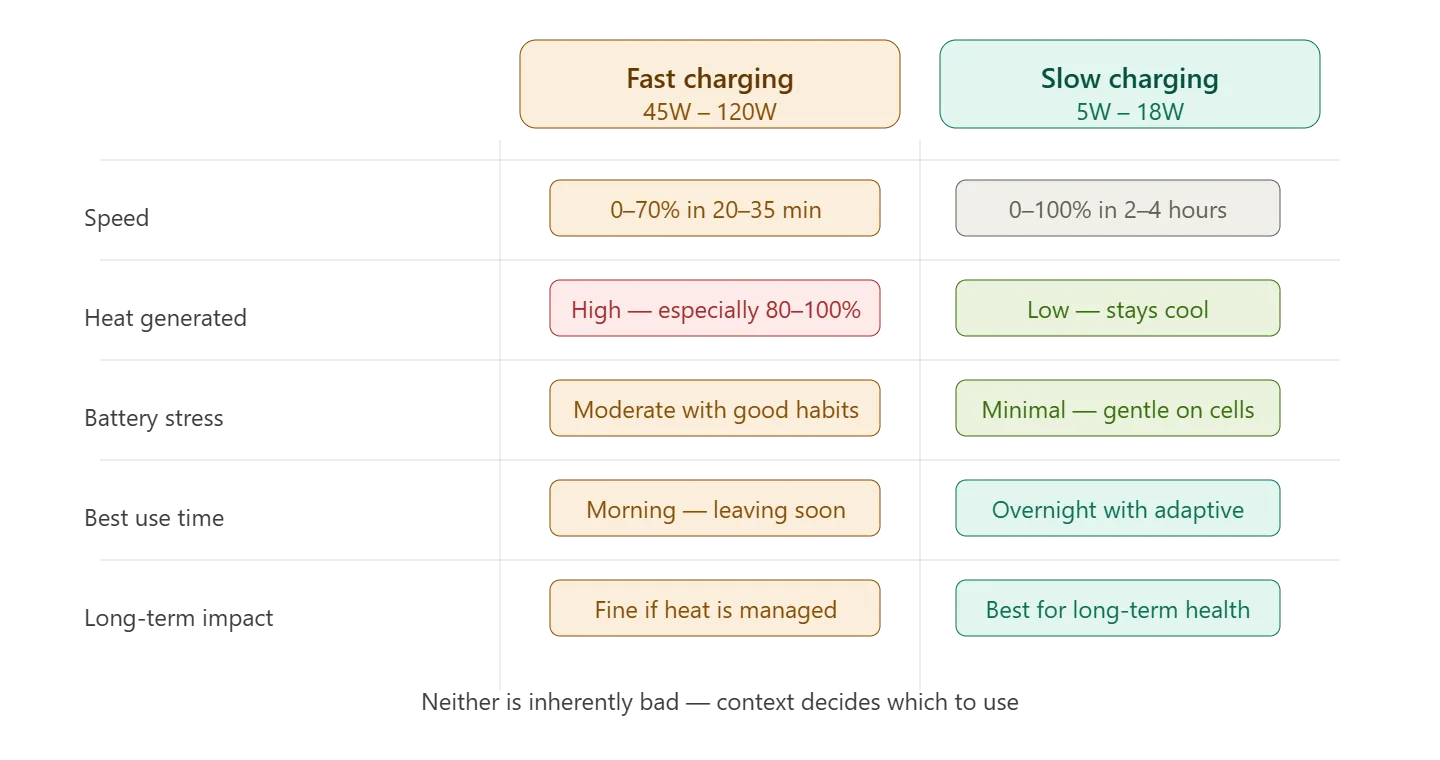
Fast charging is safe when your battery is below 80% and your phone is cool.
Battery damage mainly happens from heat while charging above 80% for long periods.
Most battery advice online gets this wrong in one of two directions. Either it tells you fast charging is perfectly fine and you should never worry about it, or it tells you fast charging is destroying your battery and you should always use a slow charger. Neither is accurate.
The real answer is simpler: fast charging is a tool, and like any tool, it causes problems when you use it at the wrong time. This Lab guide explains exactly when to use each, why it matters for silicon-carbon batteries in particular, and what actually causes long-term damage.
What Fast Charging Actually Does Inside the Battery
Fast charging pushes more current into the battery in a shorter time. The battery handles this through two phases — a fast bulk charge phase where most of the capacity fills quickly, and a slower taper phase where the charger reduces power as the battery approaches full.
The bulk phase is where the speed happens. A 67W charger can fill a 5,000mAh battery to roughly 70% in under 30 minutes. The remaining 30% takes almost as long again because the charger slows down deliberately to reduce stress on the cells.
Heat is the byproduct of moving that much current quickly. And heat near full charge is where the real damage happens — not from the fast charging speed itself, but from the combination of high voltage and elevated temperature.
This is why silicon-carbon batteries in 2026’s big-battery phones need more careful management. Their anodes are more reactive than graphite, which means they hold more energy — but also means heat at high charge states causes faster structural degradation over time.
When Fast Charging Is Completely Fine
Fast charging is the right choice in all of these situations:
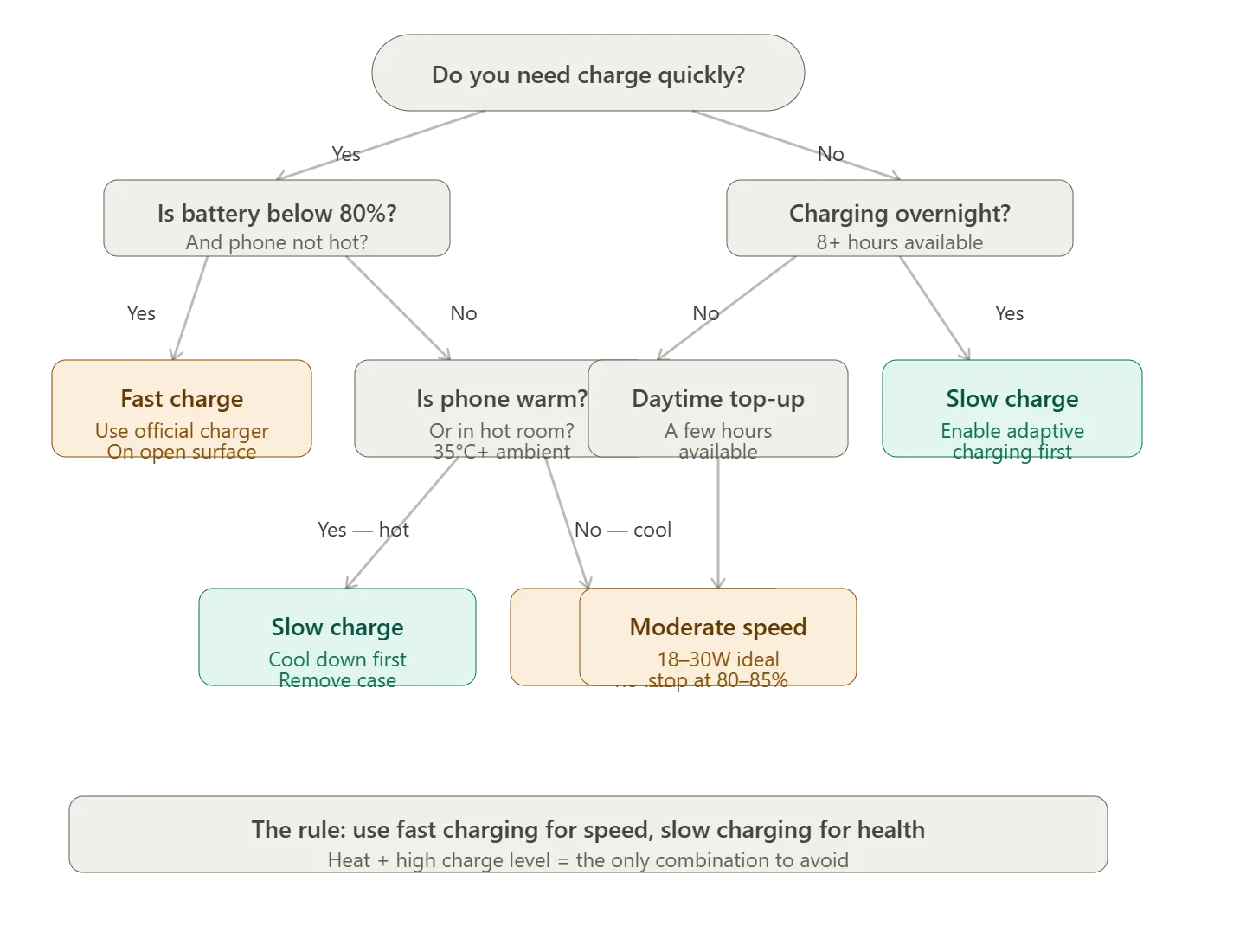
You need power quickly before leaving. This is exactly what fast charging is designed for. Plugging in for 20–30 minutes before heading out, charging from 15% to 60%, is low stress because the bulk phase happens well below the high-voltage range where heat causes real damage.
Your battery is below 50%. The lower half of the charge curve is where fast charging is most efficient and least stressful. The charger pushes hard, the cells accept current easily, and heat stays manageable. This is why phones charge so fast at the start and slow down near the top.
You’re charging on a flat, open surface. If the phone isn’t trapped under a case that doesn’t breathe well, sitting on a clear table with airflow, fast charging heat dissipates normally. The phone gets warm — that’s fine. It shouldn’t get hot enough to be uncomfortable to hold.
You’re not gaming or running heavy apps simultaneously. Fast charging plus light use is manageable. The phone is generating heat from one source. Stack GPU-intensive gaming on top and you’ve doubled the heat load.
When to Switch to Slow Charging
Charging overnight. This is the clearest case for slow charging. You don’t need speed — you have eight hours. Slow charging keeps the phone cooler throughout the cycle and, combined with adaptive charging, prevents the phone from sitting at 100% for hours. That combination is the single best thing you can do for long-term battery health.
Charging above 80%. The final 20% is where fast charging heat causes the most damage, because it combines high current with high cell voltage. If your phone supports a charge limit (Samsung’s Battery Protection, OnePlus’s Optimised Charging), use it. If not, unplugging at 80–85% on normal days and using a slower charger for that final stretch is worth the habit.
In hot environments. In Indian summers especially, ambient temperature adds to charging heat significantly. If your room is above 35°C and your phone is fast charging, the combined heat load is considerably higher than the charger alone produces. In these conditions, slow charging or removing the case during fast charging makes a real difference.
When the phone is already warm. If you’ve been gaming, navigating, or on a long call and the phone feels warm — and you then plug in a fast charger — you’re adding charging heat to residual heat. Let the phone cool down for 5–10 minutes first, or use a slower charger.
Related Lab Guides
The Charging Decision Flowchart
Brand-Specific Charging Tips
Samsung — Galaxy phones with 45W or 65W charging throttle automatically when the battery gets warm. This is intentional and healthy. Don’t interpret the slowdown as a fault. For overnight charging, Battery Protection (80% limit) combined with Adaptive Charging is the optimal setup.
OnePlus and Realme — These brands push the highest wattages in India right now (80W, 100W, 150W on some models). The chargers are well-engineered and the phones manage heat reasonably — but the heat spike between 80% and 100% is real. If you’re charging while in bed under a cover, you’re negating all that engineering. Charge on a desk or table.
Xiaomi, Redmi, POCO — HyperOS phones at 67W+ get noticeably warm even with a case off. In summer months, or if you’re in a hot room, drop to a 33W or 18W charger for overnight charging. The difference in time is marginal; the difference in heat is significant.
iPhone — Apple’s Optimized Battery Charging is one of the best implementations of slow overnight charging available. Leave it on. If you use MagSafe, be aware that wireless charging always runs warmer than wired — in summer or on a hot bedside table, switch to the cable.
Google Pixel — Adaptive Charging is solid. The one thing to watch: Pixel phones slow down fast charging aggressively when warm, which can make the last 20% very slow on a warm day. This is correct behaviour — don’t override it.
Common Myths — Cleared Up
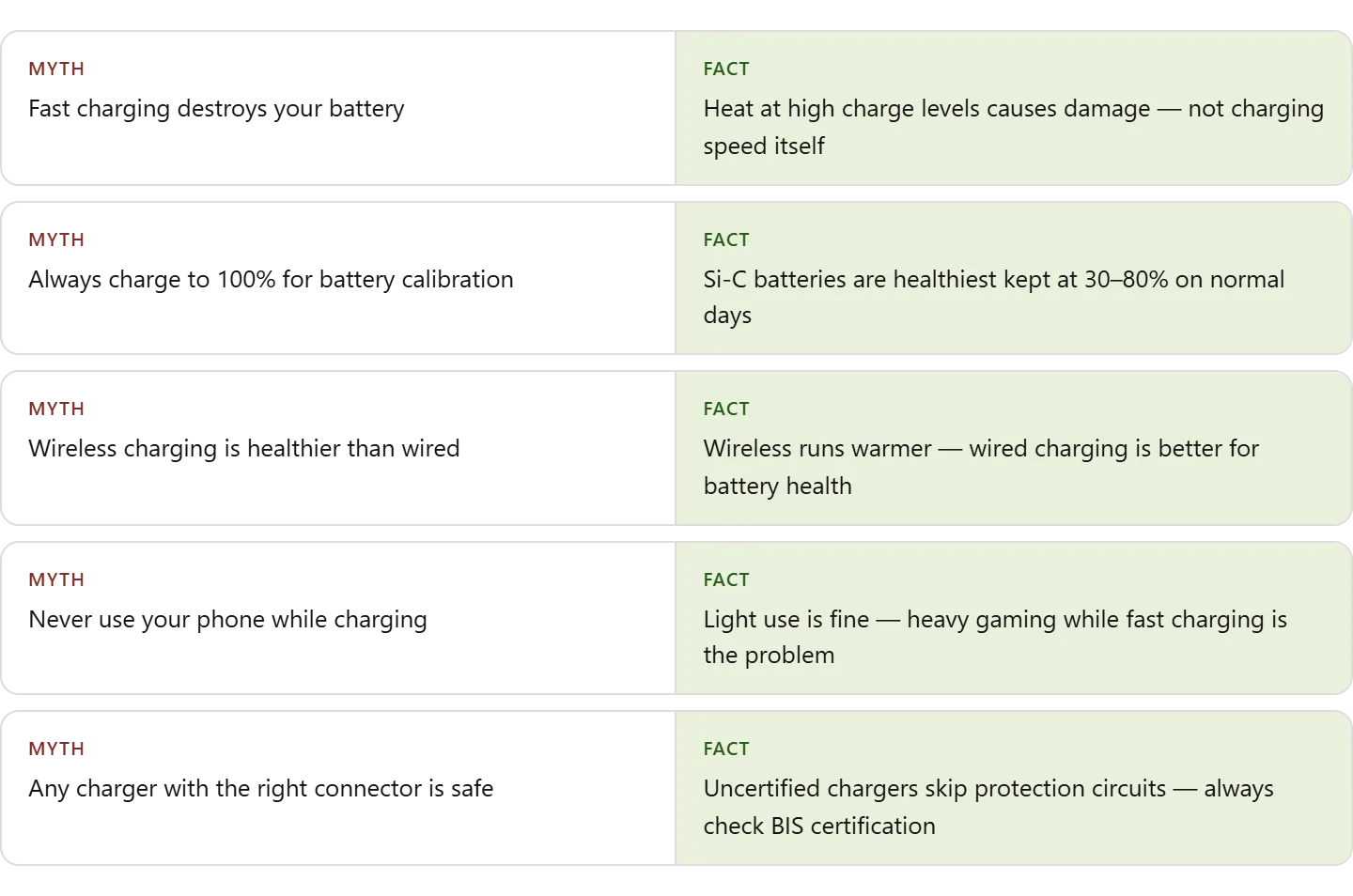
“Fast charging will destroy my battery.” False if used correctly. The damage comes from heat at high charge levels — not from fast charging itself. Charging from 10% to 70% quickly on a cool phone with a good charger is low stress.
“I should always charge to 100% to keep the battery calibrated.” Outdated advice for old graphite batteries. Modern silicon-carbon cells are healthiest when kept below 80–85% on normal days. The calibration issue is separate — see the battery calibration Lab guide.
“Third-party chargers are just as safe as official ones.” Depends entirely on the charger. Certified third-party chargers from brands like Anker, Baseus, or Belkin with proper GaN circuitry are safe. Uncertified chargers from unknown brands can push incorrect voltage, skip protection circuits, and cause real damage. Always check for BIS certification in India.
“Wireless charging is better for battery health than wired.” Wireless charging is more convenient, not healthier. It runs warmer than wired charging for the same wattage, and that additional heat at high charge levels does more long-term damage, not less.
“You should never use your phone while charging.” Partially true for fast charging combined with heavy gaming — that specific combination stacks heat sources. Light use while charging (calls, browsing, messaging) is fine. The phone handles it.
The Verdict
Fast charging and slow charging are not competing philosophies — they’re two tools for two situations.
Use fast charging when you need power quickly, your battery is below 80%, the phone is cool, and you’re not gaming simultaneously. That covers most daytime top-ups perfectly well.
Use slow charging when you have time — overnight especially. Combined with adaptive charging enabled, slow overnight charging is the single best habit for long-term battery health on any phone, but particularly on 2026’s silicon-carbon big-battery phones where heat near full charge matters more than it did on older graphite cells.
The habit to build is not “always use slow” or “never use fast.” It’s simply this: match the charger to the situation. Fast when you need speed. Slow when you have time. Avoid fast charging when the phone is already warm or already above 80%. That covers 95% of what matters.