The Death of the ₹10,000 5G Phone: How the Global AI Boom Priced Out India’s Budget Smartphone Market
A few years ago, India’s smartphone market was running on a very specific obsession: who can sell 5G the cheapest?
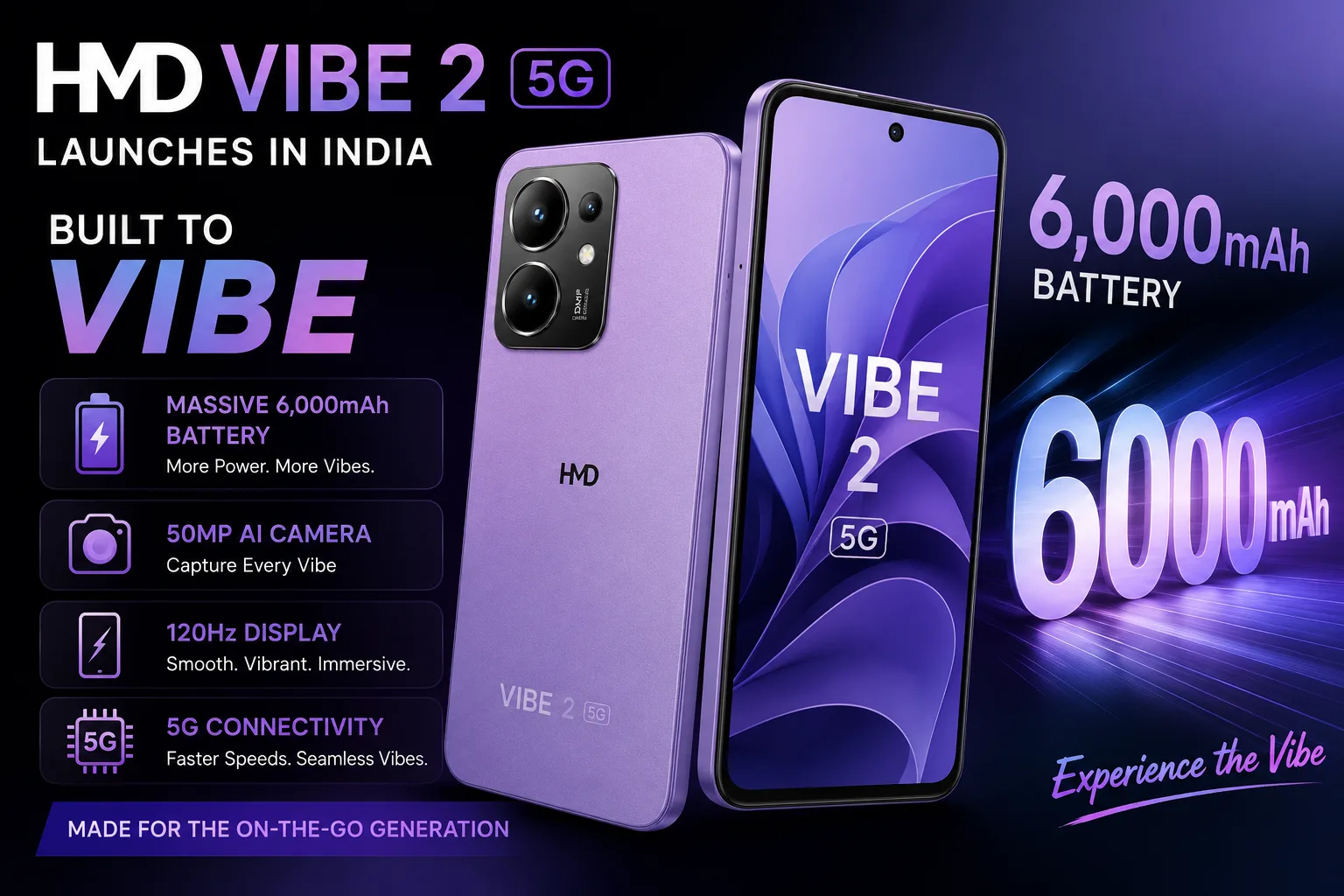
It wasn’t even subtle. Every few weeks, a new launch would appear with a familiar headline — “India’s most affordable 5G phones,” “5G for the masses,” or “next-gen connectivity at entry-level pricing.” Brands like Redmi, Realme, POCO, Lava, and itel aggressively chased this segment, hoping to lock in first-time 5G buyers before rivals could.
For a while, it felt like the beginning of a new normal. A ₹10,999 5G phone didn’t look unrealistic. It looked like the market’s new baseline.
But in 2026, that pricing has started to fade out quietly. Not because companies have stopped selling budget devices, but because the definition of “budget” is shifting right in front of us.
Phones that would have comfortably launched around ₹10,000–₹12,000 now appear closer to ₹14,999 or ₹15,999 — often with the same marketing language, but very different economics behind them.
So the real question is no longer whether cheap 5G phones exist. The real question is:
Is India reaching the end of the road for truly cheap 5G smartphones?
The ₹10K 5G Phone Was a Perfect Storm — Not a Permanent Reality
The low-cost 5G wave happened because everything aligned at once.
Telecom operators rolled out 5G aggressively. Consumers were upgrading from older 4G phones in massive numbers. Brands were fighting for market share rather than profit. Component costs were manageable. And most importantly, the industry was still obsessed with scale.
In that environment, sacrificing margins to win volumes made sense.
A phone launched at ₹10,999 could generate millions of shipments, boost quarterly performance, and create a “value brand” reputation. The business model wasn’t designed to be sustainable forever — it was designed to win the moment.
Now, that moment is ending.
Why Budget 5G Phones Are Becoming More Expensive
The simplest explanation is inflation. But the deeper reason is that entry-level phones are facing pressure from multiple directions at the same time.
Rising memory and storage costs are hitting budget phones hardest
RAM and storage pricing doesn’t just impact flagships — it impacts entry devices even more because their margins are razor-thin. A small cost increase that premium phones can absorb easily becomes a serious problem for a phone that sells at ₹10K–₹12K.
Smartphones are no longer “basic” devices
Apps have become heavier. Android itself has become more demanding. Even casual usage today includes multitasking between WhatsApp, UPI apps, Instagram, YouTube, and browser sessions — all running in the background.
That means 4GB RAM phones don’t feel “entry-level” anymore. They feel outdated.
And once brands push 6GB RAM and 128GB storage as minimum, the bill of materials climbs automatically.
Consumers expect premium features even at low prices
The modern Indian buyer expects 120Hz displays, decent cameras, fast charging, and smooth performance even in the ₹12K range.
This expectation is fair — but it forces brands to spend more per unit.
Brands Have Moved On From the “Volume War” Era
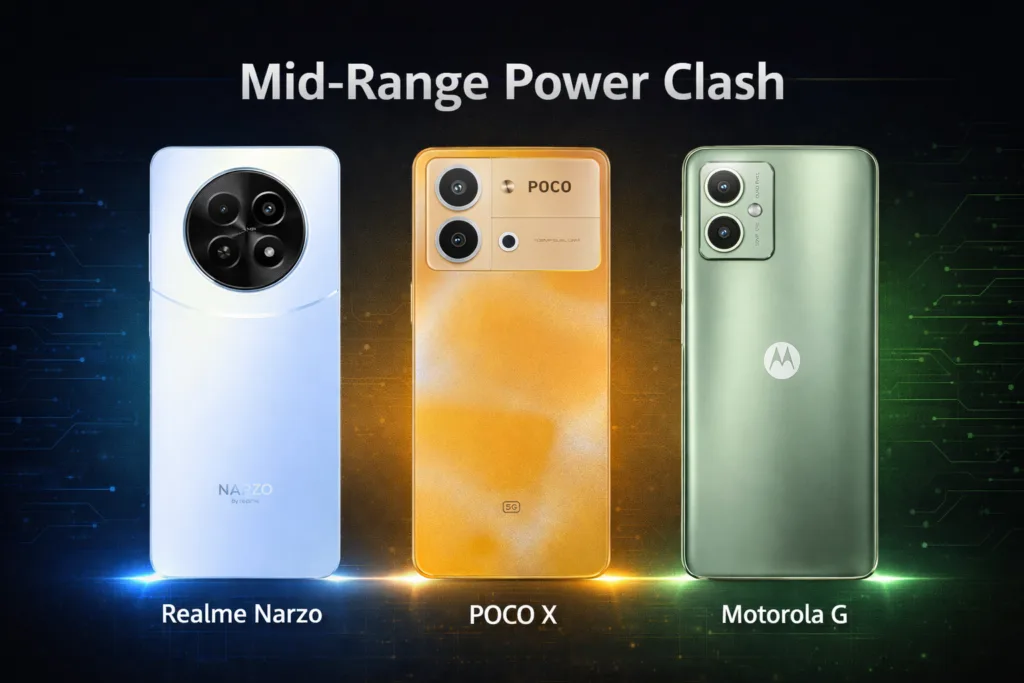
A decade ago, the Indian smartphone market rewarded brands that sold the most units at the lowest price. That’s how Xiaomi grew. That’s how Realme exploded. That’s how POCO built its reputation.
But 2026 is different.
Consumers are holding onto phones longer. Online flash-sale hype is weaker than before. Profitability matters more than raw shipment numbers. Brands are no longer trying to win India with “cheapest phone” messaging — they’re trying to win India with ecosystem lock-in, software features, and premium branding.
This is also why mid-range launches are growing more aggressively than ultra-budget launches. Instead of fighting at ₹10K, brands are building stronger lineups around ₹15K–₹25K, where margins are healthier and buyers are willing to spend more.
This is also the same segment where upcoming leaks like the Vivo T5 Lite and Realme P4R are expected to land — showing that the market’s “entry” focus is already moving upward.
The New Budget Segment in India Might Start at ₹15,000
Here’s the uncomfortable truth: ₹10K pricing is no longer the realistic baseline for a modern 5G experience.
The ₹15K bracket is becoming the new “safe zone” for buyers who want:
- reliable performance
- 5G support that doesn’t feel like a checkbox
- decent cameras
- faster charging
- smoother displays
- usable software experience
In fact, even phones like the Vivo Y60 launched with a Snapdragon chipset and a massive battery show how brands are positioning battery-first value devices at higher pricing than entry-level expectations.
The market is clearly moving toward “mid-range mass adoption” rather than “budget mass adoption.”
What This Means for Buyers in 2026
If prices keep climbing, the biggest change won’t be the phone itself — it will be user behaviour.
People will upgrade less often. A phone purchase will feel more like a 3–4 year investment, not a 2-year replacement cycle. Buyers will care more about long-term battery health, software updates, and stability rather than short-term performance claims.
This is also why leaks like the iQOO Z11 India launch matter. A phone targeting under ₹30K with a massive battery and performance-first specs shows how brands are shifting “value” upward instead of keeping it at ₹10K.
Final Verdict: Cheap 5G Isn’t Dead — But ₹10K 5G Phones Are No Longer the Priority
India’s 5G expansion was built on the promise of accessibility. And in its early phase, smartphone brands delivered exactly that — phones priced close to ₹10K that brought 5G into the mainstream.
But in 2026, the economics have changed.
Rising component costs, heavier software demands, shifting consumer expectations, and brands prioritising profit stability over volume wars are all pushing the entry point upward.
So no — affordable 5G phones are not disappearing.
But the era of ₹10,000 5G smartphones being common and competitive is fading fast. If current trends continue, ₹15,000 will become the new baseline for what India considers a “budget 5G phone.”
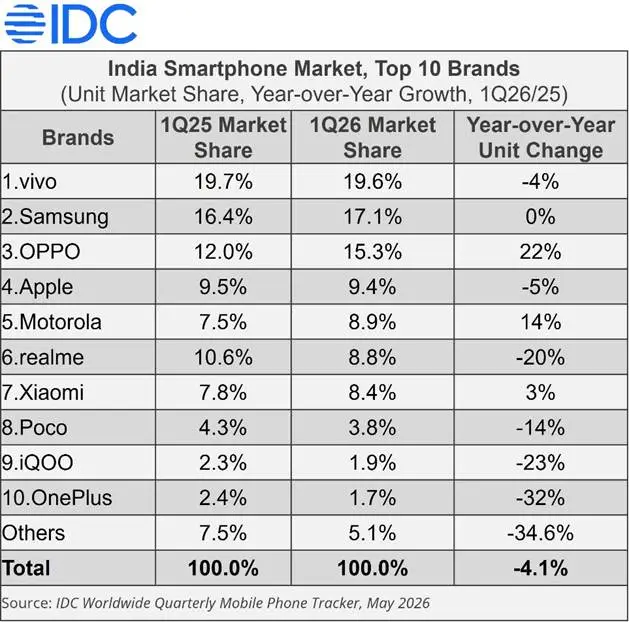
For market segmentation trends and India smartphone pricing movement, reference:
IDC India smartphone market report