Finally Samsung 2026 Unveiled: Samsung Galaxy S26 Series Comparison Between – Ultra vs S26+ vs S26
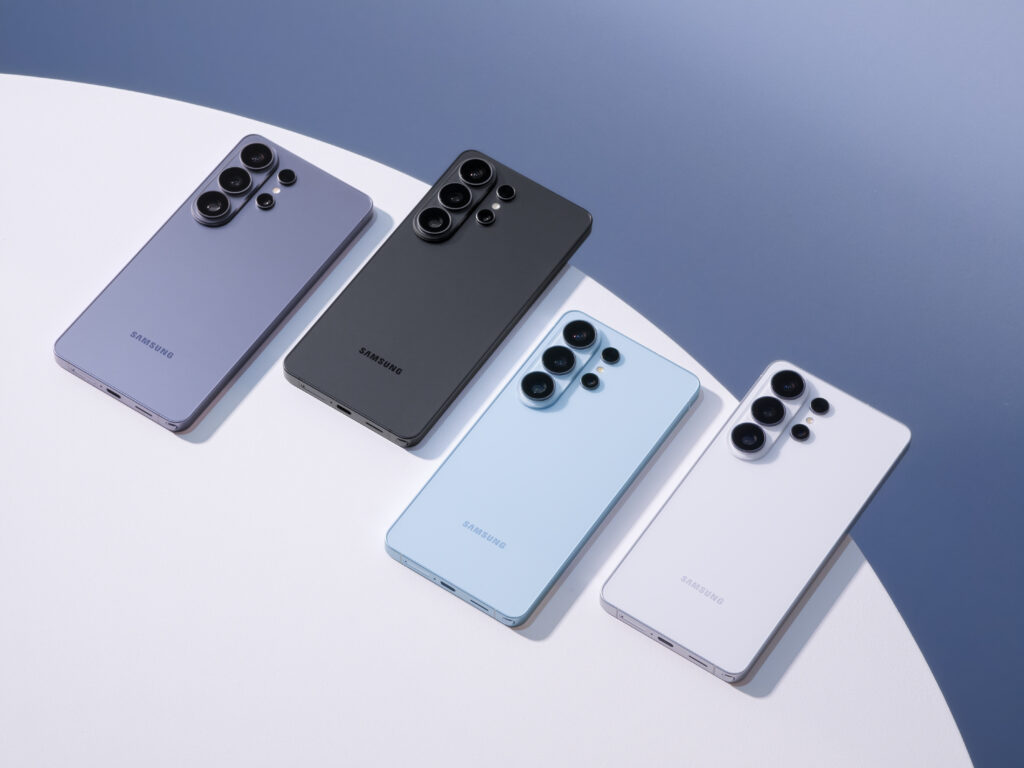
Samsung Galaxy S26 Series Comparison: Ultra vs S26+ vs S26
Samsung Galaxy S26 Series comparison becomes critical following the official 2026 unveiling, as Samsung has introduced three distinct models — Galaxy S26, Galaxy S26+, and Galaxy S26 Ultra. While the launch presentation heavily emphasized Galaxy AI integration and software intelligence, the real separation between these devices lies in measurable hardware differences such as display resolution tiers, chipset variants, camera architecture, charging speeds, and memory configurations.
This Samsung Galaxy S26 Series comparison examines the complete specification breakdown, pricing structure, and positioning strategy behind each model to clarify which version delivers the strongest value depending on performance needs, photography priorities, and long-term storage requirements.
Official Samsung Galaxy S26 Series Specifications
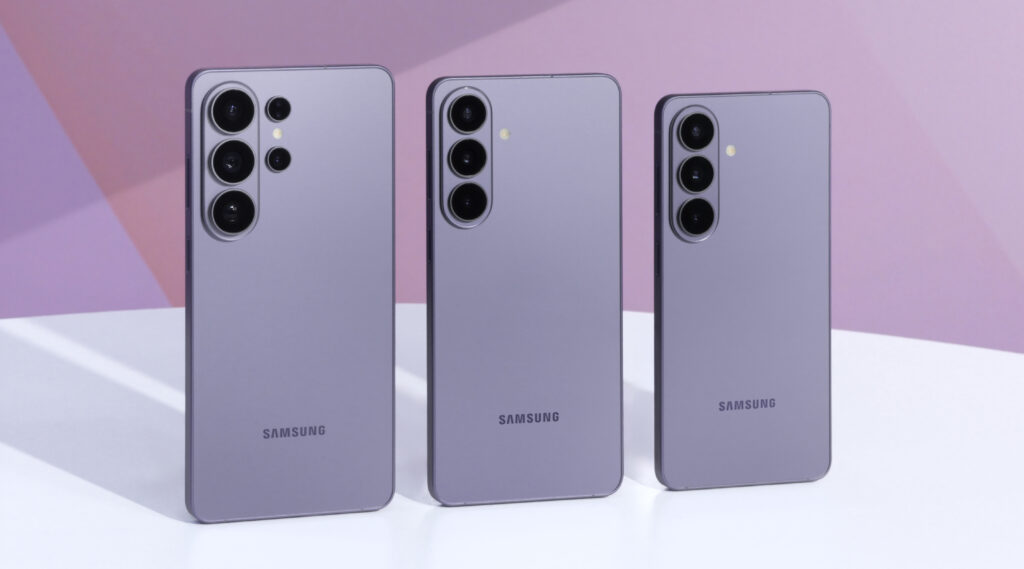
| Feature | Galaxy S26 Ultra | Galaxy S26+ | Galaxy S26 |
|---|---|---|---|
| Display | 6.9” QHD+ Dynamic AMOLED 2X | 6.7” QHD+ Dynamic AMOLED 2X | 6.3” FHD+ Dynamic AMOLED 2X |
| Refresh Rate | 1–120Hz adaptive | 1–120Hz adaptive | 1–120Hz adaptive |
| Chipset | Snapdragon 8 Elite Gen 5 for Galaxy | Snapdragon 8 Elite Gen 5 / Exynos 2600 (region) | Snapdragon 8 Elite Gen 5 / Exynos 2600 (region) |
| Memory (RAM) | 12GB / 16GB | 12GB | 8GB / 12GB |
| Storage Options | 256GB / 512GB / 1TB | 256GB / 512GB | 128GB / 256GB |
| Main Camera | 200MP (F1.4) | 50MP (F1.8) | 50MP (F1.8) |
| Ultra-Wide | 50MP (F1.9) | 12MP (F2.2) | 12MP (F2.2) |
| Telephoto | 50MP (5x) + 10MP (3x) | 10MP (3x) | 10MP (3x) |
| Battery | 5,000 mAh | 4,900 mAh | 4,300 mAh |
| Charging | 60W | 45W | 25W |
| Bluetooth | 6.0 | 6.0 | 5.4 |
| Water Resistance | IP68 | IP68 | IP68 |
| Software | Android 16 + One UI 8.5 | Android 16 + One UI 8.5 | Android 16 + One UI 8.5 |
| Starting Price (US) | $1,299.99 (256GB) | $1,099.99 (256GB) | $899.99 (256GB) |
| 512GB Price | $1,499.99 | $1,299.99 | $1,099.99 |
| 1TB Price | $1,799.99 | N/A | N/A |
Performance & Processing Power
The Galaxy S26 Ultra runs globally on the Snapdragon 8 Elite Gen 5 for Galaxy. The S26 and S26+ may ship with Snapdragon or Exynos 2600 depending on the region.
Samsung claims measurable performance improvements over the previous generation, particularly in AI processing through an upgraded NPU. The larger vapor chamber cooling system in the Ultra model suggests sustained performance under load will be stronger in gaming and high-resolution video capture scenarios.
The base S26, while capable, is positioned as a compact flagship rather than a performance-maximizing device.
Memory & Storage: Long-Term Usability Factor
This is where real separation appears.
- The Ultra supports up to 16GB RAM and 1TB storage, positioning it for creators and heavy multitaskers.
- The S26+ caps at 12GB RAM and 512GB storage.
- The base S26 starts at 128GB storage, which may feel restrictive for long-term use, especially with 4K/8K video capture.
If device longevity is a priority, higher storage tiers reduce dependency on cloud storage and improve resale value — a principle also outlined in our Smartphone Buying Guide: What Matters Most in 2026.
Camera Hardware Differences
The Ultra’s 200MP wide sensor with F1.4 aperture significantly increases light intake compared to the 50MP sensors in the S26 and S26+.
It also includes:
- Dual telephoto setup (5x + 3x optical zoom)
- Higher resolution ultra-wide sensor
- Advanced video codec support
The S26 and S26+ remain strong for everyday photography but lack the hardware depth for serious zoom or professional-grade capture flexibility, particularly when evaluating real-world imaging factors beyond megapixel marketing — as discussed in our Camera Features That Actually Matter (Not Megapixels) guide.
Battery & Charging Strategy
- Ultra: 5,000mAh + 60W charging
- S26+: 4,900mAh + 45W charging
- S26: 4,300mAh + 25W charging
The charging gap is substantial. The base S26 will require significantly more time to reach full charge compared to the Ultra.
For heavy users, charging speed becomes a quality-of-life factor, not just a specification.
Display & Size Positioning
- Ultra: Largest display, highest resolution (QHD+)
- S26+: Same resolution class but slightly smaller
- S26: Compact size with FHD+ resolution
If media consumption or productivity matters, the Ultra and Plus models provide noticeably sharper visuals.
However, the S26 is significantly lighter and easier for one-handed usage.
Which Samsung Galaxy S26 Model Makes Sense?
Choose S26 Ultra if you want:
- The most advanced camera system (200MP + dual telephoto)
- Up to 16GB RAM and 1TB storage
- The fastest 60W charging support
- Maximum performance headroom
- Long-term storage flexibility for heavy usage
Choose S26+ if you want:
- A large QHD+ display without Ultra pricing
- Strong battery capacity at 4,900mAh
- Balanced flagship performance
- A middle-ground option between size and cost
Choose S26 if you want:
- A compact flagship form factor
- Core Snapdragon / Exynos performance
- Lower entry pricing
- A lighter device for everyday portability
Final Choices: Which Galaxy S26 Model Makes Sense?
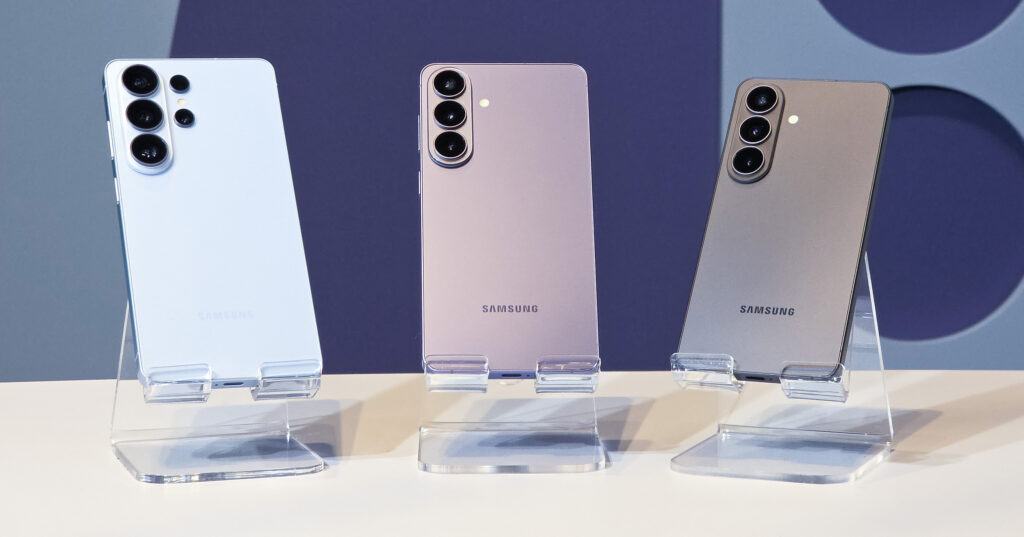
The Samsung Galaxy S26 Series is clearly segmented by performance tier, and the differences are practical rather than cosmetic. The decision largely depends on how much camera flexibility, memory headroom, and charging speed you require.
Galaxy S26 Ultra is positioned as the top-tier option. It is best suited for users who prioritize advanced photography hardware, higher RAM and storage ceilings, and faster charging performance. The inclusion of a 200MP main sensor, dual telephoto system, and up to 1TB storage makes it the most capable device in the lineup.
The Galaxy S26+ serves as the balanced flagship. It retains a large QHD+ display and strong battery capacity while reducing camera complexity and price. For users who want a large-screen experience without paying Ultra-level pricing, this model occupies the middle ground.
The base Galaxy S26 remains the compact alternative. It delivers core flagship performance in a smaller chassis with reduced charging speed and storage ceiling. This option is more suitable for users who prioritize portability and entry pricing over maximum hardware specifications.
In practical terms, the 2026 lineup is differentiated by memory scalability, charging capability, and camera system depth. Selecting the right model depends on workload intensity, storage needs, and long-term usage expectations rather than feature marketing.
Editorial Note: Product images and technical specifications are sourced from the official Samsung Newsroom for editorial reporting purposes.