5G Technology in 2026: What It Really Delivers
5G technology has moved well beyond the hype cycle. While early discussions focused almost exclusively on headline download speeds, the reality in 2026 is far more nuanced. Today, 5G is primarily about network efficiency, latency reduction, and capacity management, not just raw performance numbers.
Unlike previous mobile generations, 5G was designed to scale across consumer devices, enterprise infrastructure, and emerging machine-to-machine communication. Understanding how it actually works—and where its benefits are tangible—helps separate real value from marketing noise.
This article explains what 5G technology truly delivers in 2026, how it differs from 4G LTE in practice, and why it continues to matter even as 6G research accelerates.
How 5G Technology Differs from 4G LTE?
At a technical level, 5G introduces a redesigned radio interface and core network architecture. These changes allow networks to handle significantly more connected devices while reducing transmission delays.
The most important differences include:
- Lower latency, enabling near real-time data transfer
- Higher network capacity, not just faster speeds
- Improved spectral efficiency, allowing better use of available frequencies
In real-world usage, these improvements translate into more stable connections in crowded environments, faster response times for cloud-based applications, and better consistency across devices.
Latency Is the Most Meaningful Upgrade
One of the most practical benefits of 5G technology is reduced latency. While 4G networks typically operate with latency between 30–50 milliseconds, well-optimized 5G networks can achieve latency under 10 milliseconds in controlled conditions.
Lower latency improves:
- Cloud gaming responsiveness
- Video call stability
- Real-time navigation and location services
- Interactive applications such as AR interfaces
Even when peak speeds are similar to advanced 4G, reduced latency fundamentally changes how applications feel in daily use.
Network Capacity Matters More Than Peak Speed
Speed tests often dominate 5G discussions, but network capacity is the real differentiator. 5G networks are designed to support a much higher number of simultaneous connections without congestion.
This is especially relevant in:
- Urban centers
- Stadiums and transit hubs
- Large residential complexes
- Smart city deployments
By using technologies such as massive MIMO and dynamic spectrum sharing, 5G technology allows carriers to maintain performance consistency even during peak usage periods.
The Role of Mid-Band 5G in Real-World Coverage
In 2026, mid-band frequencies form the backbone of practical 5G deployment. While millimeter-wave delivers extreme speeds, its limited range restricts widespread use.
Mid-band 5G offers:
- A balance between speed and coverage
- Better indoor penetration than high-frequency bands
- More reliable performance in suburban and urban areas
This is why most users experience 5G as a steady upgrade, not a dramatic leap in raw speed.
Battery Efficiency Has Improved Significantly
Early 5G devices were criticized for increased power consumption. That concern has largely been resolved through modem optimization and improved power management at the chipset level.
Modern devices benefit from:
- More efficient 5G modems
- Smarter network switching between 4G and 5G
- Reduced background signaling
As a result, 5G technology no longer carries a meaningful battery-life penalty for most users.
Enterprise and Industrial Use Cases Drive Long-Term Value
Beyond smartphones, 5G’s long-term relevance comes from enterprise adoption. Private 5G networks are increasingly used in manufacturing, logistics, and healthcare environments.
Key advantages include:
- Reliable low-latency communication
- Secure, localized network control
- Support for automation and real-time monitoring
These deployments highlight why 5G is viewed as an infrastructure upgrade rather than just a consumer feature.
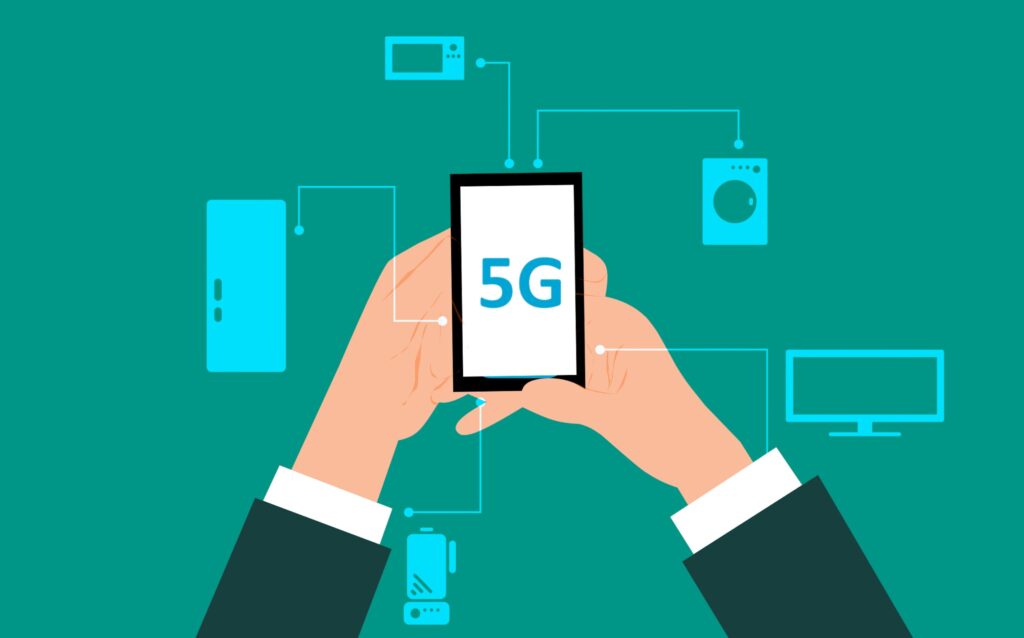
5G and IoT: Scaling Connected Devices
5G technology supports a broader range of connected devices with varying power and data requirements. This enables large-scale IoT deployments without overwhelming network resources.
Examples include:
- Smart meters and sensors
- Asset tracking systems
- Environmental monitoring
By managing device density more efficiently, 5G creates a foundation for scalable connected ecosystems.
Addressing Common Misconceptions About 5G
Despite its maturity, misconceptions persist. The most common is that 5G’s value depends entirely on maximum download speed. In reality, many users benefit more from consistency and responsiveness than from occasional speed spikes.
Another misconception is that 5G adoption is complete. In practice, network optimization and infrastructure upgrades continue to improve performance year over year.
Key Takeaways:
5G technology is no longer defined by theoretical speed claims. Its real-world impact comes from lower latency, improved network capacity, and more efficient handling of connected devices.
For consumers, this means more stable connectivity and better performance in dense environments. For industries, it enables automation, real-time control, and scalable IoT deployments. As an infrastructure layer, 5G remains highly relevant in 2026 and will continue to support emerging applications well into the next decade.