Foldable iPhone Ultra Could Be a Surprise Hit: Survey Suggests Millions May Upgrade for a New Design
Apple’s long-rumoured foldable iPhone — often referred to as the foldable iPhone Ultra in leaks and speculation — could end up being far more popular than many expect. A new consumer survey suggests that a significant number of iPhone users may be willing to upgrade specifically for a completely new phone concept, which includes foldable or flip-style designs.
Foldables have existed for years, with Samsung, Huawei, Motorola, and others pushing the category forward. But despite flashy hardware and futuristic form factors, foldables still remain a niche market globally. Apple entering the segment could be the moment that finally pushes foldables into the mainstream — not necessarily because foldables are new, but because Apple makes categories “feel standard.”
The new survey reinforces that idea.
For official iPhone product and upgrade information, Apple maintains its iPhone lineup and pricing details on its website.
Survey Suggests Foldable iPhone Interest Is Bigger Than It Looks
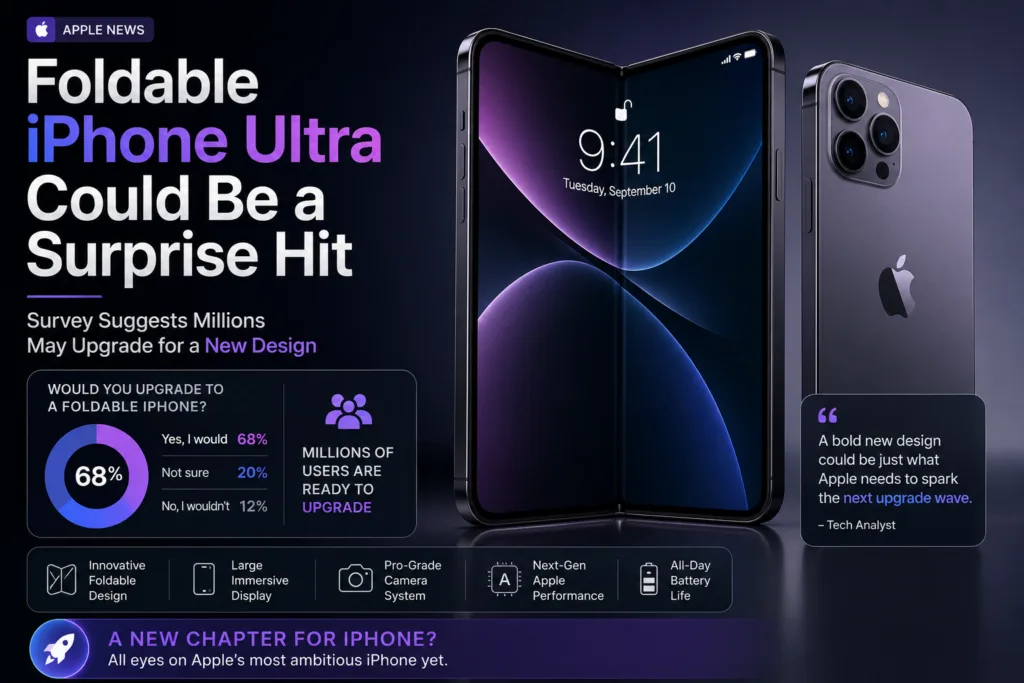
According to a survey report shared by CNET, around 14% of iPhone users in the US said their biggest reason for upgrading would be a “new phone concept.” That category reportedly includes devices like foldables and flip phones.
At first glance, 14% doesn’t sound massive. But in Apple’s world, even small percentages can translate into huge real-world numbers. Apple sells iPhones at a scale where a niche interest can still create a blockbuster product.
If Apple launches a foldable iPhone Ultra, even a small portion of its upgrade base could generate sales numbers that most foldable manufacturers can only dream of.
Why Apple Could Succeed Where Foldables Have Struggled
Foldables are not a new idea anymore, but they still carry a few challenges: high pricing, durability concerns, and the fact that many buyers don’t see them as “necessary.”
Apple’s advantage is that it rarely launches first — but when it enters a segment, it typically refines the user experience and simplifies the message.
If Apple positions the iPhone Ultra as a premium flagship that replaces both an iPhone and an iPad mini-style experience, it could instantly give foldables a more logical purpose for mainstream buyers.
The timing also matters. Smartphone innovation has slowed in recent years, and consumers are now more interested in meaningful design changes rather than small camera upgrades. That’s the exact market condition where foldables can thrive.
Millions of Buyers Could Still Mean a Foldable Boom
Apple does not publicly share exact iPhone unit sales every quarter, but the company generates tens of billions in iPhone revenue regularly. Analysts have estimated iPhone shipments in the hundreds of millions annually.
That means even if only 10–15% of upgrade-focused users seriously consider a foldable iPhone, Apple could still sell the iPhone Ultra in numbers that redefine the foldable category overnight.
This is why Apple’s entry is being watched so closely. Foldables haven’t failed because the idea is bad — they’ve struggled because the market hasn’t had a “mainstream moment.” Apple could be the brand that delivers that moment.
Price Could Be the Biggest Barrier
Leaks suggest the iPhone Ultra could cost $2,000 or more, which would instantly place it in ultra-premium territory. That pricing alone will limit mass adoption, no matter how impressive the hardware is.
But Apple doesn’t need foldable iPhone Ultra sales to match standard iPhone sales. Even modest volume at a premium price can generate enormous revenue — and Apple’s ecosystem makes high-end upgrades easier to justify for loyal users.
In other words, this product doesn’t need to be for everyone. It just needs to be for enough people.
The Bigger Picture: Foldables Are Becoming More Normal
Foldables are slowly gaining credibility, especially in markets where premium Android devices dominate. Samsung’s Fold series has matured, and Chinese brands continue pushing thinner designs and better hinge engineering.
Apple entering now would mean it’s stepping into a market that has already solved many first-generation problems. If Apple’s foldable is designed with stronger durability standards and refined software, it could instantly become the “default foldable” for many buyers.
This could also influence the broader smartphone ecosystem, including how AI and premium experiences are built into next-generation devices. Apple’s AI direction is already a major talking point, especially with recent reports suggesting Apple Intelligence could expand its assistant options. Apple Intelligence Could Soon Let Users Choose ChatGPT, Gemini, or Claude — and It May Redefine the iPhone AI Era
Foldable iPhone Ultra vs Android Foldables: Apple’s Strategy Will Matter
Apple’s success won’t depend only on hardware. It will depend on how well iOS adapts to folding displays.
Android has had years to evolve its multitasking UI and split-screen features. Apple will likely need to deliver a smooth tablet-like experience when unfolded, while keeping the closed mode feeling like a regular iPhone.
If Apple gets the software experience right, the iPhone Ultra could become the first foldable phone that feels “normal” for mainstream consumers.
That matters because most people don’t buy foldables for the hinge — they buy them for what they can do with the extra screen space.
TechularZtrix Take: Apple Doesn’t Need Huge Numbers to Win
The survey result might look small at 14%, but Apple operates on a scale where that percentage represents millions of customers. If Apple releases the iPhone Ultra as a premium foldable device, it could easily become one of the best-selling foldables in the world, simply due to Apple’s ecosystem pull.
And the moment Apple makes foldables feel like the next “must-have” iPhone upgrade, other brands will be forced to respond aggressively with better pricing and faster innovation.
Apple entering foldables could be the shake-up this category has been waiting for — not because Apple invented foldables, but because Apple might finally make them mainstream.