
NASA’s Surprising JPL Shake-Up Could Change the Future of America’s Space Missions
Quick Highlights
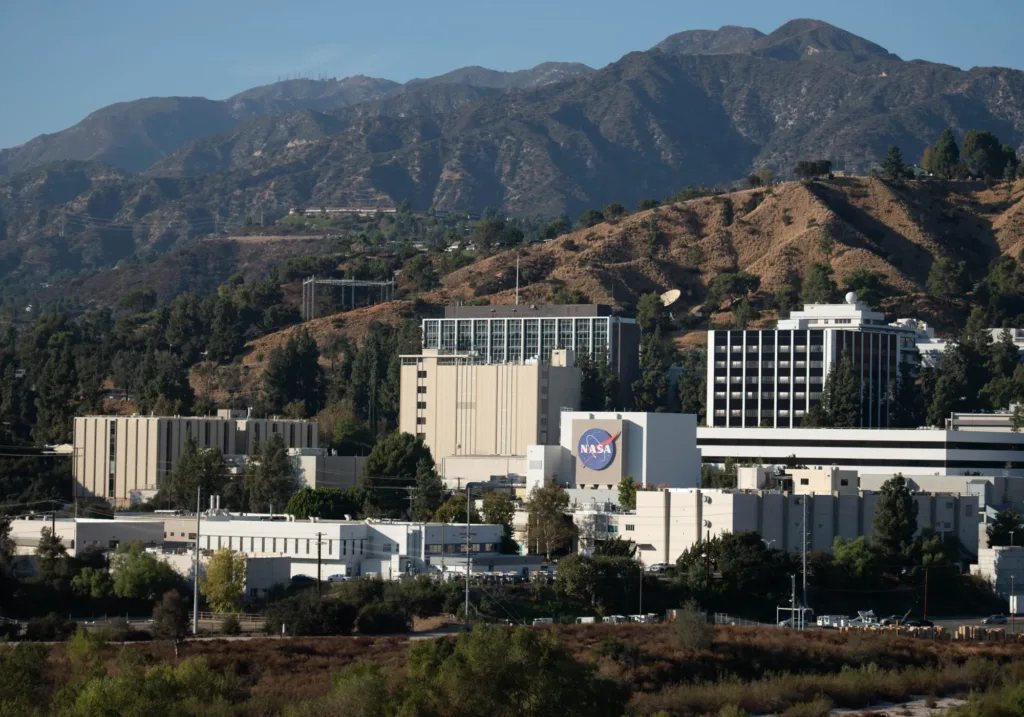
NASA has officially opened bidding for who will manage the legendary Jet Propulsion Laboratory (JPL) once its current contract with Caltech expires in 2028 — a decision that could completely reshape one of America’s most important space research institutions.
The move is significant because Caltech has operated JPL continuously since the laboratory was founded back in 1936, long before NASA itself even existed. For decades, the partnership has been closely tied to some of the world’s biggest space missions, including Mars rovers, deep-space exploration projects, and robotic planetary science programs.
Now, for the first time in generations, NASA is exploring whether a different organization could take over management responsibilities for the iconic research center.
The announcement arrives during a period of major restructuring across the aerospace industry, especially after SpaceX’s Explosive Starship V3 Launch Marks a Huge Leap for Future Mars Missions highlighted how rapidly private-sector space development is accelerating alongside government-funded programs.
NASA Wants to Explore Alternative Management Models
NASA says the decision to open competitive bidding is part of a broader effort to evaluate whether different management structures could improve mission performance, innovation, operational efficiency, and long-term costs.
According to the agency, the modern US space economy has expanded rapidly enough that there may now be a viable competitive market capable of handling large-scale aerospace research operations like JPL.
That wording alone signals how dramatically the industry has changed over the past decade.
Instead of relying almost exclusively on academic institutions and government agencies, NASA now operates in an environment where private aerospace companies and commercial launch providers have become major forces in space exploration.
Why the Jet Propulsion Laboratory Matters So Much
JPL is one of NASA’s most important research and engineering facilities.
The California-based laboratory has played a central role in:
- Mars rover missions
- planetary exploration
- deep-space probes
- robotic spacecraft development
- Earth science programs
- satellite technologies
Over the years, JPL has become almost synonymous with NASA’s robotic exploration efforts.
Many of the agency’s most famous missions — including Voyager, Curiosity, Perseverance, and Cassini — were either developed or managed through the laboratory.
That long history makes NASA’s decision especially surprising because Caltech’s involvement has remained largely untouched for nearly 90 years.
Budget Pressure Could Be Driving the Decision
NASA’s announcement also comes during growing political and financial pressure surrounding federal spending.
The Trump administration has reportedly proposed cutting NASA’s budget by roughly 23 percent, placing additional pressure on the agency to reduce costs and improve operational efficiency.
That financial environment may explain why NASA is now willing to reconsider management arrangements that have existed for decades.
The agency described the bidding process as part of a wider government effort focused on finding operational efficiencies across federally funded programs.
Who Could Potentially Replace Caltech?
At the moment, NASA has not announced any official bidders.
However, several large aerospace contractors and research institutions could theoretically compete for the contract.
Potential candidates may include:
- major aerospace universities
- Lockheed Martin
- Boeing
- nonprofit research organizations
- federally funded technology groups
The management contract itself could reportedly be worth at least $30 billion, making it one of the most important aerospace operational agreements in the United States.
That growing overlap between government contracts, private infrastructure, and commercial innovation is becoming increasingly visible throughout the industry, particularly after NASA is opening up bids for who will run the Jet Propulsion Laboratory discussions began raising concerns about how future public-private partnerships may reshape scientific research programs.
NASA Says Operations Will Continue Normally
Despite the uncertainty surrounding future management, NASA says there should be no disruption to ongoing JPL operations.
The agency intentionally started the process years before the current contract expires in order to ensure a smooth transition and maintain continuity for active missions and long-term research programs.
For now, Caltech still remains fully in charge of JPL, and the organization could ultimately retain the contract if NASA decides its proposal remains the strongest option.
TechularZtrix Take
This decision feels much bigger than a standard government contract review.
NASA opening up JPL management bidding signals how deeply the aerospace industry is shifting toward commercial competition, operational efficiency, and private-sector influence.
For decades, institutions like Caltech represented the traditional backbone of American scientific research. But modern space exploration is increasingly being shaped by aggressive commercial expansion from companies like SpaceX, Blue Origin, and other aerospace giants.
If another organization eventually takes over JPL management, it could mark one of the most important structural changes in NASA’s modern history.
At the same time, NASA appears careful not to disrupt one of its most valuable research facilities during an era when global competition in space technology is intensifying rapidly.
For more details, NASA’s official procurement and contracting updates provide additional information about the future JPL management bidding process.