Samsung Expands Its Enterprise Push in India With AI-Powered Connected Ecosystems and Knox Security
Samsung is widening its focus beyond consumer smartphones in India, pushing deeper into the enterprise segment with a new emphasis on AI-powered connected ecosystems. The company says it is building end-to-end business solutions that combine hardware, software, and security into one integrated framework — positioning itself less like a device brand and more like a full-stack technology partner.
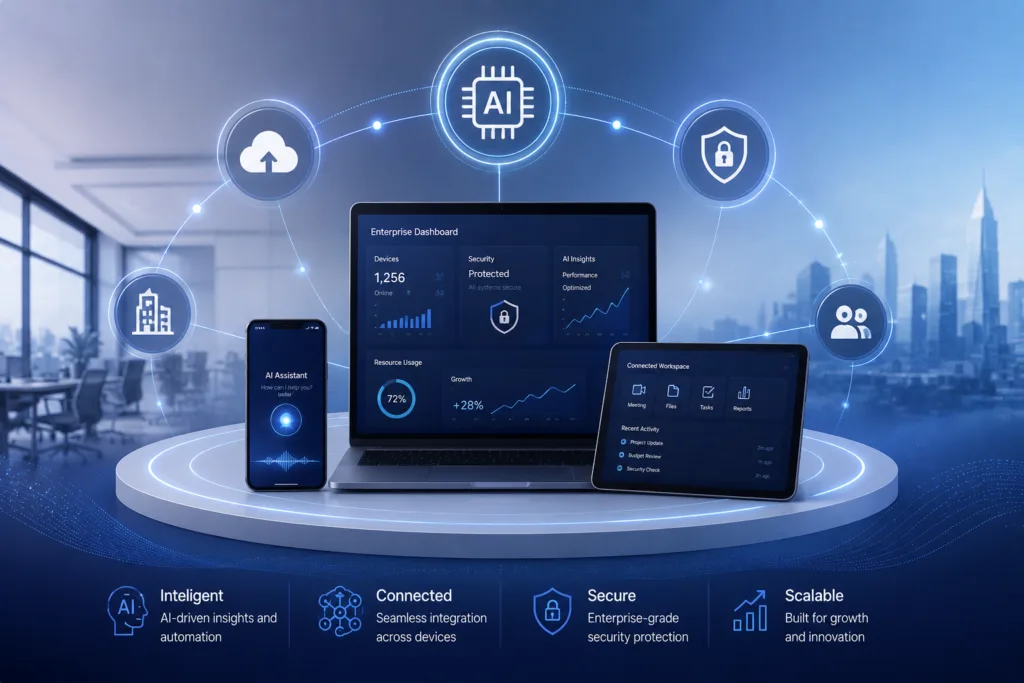
The move comes as Samsung completes 30 years in India, and it reflects a growing industry trend: enterprise customers are no longer looking for standalone devices. They want ecosystems that can scale across teams, locations, and workflows while remaining secure.
Samsung’s strategy appears to be built around three pillars — connected device environments, AI-driven productivity, and Knox-backed security infrastructure.
Samsung’s Enterprise Strategy Is Shifting From Devices to Ecosystems
For years, Samsung’s enterprise presence in India was mostly linked to smartphones and tablets deployed at scale. Now, the company is pushing toward what it calls “connected ecosystems,” which can combine everything from mobility devices to digital display systems, business productivity platforms, and secure authentication layers.
The bigger story is that Samsung wants to become a serious player in enterprise digital transformation — not just a hardware supplier.
That approach is increasingly common in 2026, as AI becomes a foundational layer in business workflows. Similar shifts are happening across the tech industry, especially as AI agents start moving from experimental tools into real productivity platforms, as explained in 9 Critical AI Agents in 2026: Why OpenAI Operator and Google Jarvis are Replacing Your Apps.
Business Experience Studios in Gurugram and Mumbai Are the Core of the Push
Samsung says its enterprise expansion is being anchored by its Business Experience Studios (BES) located in Gurugram and Mumbai. These spaces function as live demonstration hubs where enterprise clients can see how Samsung’s connected solutions work in real-world environments.
Instead of traditional showrooms, these studios are positioned as enterprise testbeds where businesses can explore integrated use cases across multiple industries.
Samsung claims the BES ecosystem supports sectors such as retail, BFSI, healthcare, education, and hospitality, with demonstrations focused on operational automation, secure digital interactions, and immersive customer engagement.
This signals a shift in how Samsung is selling enterprise technology — less through product brochures and more through real deployment simulations.
Samsung Is Targeting Private and Public Sector Digital Transformation
Samsung’s enterprise push also aligns with India’s broader digital transformation direction, where both government and private organisations are investing heavily in connected infrastructure and secure systems.
Samsung says it is actively working with enterprises across both sectors, highlighting local partnerships and innovation as major growth drivers. The company appears to be positioning itself as a long-term infrastructure partner, not just a vendor.
This approach could help Samsung build deeper enterprise relevance in India, where digital service delivery and security compliance are becoming major priorities.
Knox Security and AI Platforms Will Likely Be the Biggest Differentiators
Samsung’s enterprise pitch in India continues to lean heavily on Samsung Knox, its security platform used across Galaxy devices for encryption, device control, and enterprise-grade management.
As businesses move toward AI-powered environments, security becomes even more critical. AI systems often require access to sensitive company data, internal documents, and communication workflows. Samsung’s goal seems to be offering enterprises a path to AI adoption without compromising on compliance and security standards.
This also connects with a broader industry shift where AI tools are no longer standalone apps. They’re being embedded directly into productivity systems, similar to what we’re seeing with Microsoft 365 integrations like Anthropic Expands Claude Into Microsoft 365: Excel, Word and PowerPoint Add-ins Now Widely Available.
Samsung Wants Businesses to Move Beyond Standalone Devices
According to Samsung, the long-term enterprise goal is to help businesses transition from using isolated devices into building “intelligent, adaptive environments” that improve efficiency at scale.
That includes mobility solutions, digital workflow systems, security layers, and connected infrastructure that can be customised depending on business size and sector.
The company’s enterprise leadership has also emphasised that Samsung is investing in ecosystem partnerships and local innovation, suggesting that its enterprise roadmap is not just global strategy repackaged for India, but something it wants to actively build within the Indian market.
This is also where Samsung’s long-term competitive advantage could emerge — because unlike smaller enterprise software players, Samsung controls both the hardware and the security stack.
TechularZtrix Verdict: Samsung Is Building a Long-Term Enterprise Identity in India
Samsung’s enterprise expansion in India is a clear signal that the company is not satisfied being known only as a smartphone brand. By focusing on AI-powered connected ecosystems, Knox security, and live enterprise demonstration studios, Samsung is building a stronger identity as a digital transformation partner.
For India, this could matter more than it seems. Enterprise tech adoption is accelerating across sectors, and companies increasingly want secure, integrated ecosystems rather than fragmented device fleets.
Samsung’s BES strategy, combined with Knox-backed security and AI workflow integration, positions it well to compete not only with consumer-first brands, but also with enterprise-focused players that traditionally dominated this space.
For more official details, Samsung provides enterprise ecosystem and Knox information through its official Samsung Knox platform page.
Samsung is expanding its enterprise business in India with AI-powered connected ecosystem solutions spanning hardware, software, and security.
They are Samsung’s enterprise demo hubs in Gurugram and Mumbai where businesses can explore connected ecosystem solutions across industries.
Samsung says it is targeting retail, BFSI, healthcare, education, and hospitality.
Samsung Knox provides enterprise-grade security, encryption, and device management tools for businesses using Galaxy ecosystems.
Samsung is marking 30 years in India and aligning its enterprise roadmap with India’s growing digital transformation projects.