Apple Intelligence Brings Major Accessibility Upgrades: VoiceOver, Live Recognition, AI Captions and Vision Pro Eye Control
Quick Highlights
Apple has announced a major set of accessibility upgrades powered by Apple Intelligence, expanding features across VoiceOver, Voice Control, Live Recognition, Reader, and real-time caption generation. The company says these improvements are designed to make Apple devices more useful for people with vision, hearing, and learning disabilities, while also introducing a standout Vision Pro feature that enables eye-based wheelchair control for compatible systems.
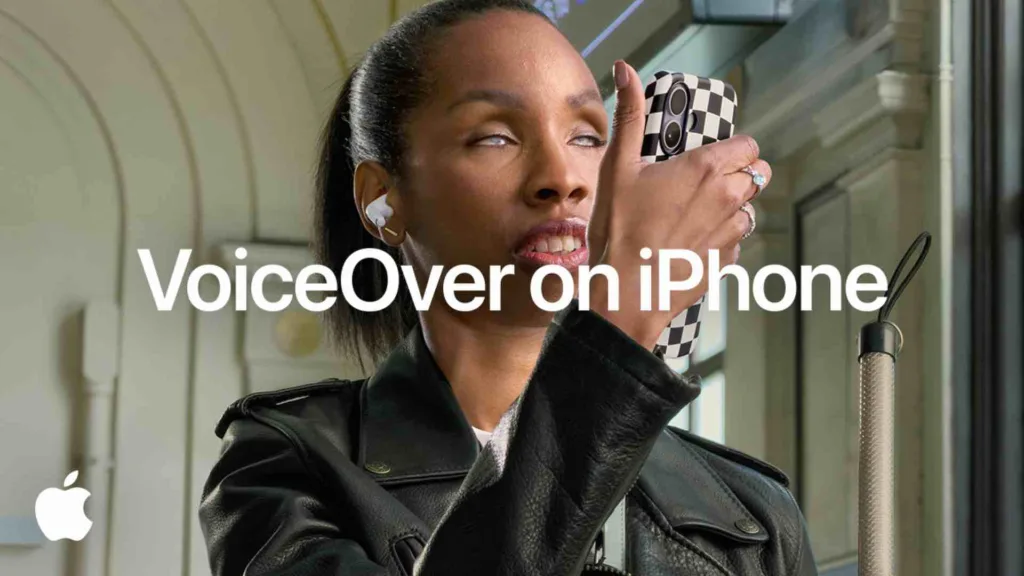
These accessibility updates are expected to roll out later this year and will likely arrive as part of Apple’s upcoming iOS 27 software cycle.
VoiceOver Gets Smarter Image Recognition With Apple Intelligence
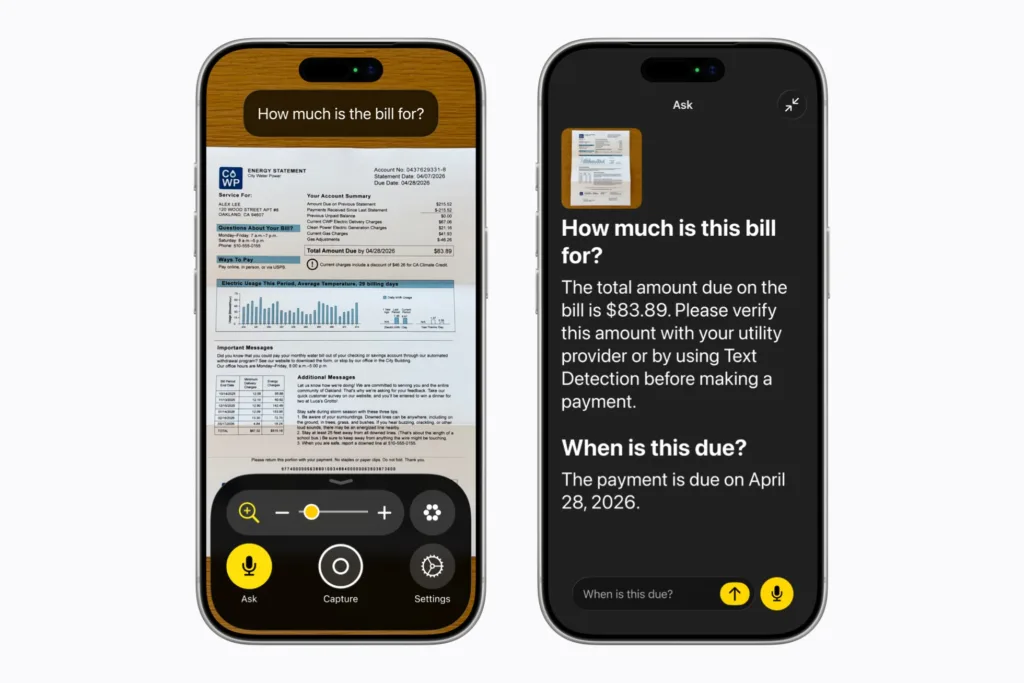
Apple says VoiceOver’s image recognition capabilities are getting a significant upgrade through Apple Intelligence. The system will be able to interpret images in greater detail, offering more descriptive explanations for photos, documents, and everyday objects.
One practical example Apple highlighted is bill scanning. VoiceOver can reportedly recognize a bill and read out important information such as the amount due and the due date, improving independence for blind or low-vision users.
This improvement could make iPhone accessibility feel far more contextual and useful, especially in everyday situations like reading mail, understanding receipts, or interpreting personal records.
Live Recognition Becomes More Interactive
Apple is also expanding Live Recognition, which uses the iPhone camera to detect objects and content within a frame. Users can now activate Live Recognition using an iPhone and even ask follow-up questions for more clarity.
This makes the feature less like a one-time scanner and more like a real-time assistant — a direction that matches Apple’s growing focus on AI-driven usability.
For users with low vision, Apple is also making Magnifier more accessible by allowing it to be assigned to the Action Button, with high-contrast UI support for easier visibility.
Voice Control Now Supports Natural Language Actions
One of the most important changes is Apple’s upgrade to Voice Control, which now supports more natural language commands.
Instead of relying on rigid commands, users will be able to describe tasks in everyday language. Apple gave examples such as:
- asking Apple Maps to tap a restaurant guide
- selecting specific folders in Files by describing them visually
This shift could make iPhone automation and navigation significantly easier for users who struggle with touch input.
The move also aligns with Apple’s wider push toward AI-based simplification, similar to what’s being discussed in iOS 27 Could Let You Build Shortcuts With AI — Apple May Finally Unlock One of iPhone’s Most Useful Features, where natural language is expected to reshape how users interact with system tools.
Reader Gets Better Support for Complex Documents
Apple’s built-in Reader is also receiving major improvements. The company says Reader can now handle complicated layouts like scientific papers with:
- multiple columns
- images
- tables
Users will also be able to access AI-generated summaries and view content in their preferred language, while maintaining formatting such as fonts and colors.
Apple says the updated Reader is being designed to better support different needs, including dyslexia and low vision.
AI-Generated Subtitles Coming Across Apple Devices
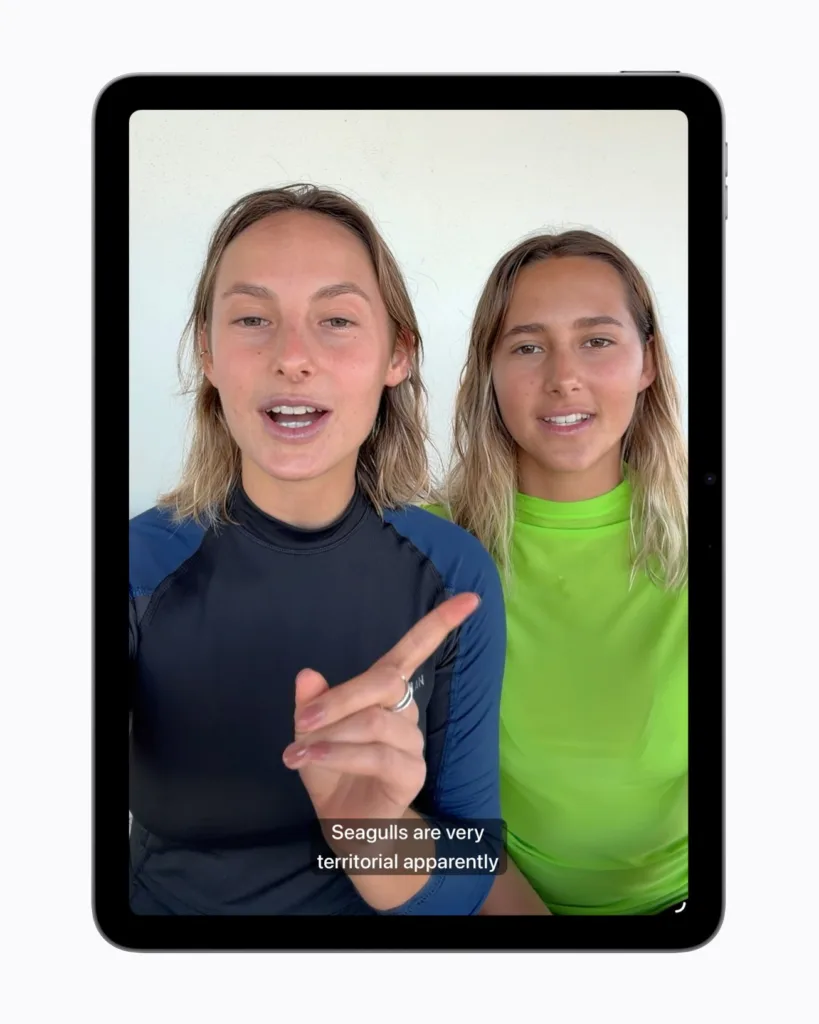
Apple is introducing AI-powered subtitle generation for videos that do not have captions. This includes videos recorded on an iPhone or clips shared through messages.
The company says the feature will work across:
- iPhone
- iPad
- Mac
- Apple TV
- Apple Vision Pro
Users will also have control over the subtitle appearance, which could be a major quality-of-life improvement for hearing-impaired users.
Vision Pro Will Support Eye-Controlled Wheelchairs
One of the most significant announcements is Apple’s new accessibility project for the Vision Pro. Apple says users will be able to control compatible wheelchairs using eye tracking, allowing hands-free navigation.
The feature is expected to launch in the US first, with support for Tolt and LUCI alternative drive systems, working through Bluetooth and wired accessory connections. Apple claims the system can operate under different lighting conditions without requiring constant recalibration.
This feature signals Apple’s intent to push Vision Pro beyond entertainment and productivity, positioning it as a serious accessibility platform.
Other Accessibility Improvements Apple Announced
Apple also highlighted additional updates, including:
- Name Recognition now supports 50 languages
- Large text support is coming to tvOS
- Made for iPhone hearing aids will handle device handoff better
Together, these updates show Apple is expanding accessibility improvements across multiple product categories rather than limiting them to iPhone and iPad.
TechularZtrix Take
Apple’s accessibility upgrades show one of the most practical applications of Apple Intelligence so far. Instead of focusing purely on flashy AI features, Apple is using its models to improve daily life for users who rely on VoiceOver, captions, and adaptive controls.
The Vision Pro wheelchair eye-control project stands out as the most ambitious part of the update. It’s not just a feature update — it’s Apple positioning spatial computing as an assistive technology platform with real-world medical impact.
For official details on Apple’s accessibility initiatives, visit Apple Accessibility
Apple announced upgrades to VoiceOver, Live Recognition, Voice Control, Reader, and AI-generated captions, along with Vision Pro eye-controlled wheelchair support.
Apple Intelligence improves image recognition in VoiceOver, allowing it to describe images more accurately and even read key bill details like due dates and payment amounts.
Live Recognition uses the iPhone camera to identify objects or content in the frame and provide real-time information to users.
Yes, Apple is adding AI-generated subtitles for videos without captions, and the feature will work across iPhone, iPad, Mac, Apple TV, and Vision Pro.
Apple says Vision Pro will support eye-based wheelchair control for compatible systems, starting in the US with Tolt and LUCI drive systems.
Apple says the features will be available later this year and will likely arrive as part of iOS 27 updates.