Google’s New Gemini Voice Features Could Radically Change How People Think and Communicate
Quick Highlights
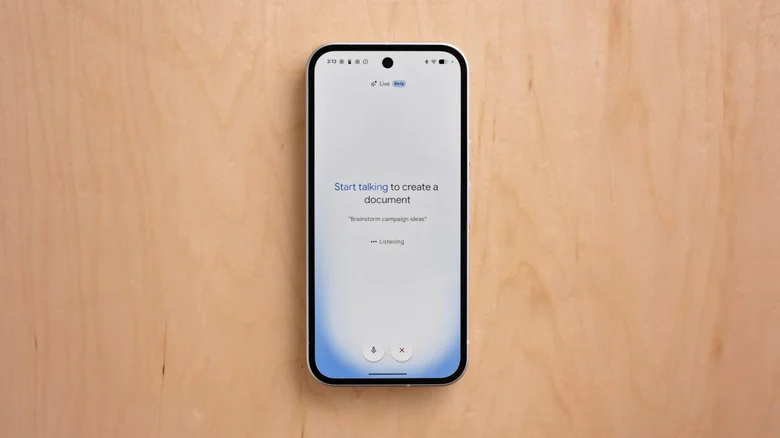
Google’s latest Gemini-powered features unveiled during Google I/O 2026 are doing much more than simply improving voice assistants. The company is now pushing toward a future where users speak naturally, ramble freely, and allow AI to organise, rewrite, summarise, and even think through information on their behalf.
From AI-generated documents to smarter speech-to-text tools, Google’s growing ecosystem of Gemini Live experiences signals a major shift in how the company imagines people interacting with technology in the AI era.
Instead of carefully structured prompts and robotic commands, Google now wants users to speak casually and let Gemini figure out intent automatically.
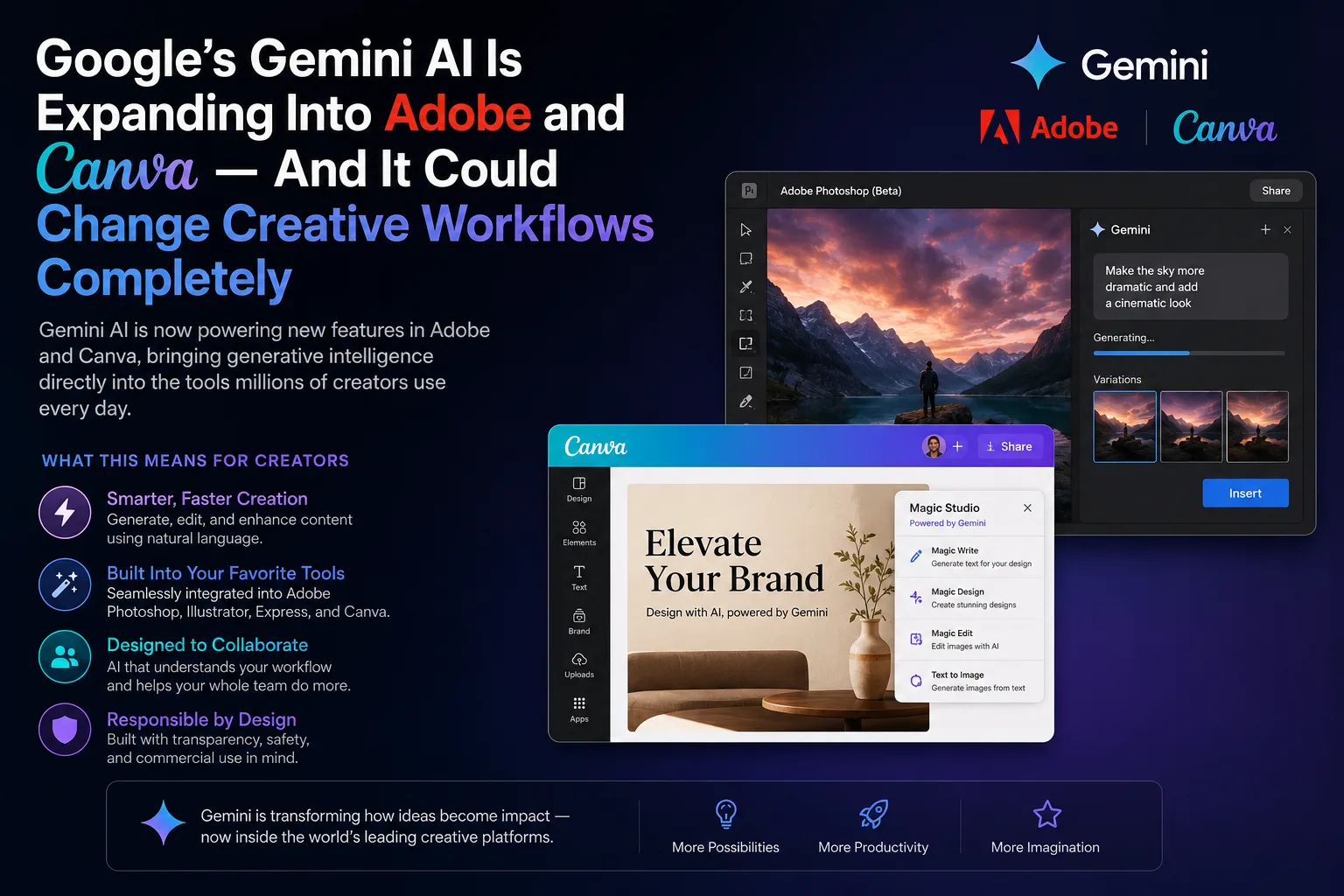
That broader shift toward agentic AI systems has accelerated rapidly this year, especially after Google’s Gemini Offers Agentic Design Creation With New Adobe and Canva Connectors showcased how Gemini is evolving into a deeply integrated cross-platform AI ecosystem.
Google Wants Users to “Ramble” Instead of Typing
One of the most interesting announcements from Google I/O 2026 was Rambler, an upgraded speech-to-text system integrated into Gboard.
Unlike traditional dictation tools that attempt to capture speech word-for-word, Rambler is designed to interpret meaning instead of exact phrasing.
The system can automatically:
- remove filler words
- rewrite sentences
- summarise ideas
- combine fragmented thoughts
- switch between multiple languages naturally
Google says users no longer need to carefully think through every sentence before speaking because Gemini can organise messy input into concise messages automatically.
The feature also brings important accessibility benefits by allowing users to compose messages hands-free while multitasking or moving.
That growing emphasis on conversational AI interaction is becoming increasingly common across modern software ecosystems, especially after WhatsApp’s Secret New Feature Could Delete Texts Once You’ve Read Them highlighted how messaging platforms are rapidly evolving beyond traditional communication systems.
Docs Live Turns Conversations Into Full Documents
Google is also integrating Gemini Live directly into productivity apps through features like Docs Live, Gmail Live, and Keep Live.
Docs Live allows users to simply talk to Gemini while the AI creates structured Google Docs in real time using spoken thoughts, ideas, and contextual information pulled from connected Google services.
According to Google, Gemini can:
- organise outlines
- structure documents
- pull details from Gmail and Drive
- generate drafts from conversations
- transform stream-of-consciousness speech into written content
The feature effectively removes much of the traditional writing process by allowing Gemini to handle structure, formatting, and organisation automatically.
Google demonstrated the tool using a software engineer generating a speech draft for a university presentation entirely through voice interaction.
Keep Live and Gmail Live apply similar concepts to note-taking and email management.
AI Voice Assistants Are Becoming More Autonomous
The biggest difference between older voice assistants like Google Assistant or Alexa and Gemini’s new voice tools is how much responsibility the AI now assumes.
Traditional voice assistants relied heavily on structured commands because users needed predictable outcomes.
Gemini, however, is being designed to interpret ambiguity, incomplete thoughts, emotional phrasing, and casual conversation patterns without requiring precise prompts.
That shift reflects the broader industry trend toward increasingly autonomous AI systems capable of understanding intent instead of simply processing commands.
Google’s newer approach essentially lowers the communication effort required from users while increasing the amount of cognitive processing handled by AI.
The company appears less focused on whether users communicate clearly and more focused on whether Gemini can produce a satisfactory final result regardless of input quality.
The Bigger Concern: Are People Thinking Less?
While these tools may improve accessibility and productivity, they also raise important questions about how AI could reshape human communication habits.
Writing messages, organising thoughts, and carefully structuring ideas are all forms of cognitive effort that help people think critically and communicate more effectively.
Features like Rambler and Docs Live automate much of that process.
Instead of refining wording manually or organising ideas independently, users can increasingly rely on Gemini to handle editing, summarisation, tone adjustment, and structure generation automatically.
The long-term concern is not necessarily that people will stop writing altogether, but that AI could gradually reduce the amount of active thinking users invest into communication itself.
That debate is becoming increasingly relevant as AI platforms move deeper into everyday workflows, productivity systems, and personal interactions.
TechularZtrix Take
Google’s new Gemini voice experiences are technically impressive, but they also represent one of the clearest examples yet of AI replacing cognitive effort rather than simply assisting with tasks.
Rambler, Docs Live, and Gemini-powered productivity tools could become incredibly useful for accessibility, multitasking, and fast communication. But they also push users toward outsourcing more thinking, editing, and organisation to AI systems.
The biggest question may no longer be whether AI can understand humans naturally — it is whether humans will slowly stop needing to organise their thoughts as carefully in the first place.
For more details, Google’s official Gemini and Android 17 announcements provide deeper information about Rambler, Docs Live, and upcoming Gemini Live integrations.