
SpaceX’s Massive Starlink Factory Is Producing 70 Satellites Every Week Ahead of Historic IPO
Quick Highlights
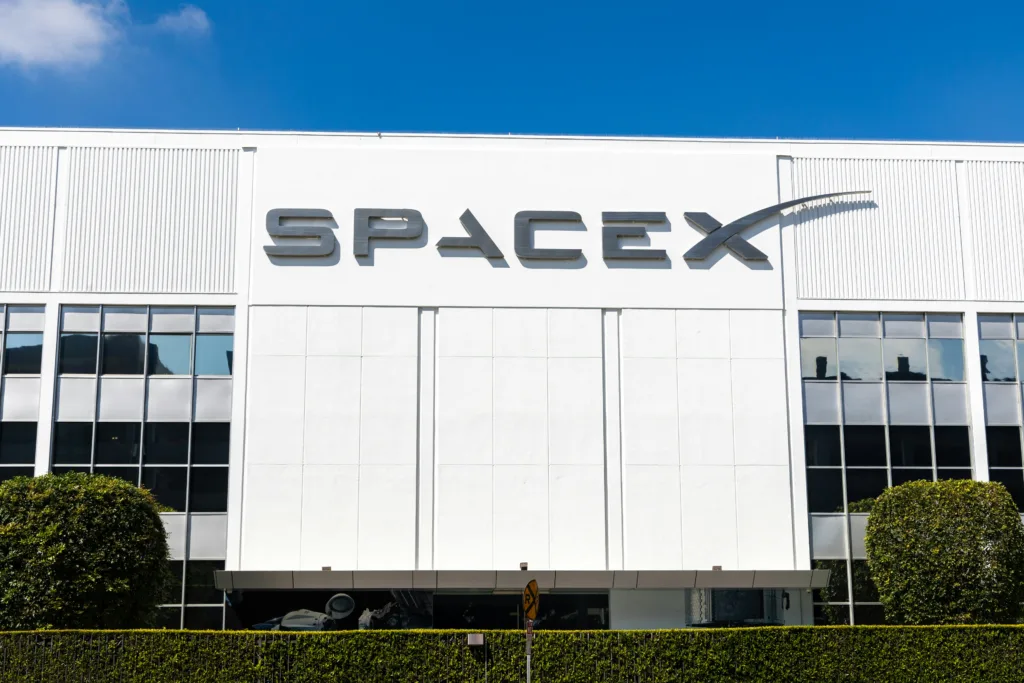
SpaceX has revealed new details about its rapidly expanding Starlink business as part of its blockbuster IPO filing, and one of the biggest revelations is the sheer scale of its satellite manufacturing operation in Redmond, Washington.
According to the filing, SpaceX is currently producing an average of 70 Starlink satellites every week at its Redmond facility, giving the company an estimated annual production capacity of around 3,640 satellites per year.
The disclosure highlights how aggressively SpaceX is scaling Starlink ahead of what could become the largest IPO in history, with reports suggesting the company may attempt to raise more than $80 billion at a valuation potentially exceeding $2 trillion.
The growing battle between AI, satellite internet, and connected infrastructure companies has intensified rapidly this year, especially after Tesla Confirms Two Robotaxi Crashes While Teleoperators Were Driving — A Worrying Detail for the AV Push showed how major technology firms are increasingly pushing next-generation autonomous and connected systems into mainstream deployment.
SpaceX’s Starlink Factory Is Operating at Massive Scale
The IPO filing reveals just how dominant SpaceX has become in satellite manufacturing.
The Redmond-based Starlink facility has now evolved into one of the world’s largest satellite production centres, producing roughly 70 satellites every week between December 2025 and April 2026.
That level of manufacturing output gives SpaceX a major advantage over competing satellite internet providers that are still scaling production capacity.
Amazon’s rival Project Kuiper operation, for example, reportedly produces only “tens of satellites per week” at its Kirkland facility. While Amazon currently has slightly more than 300 satellites in orbit, SpaceX already operates nearly 9,600 Starlink satellites globally.
The satellite race is becoming one of the most important technology infrastructure battles of the decade as companies compete to dominate broadband connectivity, AI networking, and space-based communications.
That broader push toward massive connected ecosystems is also becoming increasingly visible across consumer technology markets, especially after Android Auto Gets a Major AI Upgrade in 2026: YouTube, Dolby Atmos, and Immersive 3D Maps highlighted how companies are integrating advanced connectivity and AI features into next-generation platforms.
Starlink Has Become SpaceX’s Most Profitable Business
The IPO filing also provides one of the clearest looks yet at SpaceX’s financial performance.
According to the company, Starlink generated:
- $11.4 billion in revenue
- $4.4 billion in operating income
during 2025 alone.
That means Starlink contributed roughly 61 percent of SpaceX’s total company revenue of $18.7 billion last year and remains the company’s only consistently profitable business segment.
The satellite internet service now reportedly serves more than 10.3 million subscribers globally, making Starlink one of the fastest-growing broadband platforms in the world.
The scale of Starlink’s expansion also demonstrates how satellite connectivity is evolving from a niche technology into mainstream internet infrastructure, particularly in remote regions and underserved markets.
SpaceX IPO Could Become the Largest in History
SpaceX has officially applied to list its Class A common stock on Nasdaq under the ticker “SPCX.”
While the filing does not yet disclose final pricing or total share allocation, reports suggest the company could attempt to raise more than $80 billion.
If achieved, the offering would surpass Saudi Aramco’s 2019 IPO and become the largest public offering ever recorded.
Bloomberg reports also suggest SpaceX could pursue a valuation exceeding $2 trillion, reflecting investor confidence in both Starlink and the company’s long-term space ambitions.
The filing additionally highlights how the Pacific Northwest is rapidly becoming a major hub for space, AI, and satellite innovation, with companies like Microsoft, Blue Origin, Amazon, and SpaceX all operating major projects in the region.
SpaceX Lists Major Rivals Across AI and Space Industries
Interestingly, the IPO filing outlines an unusually broad list of competitors across multiple industries.
In launch services, SpaceX identifies competitors such as:
- Blue Origin
- United Launch Alliance
- Arianespace
For satellite broadband, the company names:
- Amazon Project Kuiper
- Eutelsat OneWeb
- Telesat Lightspeed
- AST SpaceMobile
SpaceX also lists Microsoft, Google, OpenAI, and Anthropic as AI competitors following its acquisition of Elon Musk’s xAI venture earlier this year.
The filing shows how SpaceX is no longer simply a rocket company. It is now positioning itself as a major player across AI infrastructure, communications, broadband internet, cloud systems, and advanced space technologies.
TechularZtrix Take
The biggest takeaway from SpaceX’s IPO filing is not just the company’s valuation ambitions — it is the industrial scale at which Starlink is now operating.
Producing 70 satellites every week places SpaceX far ahead of nearly every competitor in the satellite broadband industry, while Starlink’s growing profitability gives the company a major financial advantage that few space firms currently possess.
If the IPO proceeds at the projected scale, SpaceX could become one of the most influential technology companies of the next decade, spanning AI, internet infrastructure, satellite communications, and commercial space operations simultaneously.
For more details, the official SpaceX IPO filing on the SEC platform includes full financial disclosures and operational data.