Silicon-Carbon Battery vs Lithium-Ion: Why New Phones Are Suddenly Getting Massive Batteries
Quick Highlights
Every major smartphone launch in 2026 seems to mention one thing: a silicon-carbon battery. Whether it’s a new OnePlus flagship, an Honor foldable, or a battery-focused mid-range phone from vivo or Realme, brands are increasingly using the term as a headline feature.
The result has been hard to ignore. Smartphone battery capacities that once hovered around 4,500mAh to 5,000mAh are now regularly crossing 6,500mAh, 7,000mAh, and in some cases even 8,000mAh. Yet many of these devices remain surprisingly thin and lightweight.
That naturally raises an important question. Is silicon-carbon an entirely new battery technology, or is it simply a marketing term for existing lithium-ion batteries?
The answer sits somewhere in the middle. Silicon-carbon batteries represent one of the most important smartphone hardware upgrades of the past few years, but they’re not replacing lithium-ion technology. Instead, they’re improving it in a way that directly benefits battery life, charging speeds, and device design.
What Is a Traditional Lithium-Ion Battery?
For decades, lithium-ion batteries have powered almost every smartphone, laptop, tablet, and wearable device on the market.
The basic concept hasn’t changed much. During charging and discharging, lithium ions move between two electrodes inside the battery. One side is known as the cathode, while the other is called the anode.
In most traditional smartphone batteries, the anode is made primarily from graphite. Graphite became the industry standard because it is stable, reliable, relatively affordable, and capable of handling thousands of charge cycles.
The problem is that graphite has slowly approached its practical limits. Engineers have spent years squeezing more efficiency from lithium-ion batteries, but there is only so much energy graphite can store within a given physical space.
As smartphones became thinner and more powerful, battery technology started becoming one of the biggest bottlenecks in device design.
Why Smartphone Batteries Stopped Growing
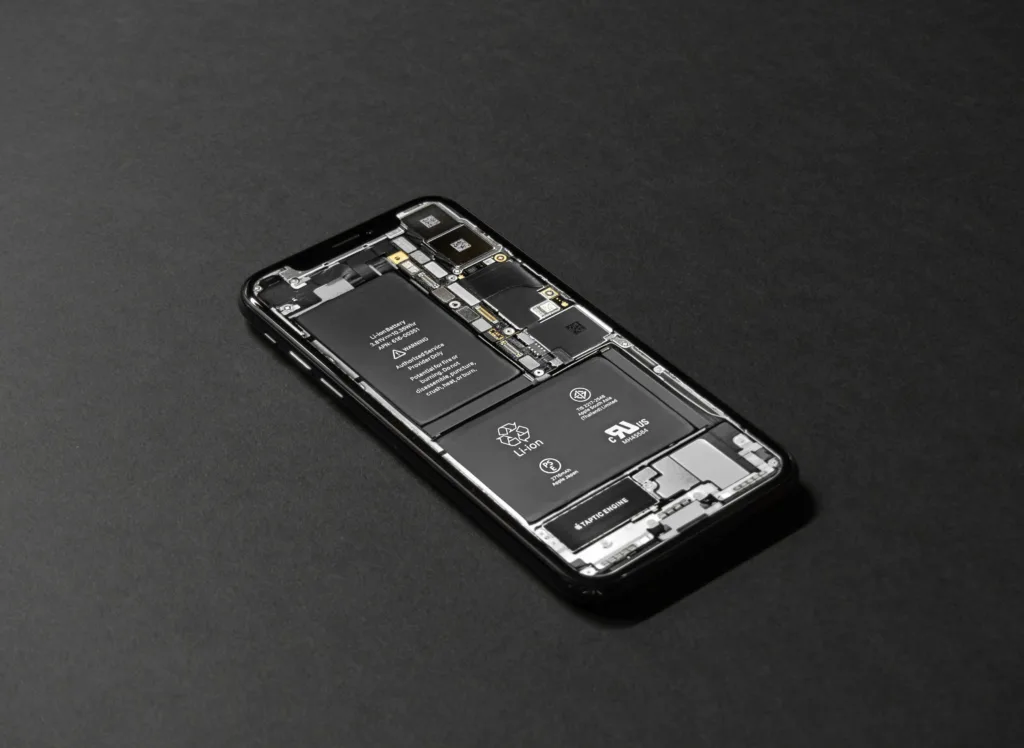
If you compare smartphones from around 2020 with modern devices, you’ll notice that battery capacity remained surprisingly similar for years.
Most premium phones stayed around the 4,500mAh to 5,000mAh range. Manufacturers instead focused on faster charging speeds, software optimization, and more efficient processors to improve battery life.
The reason wasn’t a lack of interest. Every smartphone company wanted larger batteries. The challenge was physical space.
Adding more battery capacity traditionally required making batteries larger. Larger batteries increased thickness, weight, heat generation, and manufacturing complexity.
Eventually, the industry reached a point where simply making batteries bigger was no longer the most practical solution.
Instead, manufacturers needed a way to fit more energy into the same amount of space.
That’s where silicon-carbon technology enters the picture.
What Is a Silicon-Carbon Battery?
Despite the name, a silicon-carbon battery is still a lithium-ion battery.
The chemistry remains largely the same. Lithium ions still move between electrodes during charging and discharging.
The major difference is found inside the anode.
Instead of relying almost entirely on graphite, manufacturers replace part of the graphite structure with silicon. In practice, most modern smartphone batteries use a silicon-carbon composite rather than pure silicon.
This approach allows the battery to store significantly more energy without dramatically increasing its physical size.
Think of it as upgrading the storage efficiency of the battery rather than changing the battery itself.
That’s why manufacturers can suddenly offer 7,000mAh batteries in phones that don’t feel much larger than devices with 5,000mAh batteries from a few years ago.
Why Silicon Matters So Much
The excitement surrounding silicon-carbon batteries comes from one simple fact: silicon can hold far more lithium ions than graphite.
In laboratory conditions, silicon’s theoretical storage capacity is dramatically higher than traditional graphite.
Real-world gains are obviously smaller because smartphone batteries cannot use pure silicon without introducing other problems. However, even modest silicon integration produces meaningful improvements in energy density.
For consumers, that translates into larger batteries without requiring larger phones.
It’s one of the rare smartphone upgrades where the benefit is immediately noticeable.
You don’t need benchmark software to see it. You simply notice that your phone lasts longer.
Real Benefits Buyers Actually Notice
Longer Battery Life
This is the biggest reason silicon-carbon batteries matter.
Modern silicon-carbon smartphones commonly feature battery capacities between 6,500mAh and 8,000mAh. That’s a significant jump from the 5,000mAh batteries that dominated flagship devices for years.
For many users, that means comfortably reaching the end of a day with battery remaining. Moderate users can often stretch usage into a second day without reaching for a charger.
Battery life has become one of the strongest selling points for many Chinese smartphone brands in 2026, and silicon-carbon technology is a major reason why.
Faster Charging
Higher-capacity batteries usually create concerns about charging speed.
Fortunately, silicon-carbon batteries work exceptionally well alongside modern fast-charging systems.
Many devices now support charging speeds above 80W while maintaining strong long-term battery health. Manufacturers have become much more comfortable pairing large batteries with aggressive charging technologies.
The result is a combination that would have seemed unrealistic just a few years ago: a massive battery that can still recharge in under an hour.
Silicon-carbon battery phones can support very high charging speeds while maintaining better efficiency than older graphite-based designs. However, charging speed is only one part of the equation. Daily charging habits can have a major impact on long-term battery health, which is why we recently explained Fast Charging vs Slow Charging: When to Use Each and What Actually Damages Your Battery and when each approach makes the most sense.
Slimmer Designs
Perhaps the most overlooked advantage is design flexibility.
Without silicon-carbon technology, fitting a 7,000mAh battery into a modern smartphone would often require a thicker chassis.
Instead, manufacturers can deliver larger batteries while keeping devices relatively slim and lightweight.
That’s one reason battery capacity growth has accelerated so rapidly over the last two years.
The Downsides Most Brands Don’t Mention
No technology is perfect, and silicon-carbon batteries come with their own challenges.
The biggest issue is silicon expansion.
When silicon stores lithium ions, it naturally expands more than graphite. Repeated expansion and contraction can create mechanical stress inside the battery over time.
Modern battery manufacturers manage this through advanced engineering, silicon-carbon composite structures, and sophisticated battery management systems.
For most consumers, this isn’t something they’ll notice directly, but it does make battery development more complicated and expensive.
Manufacturing costs also remain higher than traditional graphite-based batteries. As production scales up, those costs are gradually falling, but silicon-carbon technology still isn’t as inexpensive as conventional solutions.
Heat management also becomes increasingly important. Larger batteries and faster charging systems require stronger thermal controls to maintain long-term reliability.
Heat remains one of the biggest threats to battery longevity regardless of chemistry. As battery capacities continue increasing, thermal control becomes even more important. If you’ve noticed performance drops during gaming, navigation, or charging sessions, check out How to Stop Thermal Throttling on Android & iPhone (2026): The Pro Guide to Sustained Performance for practical ways to keep temperatures under control.
Which Brands Are Leading Silicon-Carbon Adoption?
Chinese smartphone manufacturers have moved aggressively into silicon-carbon battery development.
Brands such as OnePlus, OPPO, vivo, Honor, Xiaomi, and Realme are now regularly launching devices with battery capacities that would have seemed impossible in mainstream smartphones only a few years ago.
Many of the biggest battery-focused launches in 2026 are built around silicon-carbon technology.
Interestingly, Apple and Samsung have taken a more cautious approach.
While both companies continue investing heavily in battery research and efficiency improvements, neither has aggressively marketed silicon-carbon technology in the same way as many Chinese competitors.
As a result, battery capacities on flagship iPhones and Galaxy devices generally remain lower than some of their Chinese rivals.
That doesn’t automatically make those devices worse, but it does explain why battery capacity gaps have become increasingly noticeable.
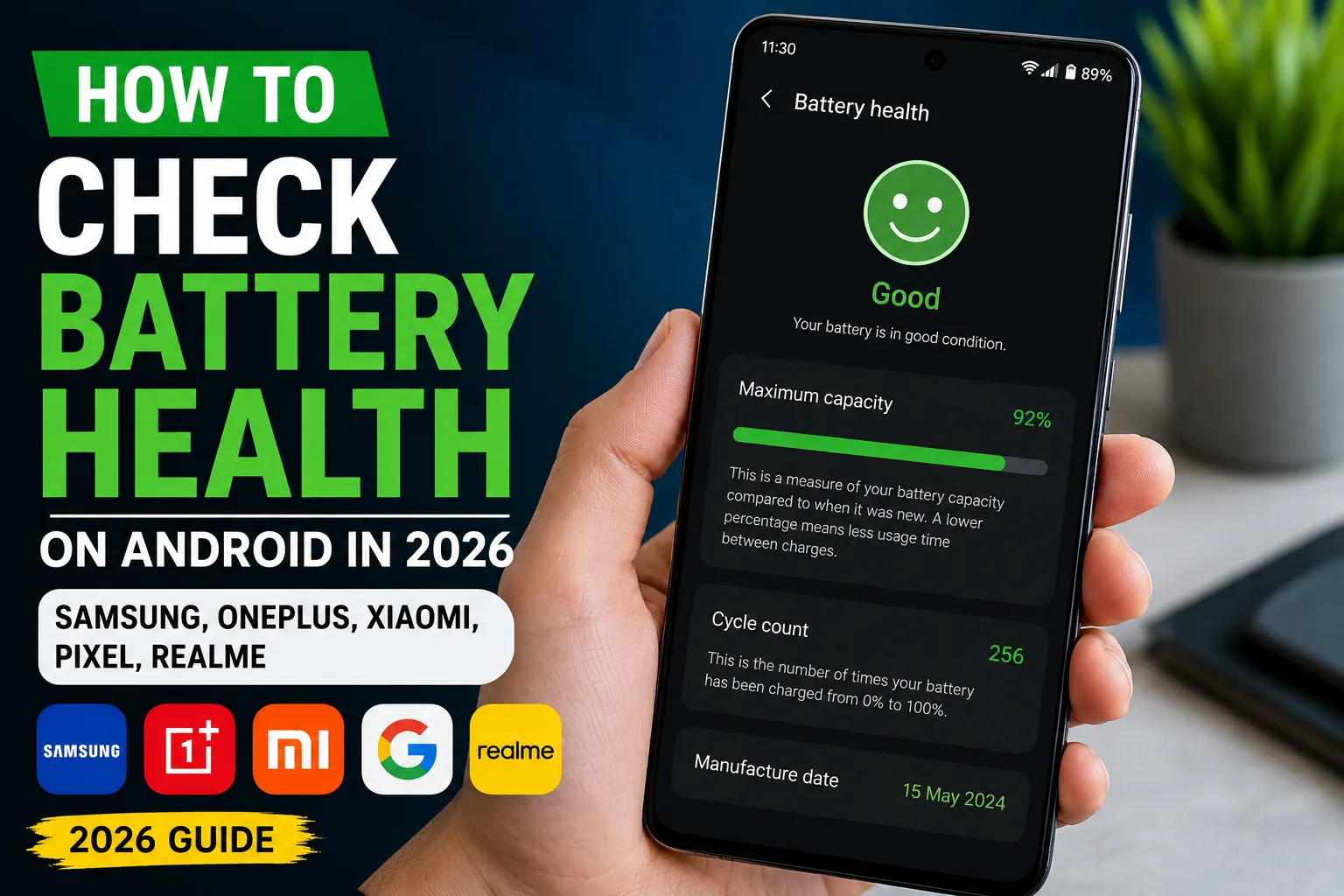
If you’re interested in monitoring long-term battery performance, our How to Check Battery Health on Android in 2026 (Samsung, OnePlus, Xiaomi, Pixel, Realme) guide explains where to find battery health information on supported Android devices.
Should You Choose a Phone Based on Battery Chemistry?
Battery chemistry shouldn’t be the only reason you buy a smartphone.
Camera quality, software support, performance, display quality, and overall value remain equally important considerations.
However, battery technology deserves far more attention than it received in previous years.
If two phones are similarly priced and one offers a modern silicon-carbon battery with significantly higher capacity, there’s a good chance you’ll notice the difference every day.
Battery life remains one of the few smartphone features that impacts nearly every user regardless of how they use their device.
For that reason alone, silicon-carbon technology is more than just marketing hype.
It’s one of the most meaningful hardware improvements currently happening in the smartphone industry.
Readers interested in the technical science behind rechargeable battery technology can also explore educational resources from Battery University.
That said, battery chemistry alone doesn’t determine battery health. Charging limits, temperature management, and charging behavior still play a major role in long-term performance. That’s exactly why we created Silicon-Carbon Phone Battery Guide (2026): Best Charging Settings to Reduce Heat and Protect Battery Health for users moving to the latest generation of smartphone batteries.
For additional technical information about Android battery management and modern smartphone power systems, readers can visit the official Android Developers documentation.
⚡ TechularZtrix Scan
📌 Bottom Line: Silicon-carbon batteries aren’t replacing lithium-ion technology. They’re improving it by increasing energy density, allowing significantly larger batteries without dramatically increasing phone size.
🎯 Best For: Heavy smartphone users, mobile gamers, travelers, content creators, and anyone who prioritizes battery life.
🏆 Biggest Win: Modern smartphones can now offer 6,500mAh to 8,000mAh battery capacities while remaining relatively slim and lightweight.
⚠️ Biggest Compromise: Manufacturing complexity and cost remain higher than traditional graphite-based batteries.
📈 Why It Matters: Silicon-carbon technology is responsible for some of the biggest real-world battery life improvements seen in smartphones over the last several years.
🔍 Difficulty Level: Easy
⏱️ Time Required: 6 minutes
📱 Seen In: OnePlus, OPPO, vivo, Honor, Xiaomi, Realme, and other next-generation Android smartphones.
“Stay Connected For more daily breaking leaks, advanced hardware forensics, and in-depth software reviews, make sure to check out the official TechularZtrix homepage. Dive into our curated category hubs to stay ahead of the rapidly shifting digital landscape.
Yes. Modern silicon-carbon batteries are designed with extensive safety systems and have not demonstrated greater safety risks than traditional lithium-ion batteries when manufactured properly.
No. Silicon-carbon batteries are still lithium-ion batteries. The improvement comes from changing the anode structure rather than replacing the underlying battery chemistry.
Chinese manufacturers have invested heavily in battery innovation and have been more aggressive about adopting new battery technologies in commercial products.
Indirectly, yes. Silicon-carbon batteries generally work well with modern fast-charging systems, allowing manufacturers to combine larger capacities with high charging speeds.
Industry analysts generally expect broader adoption over time, though neither company has publicly committed to large-scale implementation across its smartphone lineup.
When properly engineered, modern silicon-carbon batteries can maintain excellent long-term battery health while offering higher energy density than traditional graphite-based designs.