Beyond Chatbots: Why Perplexity’s “Digital Employee” Is the Real 2026 AI Breakthrough

The Shift from Asking AI to Assigning It Work
For the past few years, AI has largely been defined by conversation. Tools like ChatGPT and Claude made it easier to generate content, answer questions, and brainstorm ideas—but the responsibility of execution always remained with the user.
That model is now starting to break.
With the introduction of Perplexity Digital Employee, the focus is no longer on “what AI can tell you“, but “what it can do for you“. This marks a transition into what is increasingly being called Agentic AI—systems designed to perform tasks autonomously rather than just respond to prompts.
For professionals, students, and businesses, this is not a minor upgrade. It’s a shift in how digital work itself is structured.
What Exactly Is an AI “Digital Employee”?
To understand the difference, it helps to simplify the comparison:
- A chatbot responds to your query
- An AI agent completes your task
When using Perplexity AI in its Digital Employee mode, the interaction becomes instruction-based rather than prompt-based.
Instead of typing:
“Best laptops under ₹1.2 lakh”
You can assign a structured task:
“Find three 14-inch laptops under ₹1.2 lakh with at least 10 hours battery, check current pricing on Indian retailers, and draft a comparison summary.”
The system doesn’t just list results—it:
- Searches across sources
- Verifies data
- Organizes findings
- Produces a usable output
This is closer to delegating work to a junior analyst than querying a search engine.
Under the Hood: Why This Feels Different
The reason this system behaves differently lies in how it combines search, reasoning, and execution into a single workflow.
1. Multi-Step Reasoning Instead of One-Step Answers
Traditional AI tools generate a response based on a single pass. The Digital Employee, by contrast, performs iterative reasoning—adjusting its approach if it encounters incomplete or conflicting data.
This reduces the need for repeated prompting, which has been one of the biggest inefficiencies in chatbot workflows.
2. Action Layer Integration
The addition of an “action layer” allows the system to interact with:
- Web platforms
- Structured databases
- Third-party tools
This is what enables it to move beyond summarization into execution—a key distinction from earlier AI tools.
3. Contextual Memory Across Tasks
Unlike isolated chatbot sessions, the Digital Employee can retain context across workflows.
For example, if you are researching a device like the POCO X8 Pro Max, it can:
- Recall earlier benchmark data
- Compare with newer competitors
- Build structured reports without restarting from scratch
This creates continuity, which is essential for real-world productivity.
Real-World Use Cases: Where It Actually Matters
The value of any AI tool ultimately depends on how it fits into daily workflows. Based on testing, three clear use cases stand out.
1. Research and Analysis Work
For students, analysts, or journalists, the Digital Employee significantly reduces time spent on:
- Manual browsing
- Data extraction
- Source verification
Instead of reading multiple long documents, users can request:
- Summaries of large PDFs
- Extracted statistics
- Structured comparison tables
This transforms research from a time-heavy process into a results-focused workflow.
2. Smart Shopping and Price Intelligence
In markets like India, where pricing varies across platforms, the tool becomes particularly useful.
For instance, when evaluating a flagship device, it can:
- Track listings across multiple e-commerce platforms
- Identify hidden discounts or bank offers
- Compare real-time availability
This goes beyond what standard search engines or shopping apps currently provide.
3. Small Business and Solo Professionals
For small teams, the Digital Employee effectively acts as a virtual operations assistant.
Common use cases include:
- Drafting content outlines
- Competitor research
- Basic SEO analysis
- Workflow organization
This reduces reliance on multiple tools and simplifies day-to-day operations.
Choosing the right AI productivity tools can significantly improve workflow efficiency.
Innovation Scorecard: TechularZtrix Evaluation
Perplexity Digital Employee: Innovation Score
The strongest area is clearly task execution, which is where agent-based AI distinguishes itself from traditional tools.
The Trade-Off: Privacy and Control
The shift toward Agentic AI introduces a new layer of complexity—data access.
For the system to function effectively, it may need:
- Access to documents
- Integration with personal tools
- Awareness of user workflows
While platforms like Perplexity implement encryption and security safeguards, users should remain aware of how much information they are sharing.
For sensitive tasks, limiting access or using restricted modes is still advisable.
Are We Moving Beyond the Smartphone Model?
One of the more interesting implications of Agentic AI is its impact on hardware.
Devices such as the PLAUD NotePin and Amazon Echo Show 11 are increasingly being positioned as AI-first interfaces, where interaction is continuous rather than app-based.
This raises a broader question:
Will the future of computing be driven less by apps and more by intelligent agents operating in the background?
While smartphones are far from obsolete, their role may gradually shift from primary interface to support device for AI-driven ecosystems.
Final Verdict: The Beginning of the Agentic Era
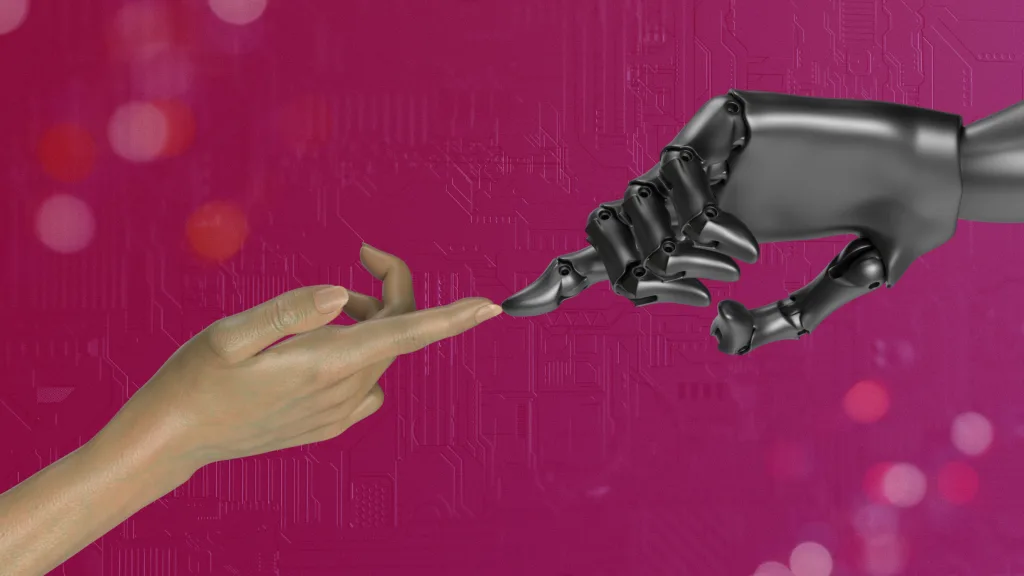
The Perplexity Digital Employee is not just another AI feature—it represents a structural change in how we interact with technology.
Instead of:
- Searching → reading → acting
We move toward:
- Assigning → processing → receiving results
It is not perfect. There are still limitations in execution accuracy and integration depth. But the direction is clear.
For the first time, AI feels less like a tool you operate and more like a system that works on your behalf.
And that shift may define the next phase of smart technology.