Stability AI Launches Stable Audio 3.0: New AI Music Model Can Generate Full 6-Minute Songs
Quick Highlights
Stability AI has officially introduced Stable Audio 3.0, a new family of AI-powered audio generation models capable of creating significantly longer and more structured music compositions than previous versions.
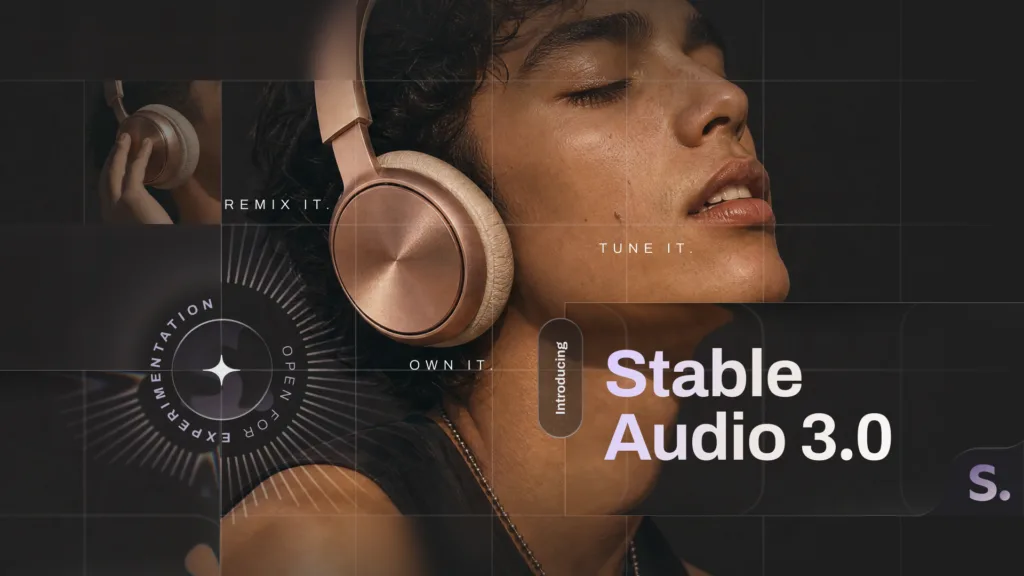
The company claims its most advanced model can now generate professional-grade songs lasting more than six minutes, marking a major leap from earlier open music-generation systems that were typically limited to under a minute.
Stable Audio 3.0 arrives at a time when AI music tools are rapidly becoming more competitive, with companies like Google, ElevenLabs, Suno, and Udio all racing to build next-generation generative audio platforms. But alongside the technology race, the industry is also facing growing pressure around licensing, training data, and copyright concerns.
That broader shift toward licensed AI ecosystems is already becoming a major industry trend — similar to how Google is pushing AI deeper into mainstream consumer platforms through projects like Google Search Gets an AI-Heavy Overhaul With Gemini 3.5 Flash, Intelligent Search Box, and Agentic AI at Google I/O 2026.
Stable Audio 3.0 Introduces Four New AI Audio Models
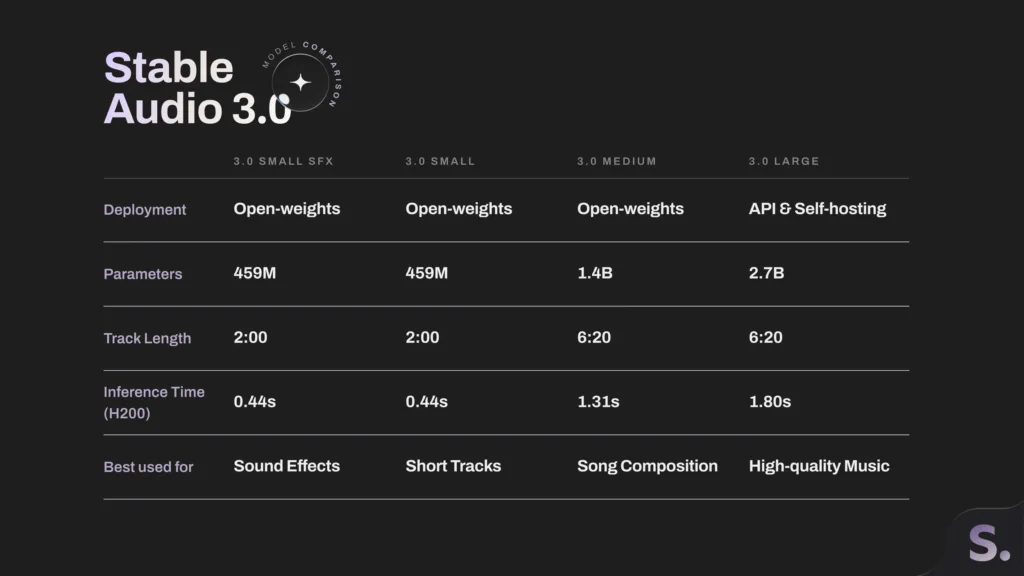
Stability AI announced four separate models under the Stable Audio 3.0 lineup:
- Small SFX (459M parameters)
- Small (459M parameters)
- Medium (1.4B parameters)
- Large (2.7B parameters)
The two smaller models are designed for lightweight sound and music generation tasks, including on-device AI audio generation for clips up to around two minutes long.
Meanwhile, the medium and large models are built for full-length composition generation. Stability AI claims these versions can create tracks lasting up to 6 minutes and 20 seconds while maintaining structure, melodic continuity, and coherent musical progression.
That is a major jump from Stable Audio 2.0, which launched in 2024 and supported much shorter outputs.
For official details and developer access, Stability AI’s official Stable Audio platform and API documentation remains the primary reference source.
Longer AI Music Generation Is Becoming the New Battleground
One of the biggest limitations of earlier AI music systems was duration. Many tools could generate short loops or fragments, but longer compositions often lost consistency or drifted away from the original style.
Stable Audio 3.0 is clearly attempting to solve that problem by focusing on sustained structure and tonal continuity across full-length tracks.
This matters because AI music generation is rapidly moving beyond experimentation and into professional workflows, where creators increasingly want tools capable of producing usable background scores, cinematic tracks, and production-ready music.
Open Weights for Developers, Enterprise Licensing for Large Companies
Stability AI confirmed that the small SFX, small, and medium models will be released with open weights, allowing developers and researchers to modify and build on top of them.
That makes Stable Audio 3.0 one of the more open AI music ecosystems currently available.
However, the largest and most powerful 2.7B parameter model will only be available through API access and paid self-hosting services. Companies generating more than $1 million in revenue will also need to secure an enterprise license.
This hybrid approach reflects a broader AI industry trend where companies open smaller models to developers while monetizing flagship enterprise systems.
Licensing and Copyright Are Becoming Critical for AI Music Companies
The AI music industry is currently facing increasing legal scrutiny around copyrighted training data and licensing agreements.
Companies like Suno and Udio are already involved in ongoing legal battles tied to how AI music systems are trained. As a result, licensing partnerships are becoming one of the most important long-term survival strategies for generative audio platforms.
Stability AI appears to be positioning itself carefully here. The company says the new Stable Audio 3.0 models were trained entirely on fully licensed music data.
Last year, Stability AI also signed partnerships with Warner Music Group and Universal Music Group to develop music-generation tools and AI models.
This push toward licensed AI development mirrors a larger industry effort to make generative systems commercially safer and more sustainable.
Stability AI Is Expanding Into Professional Music Tools
Alongside the new models, Stability AI confirmed it is building a broader suite of AI tools aimed specifically at professional musicians and creators.
The company has not yet revealed detailed features, but it did announce that Ethan Kaplan, former chief digital officer at Universal Audio and Fender, is joining the company to lead its professional music initiatives.
The hiring reflects a growing pattern across the AI music industry, where companies are increasingly bringing in experienced music executives to strengthen licensing relationships and creator-focused strategies.
Earlier this year, Suno hired former Merlin CEO Jeremy Sirota, while ElevenLabs brought in Derek Cournoyer from indie music publisher Kobalt to help guide its music business direction.
AI Music Competition Is Intensifying Fast
The race to dominate AI music generation is accelerating rapidly.
Google, ElevenLabs, Suno, Udio, and Stability AI are all pushing toward tools that can generate longer, cleaner, and more commercially useful music. The next phase of competition will likely focus on three key areas:
- Better song structure and realism
- Licensed training data and legal safety
- Professional creator workflows and monetization tools
Stability AI’s newest release shows the company is trying to compete aggressively on all three fronts at once.
TechularZtrix Take
Stable Audio 3.0 is one of Stability AI’s most important releases outside image generation. The move from short clips to structured 6-minute AI compositions signals a major shift in how generative music tools are evolving.
The biggest strength here is not just duration — it’s Stability AI’s focus on licensed datasets and developer accessibility. Open-weight availability for smaller models could make Stable Audio 3.0 attractive for creators, startups, and researchers looking to experiment without heavy restrictions.
However, the long-term challenge remains the same for every AI music platform: balancing innovation with copyright protection and artist trust.
If Stability AI can successfully combine professional-grade tools, legal licensing, and creator-focused workflows, Stable Audio 3.0 could become one of the most influential AI music platforms of the next few years.