
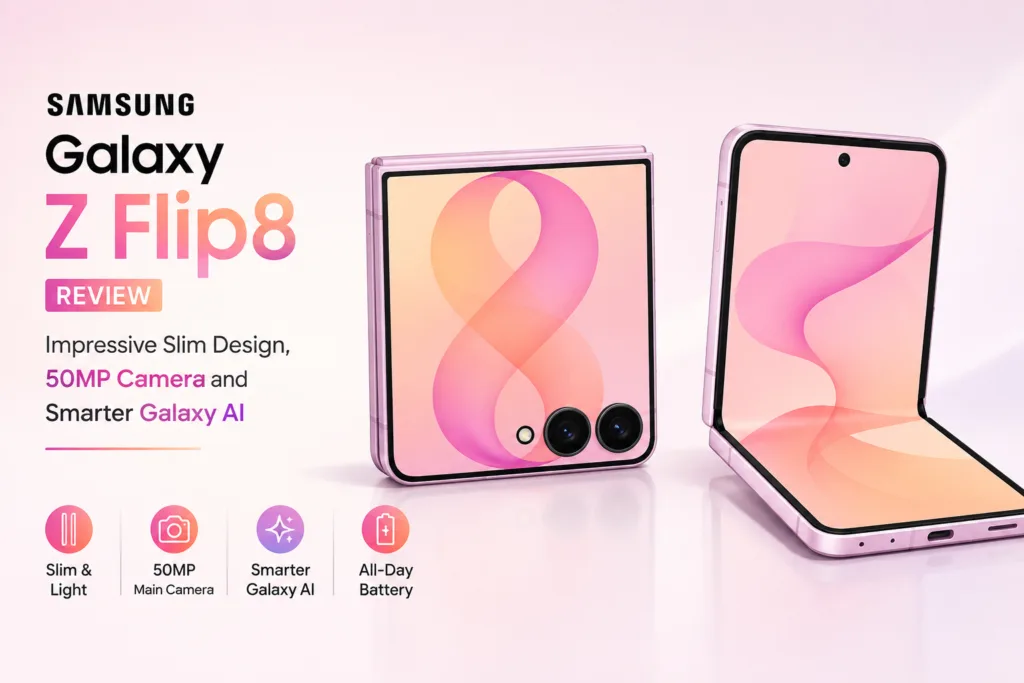
Samsung Galaxy Z Flip8 Review: Impressive Slim Design, 50MP Camera and Smarter Galaxy AI
Samsung’s Galaxy Z Flip series has always taken a different approach to foldables. While the Galaxy Z Fold lineup is designed around…
SMARTPHONE REPORTEXPLORE
 TECHULARZTRIXTMPrecision Technology Editorial
TECHULARZTRIXTM
The POCO X8 Pro Max is not trying to win the spec sheet race—it’s trying to solve real user problems: battery anxiety, performance drops, and long-term reliability.
TechularZtrixEDITORIAL DESK · UPDATED 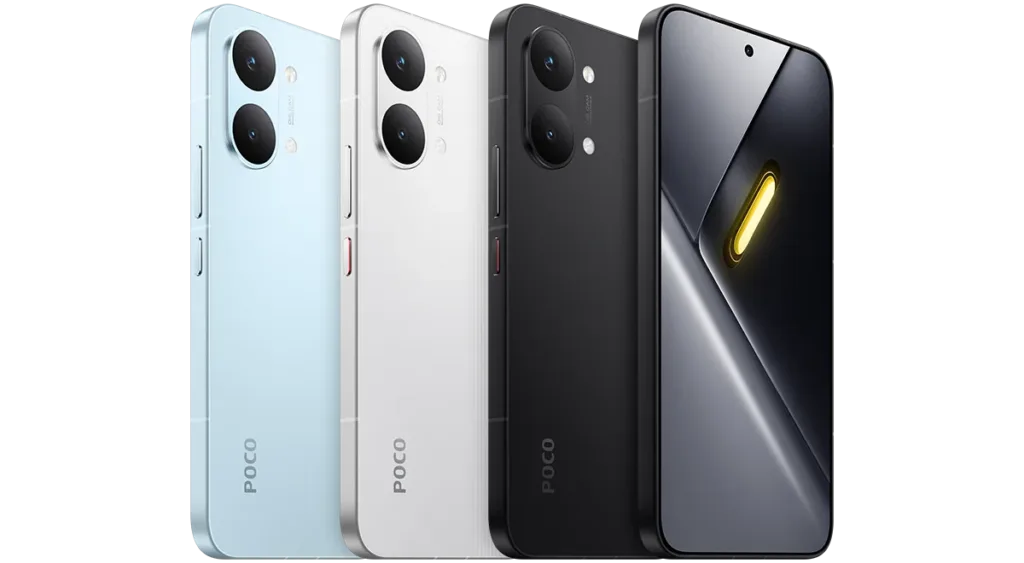

The POCO X8 Pro Max is not trying to win the spec sheet race—it’s trying to solve real user problems: battery anxiety, performance drops, and long-term reliability.
This distinction matters.
Most smartphones today are optimized for benchmarks and marketing slides. The X8 Pro Max, however, feels engineered around usage patterns—how long people game, how often they charge, and how devices behave after a year of use.
That shift changes how this phone should be evaluated.
While this Max model is built for extreme endurance, users looking for a lighter, more ergonomic daily driver should check out our full technical breakdown of the POCO X8 Pro, which balances power with a much thinner profile.
| Category | Details |
|---|---|
| Display | 6.83″ AMOLED, 1.5K (2772×1280), 120Hz |
| Brightness | 3500 nits peak |
| Processor | Dimensity 9500s (3nm) |
| GPU | Immortalis-G925 |
| RAM/Storage | 12GB LPDDR5X + UFS 4.1 |
| Cooling | 3D IceLoop (5800mm²) with SoC 3D Bulge |
| Camera | 50MP (OIS) + 8MP ultra-wide |
| Battery | 8500mAh |
| Charging | 100W fast, 27W reverse |
| Build | Metal frame + fiberglass |
| Protection | IP68, Gorilla Glass 7i |
| OS | HyperOS 3 |
| Extras | Ultrasonic fingerprint, Wi-Fi 7, eSIM |
On paper, the Dimensity 9500s is a flagship chip. In reality, what matters is how it behaves after 20 minutes of load—not 20 seconds.
The all big-core CPU design plays a role here. Instead of switching between efficiency and performance cores aggressively, it maintains a more predictable performance curve.
Most users don’t care about peak speed—they care about:
This is where the X8 Pro Max positions itself strongly.
Most gaming phones advertise high FPS. Experienced users know the real metric is:
Frame stability + thermal control
Thermal Control Pro-Detail: The X8 Pro Max isn’t just about surface area. The 5,800mm² 3D IceLoop System features a specialized 3D bulge directly over the chipset. This hardware refinement significantly improves thermal efficiency, drastically reducing SoC temperature by up to 3°C during heavy-load gaming, ensuring your frame rates stay locked.
Gamers don’t switch phones because of average FPS—they switch because of:
This device directly addresses those pain points.
The 8500mAh battery is not just “big”—it changes user behavior.
| Use Case | Experience |
| Heavy gaming | 6–8+ hours possible |
| Mixed usage | Easily 2 days |
| Travel days | No charger required |
This isn’t just a large battery; it’s a durable one. The 8,500mAh cell is rated for 1,600 charge cycles, which effectively translates to six years of regular use while maintaining over 80% health. For the Indian consumer who keeps their phone for 3–5 years, this is the most significant ‘Invisible Spec’ of 2026.
Battery is emotional:
This phone eliminates that problem.
Despite the massive battery, 100W charging keeps it practical.
Fast charging reduces friction—but big battery removes dependency.
The X8 Pro Max gives you both.
The display is not just about resolution—it’s about visibility and comfort.
Users rarely say “I want 1.5K resolution”
They say:
This panel directly solves those.
The 50MP Light Fusion 600 sensor is designed for consistency, not experimentation.
Most users:
This camera is built for that—not for pushing boundaries.
If your priority is professional-grade mobile photography rather than just ‘predictable results,’ the Xiaomi 17 Ultra with its 200MP Leica optics remains the definitive choice for 2026.
Running on HyperOS 3, the experience feels more refined and less cluttered than older POCO software.
Users don’t buy phones for AI—but they appreciate it when it:
The combination of metal frame + fiberglass back gives this device a more solid feel than typical POCO devices.
Durability is often ignored—until the first drop.
This phone is built for real-world usage, not just aesthetics.
If you find the industrial look of POCO too aggressive and prefer a cleaner, design-led interface, the Nothing Phone (4a) offers a more refined aesthetic at a similar price point.
Rather than offering a wide range of configurations, POCO keeps the X8 Pro Max lineup deliberately focused.
By standardizing on 12GB LPDDR5X RAM across all variants, the device ensures consistent flagship-level performance regardless of the chosen model, eliminating the typical entry-level compromises seen in many smartphones.

The POCO X8 Pro Max doesn’t try to impress in every category. Instead, it focuses on the three things users actually feel every day:
That makes it less flashy—but more dependable.
In a market full of spec-heavy devices, this one stands out by addressing real user frustrations rather than just chasing numbers.
POCO backs many of these claims with certified testing data; those interested in the technical validation can refer to the official POCO X8 Pro Max product documentation for a detailed breakdown.
Samsung’s Galaxy Z Flip series has always taken a different approach to foldables. While the Galaxy Z Fold lineup is designed around…
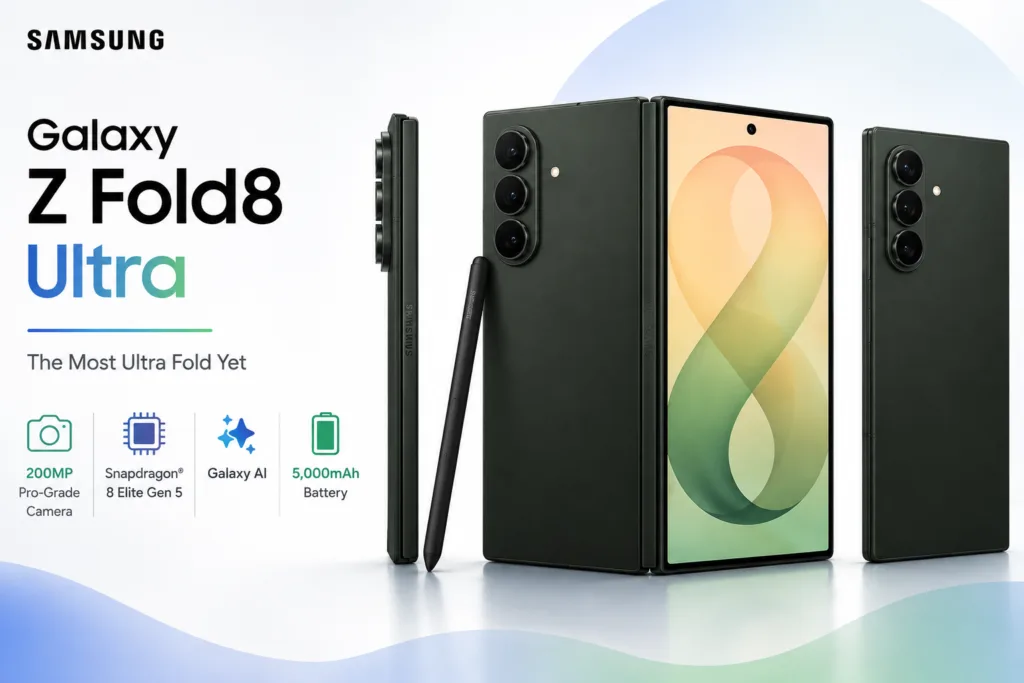
Samsung has officially expanded its foldable lineup with the Galaxy Z Fold8 Ultra, introducing what the company describes as its most capable…

Honor has officially launched the new Honor X70 Pro Max in China, adding another battery-focused smartphone to a market that is rapidly…