Microsoft Expands Copilot AI Across NHS England as 500,000 Staff Set to Gain Productivity Tools
Quick Highlights
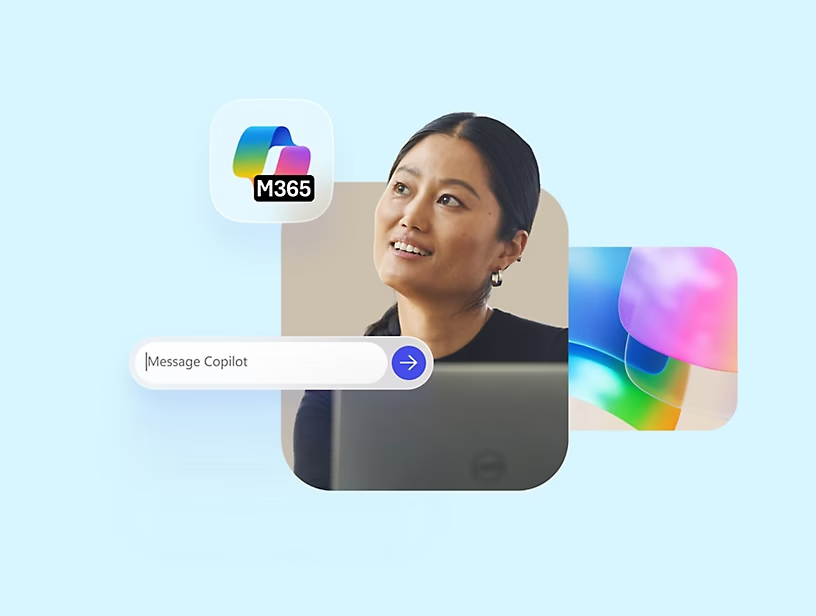
NHS England is significantly expanding its use of artificial intelligence after announcing plans to deploy Microsoft 365 Copilot to more than 505,000 healthcare workers and support staff across the organization.
The rollout follows what Microsoft described as the largest healthcare-focused AI trial conducted so far, where approximately 30,000 NHS employees tested Copilot’s capabilities across clinical, administrative, and operational tasks. According to the pilot results, workers were able to recover an average of 43 minutes per day, equivalent to nearly five working weeks per year.
The expansion marks one of the largest real-world deployments of generative AI inside a public healthcare system and highlights how governments are increasingly exploring AI tools to improve efficiency without increasing workforce pressure.
NHS Wants to Reduce Administrative Burdens
Healthcare workers often spend substantial amounts of time on documentation, reporting, scheduling, and information retrieval tasks.
Microsoft says Copilot will help automate many of these responsibilities by assisting with content drafting, document summarization, data analysis, meeting recaps, and information searches across Microsoft 365 applications.
The company believes reducing administrative workloads could allow clinicians and healthcare professionals to spend more time interacting directly with patients rather than handling paperwork.
The move mirrors broader enterprise AI adoption trends currently taking place across industries, similar to how Anthropic’s Safety Warnings May Have Backfired as Government Pulls Access to Claude Mythos 5 and Fable 5 highlighted the growing influence AI systems are having across both public and private sectors.
Pilot Results Encouraged Wider Deployment
According to NHS England, the pilot program delivered measurable productivity gains across multiple job functions.
Microsoft identified several roles expected to benefit most from Copilot adoption, including:
- Clinical administration
- Ward clerks
- Medical secretaries
- Core services staff
- Management teams
The software will also include access to Copilot Studio, Microsoft’s low-code platform that allows organizations to build customized AI agents without requiring advanced technical expertise.
Officials believe widespread adoption could save millions of work hours annually if productivity improvements observed during testing continue at scale.
Training Will Be Critical to Success
Despite positive pilot results, deploying AI tools to half a million workers presents significant challenges.
Healthcare systems often face varying levels of digital literacy among employees, and successful implementation will depend heavily on training, support, and governance frameworks.
NHS England says it plans to onboard approximately 200,000 users within the first six months, with the remaining workforce expected to gain access through a phased rollout supported by extensive training programs.
Similar public-sector deployments have shown that internal AI champions and peer-led training programs can significantly improve adoption rates and reduce resistance to new technologies.
AI Adoption Continues Accelerating in Healthcare
The NHS rollout reflects a broader shift toward AI-powered workplace tools across government agencies and healthcare organizations worldwide.
Rather than replacing workers, current deployments are largely focused on augmenting staff capabilities by reducing repetitive administrative tasks and improving access to information.
As AI platforms become more integrated into everyday workflows, healthcare providers increasingly see them as productivity tools capable of helping overstretched teams manage growing workloads more effectively.
The announcement also arrives at a time when organizations are rapidly evaluating generative AI investments, a trend that continues to shape discussions around workforce transformation, efficiency gains, and operational modernization.
For additional details about Microsoft 365 Copilot and its capabilities, users can visit Microsoft’s official Copilot website.
⚡ TechularZtrix Scan
📌 Bottom Line: NHS England is making one of the largest healthcare AI deployments ever by expanding Microsoft 365 Copilot access to more than 500,000 workers.
🎯 Target Audience: Healthcare professionals, IT administrators, enterprise AI observers, government technology teams, and digital transformation leaders.
🏆 Biggest Win: Pilot participants reportedly recovered an average of 43 minutes per day, potentially creating millions of additional work hours across the NHS.
⚠️ Biggest Compromise: Large-scale adoption will depend heavily on training, governance, and employee readiness rather than technology alone.
📈 Why It Matters: Public healthcare systems worldwide are increasingly turning to AI tools to improve efficiency while addressing workforce pressures and administrative burdens.
🔍 What Happens Next: NHS England plans to onboard 200,000 users during the first six months before expanding access to more than 500,000 staff over the following year.