Samsung Galaxy Z Flip8 Review: Impressive Slim Design, 50MP Camera and Smarter Galaxy AI
Quick Highlights
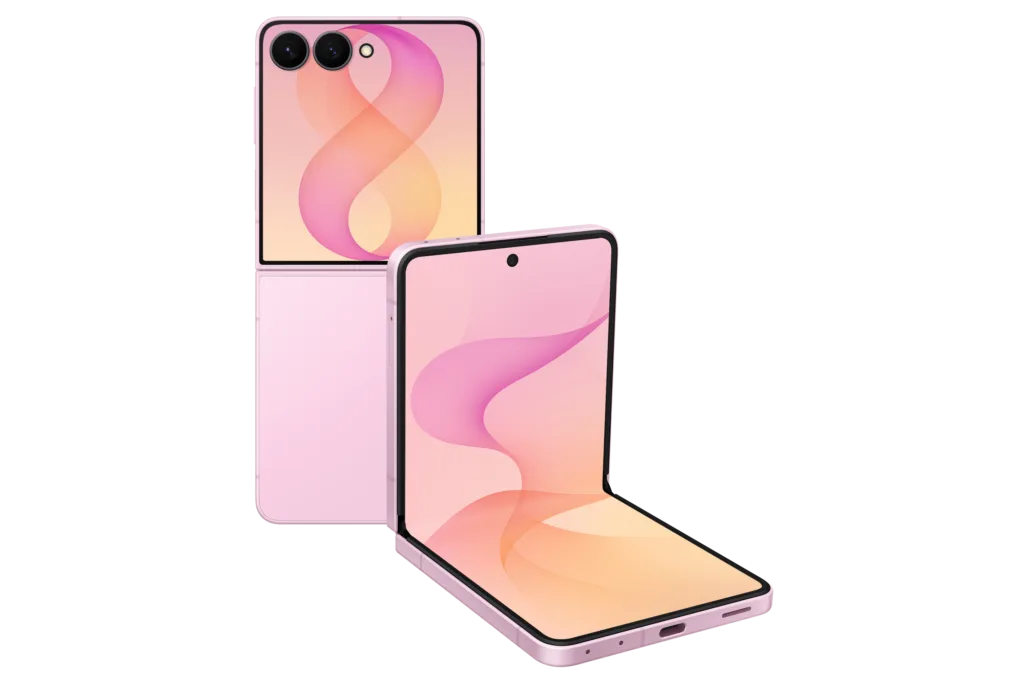
Samsung’s Galaxy Z Flip series has always taken a different approach to foldables. While the Galaxy Z Fold lineup is designed around productivity, multitasking and a large internal display, the Flip is about making a conventional flagship smartphone dramatically smaller when you do not need the full screen.
The Galaxy Z Flip8 takes that idea further. Samsung has made the device thinner and lighter, upgraded the main camera to 50MP, increased the battery to 4,300mAh and moved to the new Exynos 2600 for Galaxy platform. At the same time, the company has expanded what users can actually do from the external FlexWindow, making the cover screen a more important part of the phone rather than simply a place to check notifications.
That distinction matters. The Flip8 is not competing with Samsung’s own Fold models for productivity. It is competing for users who want a premium smartphone that becomes genuinely pocketable when folded without giving up flagship-level hardware.
Samsung also has a broader foldable strategy this year. The larger Galaxy Z Fold8 is built around a completely different experience, with a large internal screen and a stronger emphasis on multitasking. We covered that device in Samsung Galaxy Z Fold8 Officially Announced: Samsung’s Slimmest and Lightest Fold Yet Brings Bigger AI Ambitions. The Flip8, by contrast, is the model aimed at users who value portability, photography and quick interactions.
Samsung Makes the Galaxy Z Flip8 Noticeably Thinner and Lighter
The most obvious improvement is physical.
The Galaxy Z Flip8 weighs 180 grams and measures 6.1mm thick when unfolded, according to Samsung’s official specifications. That makes it 8 grams lighter than the Galaxy Z Flip7, while also making it Samsung’s thinnest Flip model to date.
The numbers may look modest on a specification sheet, but they have a bigger impact on a clamshell foldable than they would on a conventional smartphone. The entire point of this form factor is that the phone spends a significant portion of its day folded. Reducing the weight and thickness therefore improves the part of the experience users interact with constantly: carrying it.
Samsung has also revised the physical construction. The Flip8 uses an Armor Aluminum frame and Corning Gorilla Glass on the cover display, while a redesigned Armor FlexHinge and wider inner-bezel gap are intended to make opening the phone smoother and more comfortable.
The result is a device that remains recognisably a Galaxy Z Flip but feels more mature. Samsung is not trying to make the Flip8 look radically different. Instead, it has concentrated on the ergonomics that become increasingly important as foldables move from novelty products into mainstream premium smartphones.
Samsung offers the Galaxy Z Flip8 in Pink, Graphite, Cream and Mint, although colour availability depends on market and carrier, with Mint listed as a Samsung.com-exclusive option on Samsung India’s specifications page.
The 4.1-Inch FlexWindow Is More Useful Than Before
The cover display is arguably the most important part of the Flip experience because it determines how often you actually need to open the phone.
Samsung equips the Galaxy Z Flip8 with a 4.1-inch Super AMOLED FlexWindow supporting a 60Hz/120Hz refresh rate, with a resolution of 948 × 1048 pixels. The internal display is a 6.9-inch FHD+ Dynamic AMOLED 2X panel with a 1–120Hz adaptive refresh rate and 1080 × 2520 resolution.
The hardware itself is impressive, but the more important change is what Samsung allows users to do with the external screen.
The company has rebuilt FlexWindow as a more capable interface for apps, widgets, notifications and AI-powered features. Samsung says users can access more apps and information without unfolding the phone, reducing the number of times the main display needs to be opened during the day.
That is a meaningful change in the way the Flip operates.
A traditional cover display is mostly passive: check the time, glance at a notification, perhaps control music. The Flip8 moves closer to making the external screen a genuine secondary interface. For quick interactions, that means the phone can remain closed while still being useful.
The larger internal display remains the place for demanding tasks, but FlexWindow becomes the first point of interaction for many smaller ones. That should appeal to users who like the compactness of a foldable but do not want to constantly unfold it.
Samsung Upgrades the Camera to 50MP

Camera hardware has been one of the areas where Samsung’s smaller foldables have historically had to make compromises. The Galaxy Z Flip8 takes a significant step forward with a 50MP wide-angle primary camera alongside a 12MP ultra-wide camera. The front camera is 10MP.
The 50MP primary sensor is the most important change here. Samsung pairs it with Dual Pixel autofocus, optical image stabilisation and an f/1.8 aperture, giving the main camera the hardware needed for more detailed photographs and better low-light capture. The ultra-wide camera offers a 123-degree field of view, making it useful for landscapes, architecture and group photography.
But the Flip8’s biggest camera advantage is not necessarily the sensor specification. It is the way the foldable design changes how the cameras can be used.
Samsung’s FlexCam allows the phone to remain partially folded while taking photos or recording video. This lets users position the device without carrying a separate stand, which is particularly useful for selfies, group photographs and hands-free content creation.
The company also adds tools designed specifically around this form factor, including Camcorder Grip with Zoom Rocker, Super Steady with Horizon Lock and Dual Recording. Samsung says Horizon Lock can keep footage level even when the phone is being moved or rotated, while Dual Recording lets users capture different perspectives simultaneously.
This is where the Flip8 differentiates itself from a conventional slab flagship. A phone with better camera hardware is not necessarily better for hands-free shooting. The Flip8’s hinge effectively becomes part of the camera system.
For creators, vloggers and people who frequently shoot social-media content, that can be more valuable than simply adding another telephoto lens.
Galaxy AI Is Moving Onto the Cover Screen
Samsung is also making AI a much bigger part of the Flip experience.
The Galaxy Z Flip8 runs Samsung’s latest software experience with One UI 9, and the company has designed FlexWindow to work as an AI-native interface. Now Brief can surface personalised information and suggested actions directly on the cover screen, allowing users to see relevant updates without opening the phone.
Samsung is also expanding access to Gemini through FlexWindow. Users can activate AI using the side key or voice commands and perform connected tasks without necessarily unfolding the phone.
This is potentially more important than simply adding another collection of AI features.
The Flip form factor naturally encourages short interactions. If AI can answer a question, surface relevant information or help complete a task without requiring the phone to be fully opened, the external display becomes much more useful.
That also makes the Flip8’s AI strategy different from the Fold8. The larger Fold is designed to use AI within a spacious multitasking environment, while the Flip8 is about quick, contextual assistance.
Samsung’s first Ultra foldable also sits above both models with a more ambitious hardware approach. For readers interested in how Samsung’s premium foldable strategy extends beyond the standard Fold and Flip models, our Samsung Galaxy Z Fold8 Ultra Officially Announced With 200MP Camera, Bigger Battery and Next-Gen Galaxy AI coverage breaks down the Ultra’s camera, battery and AI positioning.
Exynos 2600 for Galaxy Targets Performance and AI
Samsung has equipped the Galaxy Z Flip8 with its Exynos 2600 platform, paired with 12GB of RAM and either 256GB or 512GB of internal storage. Samsung’s India specifications page lists both storage configurations.
The processor upgrade matters for more than benchmark performance.
The Flip8 has to manage a high-refresh-rate internal display, camera processing, multitasking, gaming and increasingly demanding AI workloads inside a relatively compact chassis. That makes efficiency and sustained performance just as important as peak CPU speed.
Samsung has also positioned the new processor around AI processing, which fits the broader direction of the Flip8. More of the phone’s intelligence is being moved into everyday interactions, from camera processing to FlexWindow features and AI assistance.
For users upgrading from an older Flip generation, the improvement should therefore be felt across several areas rather than in one isolated task. Faster application launches, more capable image processing and smoother multitasking all contribute to making the Flip8 feel more like a conventional flagship despite its unusual form factor.
Galaxy Z Flip8 Brings a Bigger Battery Without Losing Its Compact Focus
Battery capacity has been another area where Samsung’s Flip series has faced pressure from conventional flagship phones and newer clamshell competitors. The Galaxy Z Flip8 responds with a 4,300mAh dual battery, giving it more capacity while Samsung has simultaneously reduced the phone’s overall weight.
Samsung rates the Flip8 for up to 31 hours of video playback, although real-world endurance will naturally vary depending on display usage, camera activity, 5G connectivity and AI workloads. The combination of the Exynos 2600 for Galaxy, adaptive display refresh rate and software-level power management should help the phone make better use of its available capacity.
Charging remains relatively conservative. The Galaxy Z Flip8 supports 25W wired charging, alongside 15W wireless charging and Wireless PowerShare. That means Samsung is still prioritising a balanced battery system rather than competing directly with manufacturers offering dramatically faster wired charging.
For most users, the more important improvement is the larger battery itself. A compact foldable has less physical room for battery cells than a conventional smartphone, so increasing capacity without making the device substantially heavier is a meaningful engineering improvement.
The Flip8 therefore looks better suited to a full day of mixed use than previous generations, although heavy users who spend hours on the 6.9-inch display or rely heavily on mobile gaming and camera recording will still need to keep charging habits in mind.
Durability Remains a Major Part of the Flip8 Story
Samsung has continued improving the physical durability of its foldables, an area that remains particularly important because the Flip8 has more moving components than a traditional smartphone.
The device uses an Armor Aluminum frame, while the external display is protected by Corning Gorilla Glass. Samsung’s redesigned hinge and structural changes are intended to improve the phone’s resistance to everyday wear while maintaining the flexibility required for repeated folding and unfolding.
The Galaxy Z Flip8 also carries an IP48 rating for water and dust resistance. That does not make the device immune to environmental damage, but it provides an additional layer of protection against everyday exposure.
The bigger challenge for any foldable remains long-term mechanical reliability. Samsung has spent several generations refining its hinge architecture, and the Flip8 benefits from that accumulated engineering experience.
That is particularly important now that the Flip series is no longer positioned as an experimental product. Buyers are increasingly treating foldables as their primary phones, which means durability expectations are much closer to those of conventional flagship smartphones.
Connectivity Is Fully Flagship-Class
The Galaxy Z Flip8 includes the connectivity features expected from a premium 2026 smartphone, including 5G, Wi-Fi 7, Bluetooth 5.4, NFC and USB Type-C.
Samsung also supports Dual SIM functionality, although exact SIM and network configurations can vary by market. The Indian model supports the connectivity bands and network technologies listed by Samsung for the region.
Wi-Fi 7 is particularly useful for users with compatible routers because it provides greater bandwidth and improved efficiency compared with previous wireless standards. Bluetooth 5.4 also gives the Flip8 a modern foundation for wireless accessories.
Samsung’s wider ecosystem is another advantage. The Flip8 can work alongside Galaxy Buds, Galaxy Watch and other Galaxy devices, while Samsung Knox provides additional security features for users who rely on their phone for sensitive work and personal information.
For buyers already invested in Samsung’s ecosystem, these integrations can make the Flip8 more compelling than a competing foldable with similar hardware.
One UI 9 Makes the Foldable Experience More Context-Aware
The Galaxy Z Flip8 ships with One UI 9 based on Android 17, bringing Samsung’s latest interface to both the main display and FlexWindow.
The key difference is that Samsung isn’t treating the two screens as completely separate environments. Instead, the software attempts to make the transition between them feel more natural.
FlexWindow is particularly important here. Users can customise widgets, access information and interact with supported functions without unfolding the phone. Now Brief adds personalised information to the cover display, while Gemini provides AI assistance through voice and side-key interactions.
On the main screen, Samsung’s multitasking tools remain useful for users who want to run multiple applications, although the Flip8’s smaller internal display naturally makes it less productivity-focused than the Galaxy Z Fold8.
The software approach therefore matches the hardware. The Flip8 is about short interactions when closed and full smartphone usage when open, rather than trying to turn the device into a tablet.
Samsung’s software support also gives the phone a longer useful lifespan. For a premium foldable, long-term updates are particularly important because the hardware is expensive and buyers are more likely to keep the device for several years.
Galaxy Z Flip8 Is Built for Creators as Much as Casual Users
The Flip8’s unusual shape gives Samsung an opportunity to target a demographic that conventional flagship phones struggle to address.
Features such as FlexCam, Auto Zoom, Dual Recording and Horizon Lock are designed around the physical ability to position the phone at different angles. That makes the Flip8 naturally suited to short-form video, selfies, group photos and hands-free recording.
The cover display also functions as a preview screen when using the rear cameras, allowing subjects to see themselves before a photo or video is captured.
This creates a different shooting experience from a standard smartphone. Instead of holding the phone at arm’s length for every selfie or finding something to prop it against, users can partially fold the Flip8 and position it independently.
For creators who regularly shoot TikTok, Instagram Reels, YouTube Shorts or travel content, that flexibility could be one of the phone’s biggest practical advantages.
The camera hardware itself is not positioned as a direct rival to Samsung’s Ultra phones, but the shooting experience is arguably more distinctive.
Galaxy Z Flip8 Price and Availability
Samsung has already moved the Galaxy Z Flip8 beyond the announcement stage, with the phone becoming available from August 7, 2026 in supported markets.
In India, Samsung lists the Galaxy Z Flip8 through its official website in 256GB and 512GB storage configurations, with pricing and promotional offers depending on the configuration and purchase period. Availability can also vary between Samsung.com, carriers and retail partners.
The 256GB version makes the most sense for mainstream buyers who primarily use cloud storage and do not record large amounts of 4K video. The 512GB model is better suited to creators, photographers and users who intend to keep the phone for several years without constantly managing storage.
The bigger question is value.
The Flip8 is not necessarily designed to win a specification comparison against every conventional flagship. Its premium comes from combining flagship hardware with a compact foldable form factor, flexible camera modes and Samsung’s software ecosystem.
That makes the decision less about whether the phone has the biggest battery or fastest charging and more about whether the clamshell design adds enough value to justify its premium.
⚡ TechularZtrix Scan
📌 Bottom Line
The Galaxy Z Flip8 is a more convincing version of Samsung’s compact foldable formula. The combination of a 180g body, 6.1mm unfolded thickness, 50MP main camera, 4,300mAh battery and more capable FlexWindow addresses several areas that matter in everyday use.
Samsung hasn’t turned the Flip8 into an Ultra-class camera phone or a productivity powerhouse. Instead, it has made the device better at what the Flip format already does well: being compact, expressive and genuinely different from a conventional smartphone.
🎯 Target Audience
The Galaxy Z Flip8 makes the most sense for users who want a premium smartphone that becomes significantly smaller when carried.
It is particularly well suited to social-media creators, selfie-heavy users, travellers, fashion-conscious buyers and existing Galaxy owners who value portability and Samsung’s ecosystem.
Users who prioritise maximum camera versatility, extreme battery life or fast charging should look beyond the Flip8 before making a purchase.
🏆 Biggest Win
The biggest improvement is the combination of lighter hardware and a much more useful FlexWindow.
Samsung has managed to reduce the phone’s physical footprint while giving users more reasons to keep it closed. That makes the clamshell design feel less like a gimmick and more like a genuine usability advantage.
⚠️ Biggest Compromise
25W wired charging remains one of the Flip8’s weakest areas on paper. Competing smartphones increasingly offer much faster charging, and Samsung’s conservative approach means users cannot quickly refill the battery at the same speeds available from several rivals.
The camera system also remains focused on versatility rather than offering the complete flagship setup found on Samsung’s Ultra models.
📈 Why It Matters
The Galaxy Z Flip8 shows how Samsung is approaching the next stage of foldable development.
The company no longer needs to prove that a phone can fold. The challenge is making the folding mechanism useful enough that buyers actually prefer it.
The Flip8’s cover-screen software, flexible camera modes and improved portability all push in that direction. The result is a foldable that can offer practical advantages rather than relying solely on novelty.
🔍 What Happens Next
The biggest test for Samsung will be whether the Flip8 can maintain its appeal as thinner clamshell foldables and larger-battery competitors continue entering the market.
Samsung’s advantage remains its Galaxy ecosystem, software support, AI integration and years of foldable engineering experience. But hardware competition is becoming more aggressive, particularly around charging speeds, battery capacity and camera systems.
For now, the Galaxy Z Flip8 remains one of the most polished options for buyers who specifically want a compact premium foldable rather than simply the highest specification sheet.