Samsung Galaxy Z Fold8 Officially Announced: Samsung’s Slimmest and Lightest Fold Yet Brings Bigger AI Ambitions
Quick Highlights
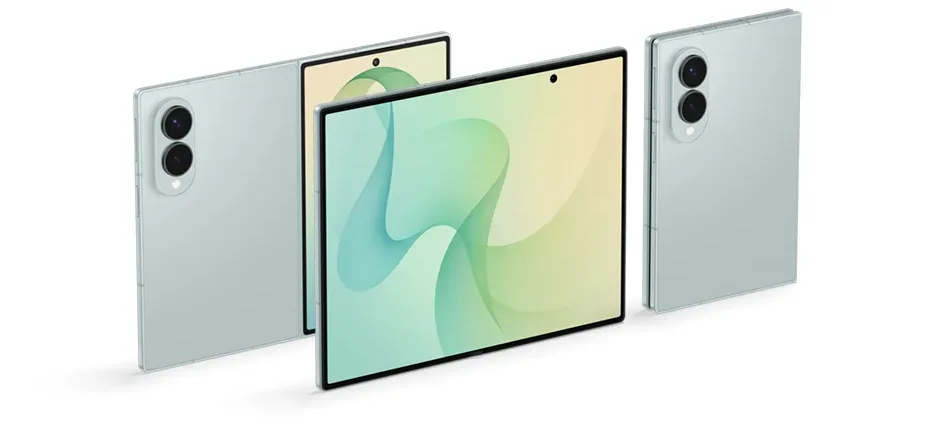
Samsung has officially unveiled the Galaxy Z Fold8, continuing its push to make foldable smartphones more practical for everyday users rather than simply showcasing futuristic hardware. While previous generations focused heavily on proving the concept of a foldable flagship, the Fold8 represents a more mature approach—one that prioritizes comfort, durability and software intelligence over dramatic redesigns.
Instead of chasing headline-grabbing specifications, Samsung has refined nearly every aspect of the Fold experience. The device is noticeably lighter, slimmer and easier to use with one hand when folded, while its updated inner display provides a more familiar tablet-like workspace for productivity and entertainment. Combined with the latest Galaxy AI features and Qualcomm’s newest flagship chipset, the Fold8 is designed to deliver an experience that feels more polished than revolutionary.
That strategy reflects where the foldable market is today. As more brands compete with increasingly thin and powerful book-style foldables, Samsung appears focused on improving the details that matter most to long-term users—comfort, software optimisation, durability and ecosystem integration. The Galaxy Z Fold8 is less about reinventing the Fold series and more about making it easier to recommend as a daily flagship.
Samsung’s latest foldable lineup also includes a more premium variant. If you’re wondering how the company’s flagship foldable differs from the standard model, our Samsung Galaxy Z Fold8 Ultra Officially Announced With 200MP Camera, Bigger Battery and Next-Gen Galaxy AI explains the biggest hardware upgrades and who they’re designed for.
Samsung Focuses on Refinement Rather Than Reinvention
Samsung’s latest announcement makes one thing clear: the company believes foldables have reached a stage where refinement matters more than dramatic experimentation.
Rather than introducing an entirely new form factor, the Galaxy Z Fold8 builds upon the foundation established by its predecessor with meaningful improvements across design, portability and user experience. The company has concentrated on reducing weight, slimming the chassis and enhancing the overall feel of the device without compromising the large-screen experience that defines the Fold lineup.
This philosophy is also reflected in Samsung’s software approach. Galaxy AI is no longer positioned as a standalone feature but as an integrated part of the Fold8 experience. Whether users are editing documents, translating conversations, summarising webpages or multitasking across multiple applications, Samsung wants the larger foldable display to become a genuine productivity advantage instead of simply offering more screen space.
For professionals, creators and users who regularly work across several apps, these refinements could prove more valuable than incremental hardware upgrades alone. The Fold8 is clearly aimed at people who want their smartphone to replace more of their tablet or even lightweight laptop usage.
A Slimmer, Lighter Design That Improves Everyday Comfort
One of the biggest changes this year is something users will notice before even turning the phone on.
According to Samsung, the Galaxy Z Fold8 weighs 201 grams, making it the lightest Galaxy Fold the company has produced so far. It is also significantly thinner than earlier generations, measuring just 4.1mm when unfolded, helping the device feel much closer to a conventional flagship smartphone in daily use.
Reducing weight has been a long-standing request from Fold users. Large foldables naturally spend much of their day folded inside a pocket, and every gram matters when carrying a premium device throughout the day. By trimming both weight and thickness, Samsung has addressed one of the biggest practical concerns surrounding book-style foldables.
The redesigned hinge also contributes to the improved ergonomics. Samsung says the updated construction allows the phone to close more naturally while maintaining the structural strength expected from its flagship foldable series. The company continues using premium materials throughout the chassis, reinforcing its focus on durability without sacrificing portability.
Rather than making the Fold8 look dramatically different, Samsung has refined proportions and balance, resulting in a device that should feel less bulky during everyday tasks such as messaging, photography and browsing.
Redesigned Displays Aim to Solve Everyday Usability
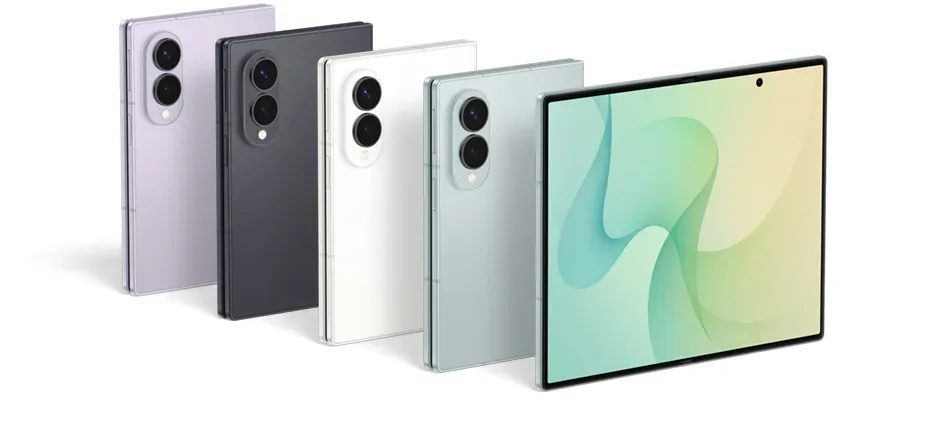
Display improvements have traditionally been one of the biggest reasons to upgrade a Fold device, and Samsung has once again focused on making both screens more practical.
The cover display now features a wider layout that more closely resembles a traditional smartphone. Earlier Fold models often required users to adapt to a narrow external screen, particularly when typing or navigating apps. The updated proportions should make common activities—including texting, replying to emails and browsing social media—feel much more natural.
Opening the device reveals Samsung’s 7.6-inch Dynamic AMOLED 2X main display, now featuring a 4:3 aspect ratio that provides a larger and more balanced workspace. The revised layout offers more usable room for split-screen multitasking, document editing, web browsing and video playback without feeling overly stretched.
Samsung continues supporting high refresh rate technology on both displays, delivering smoother scrolling, responsive animations and an overall flagship viewing experience. Combined with the larger canvas, the Fold8 remains one of the few smartphones capable of comfortably running multiple applications side by side.
The display changes may appear modest on paper, but they address real-world usability concerns that have been raised by Fold users over the past several years. Instead of simply increasing screen size, Samsung has focused on making the available space easier to use across everyday applications.
Snapdragon 8 Elite Gen 5 Powers Samsung’s Next-Generation Foldable
At the heart of the Galaxy Z Fold8 is Qualcomm’s Snapdragon 8 Elite Gen 5 for Galaxy, the latest custom-tuned flagship processor developed for Samsung’s premium smartphones.
While flagship smartphone performance has reached a point where everyday speed is rarely a concern, the Fold8’s chipset is expected to play a much bigger role in AI processing, multitasking and sustained workloads. Large-screen foldables frequently handle multiple applications simultaneously, making processor efficiency just as important as raw performance.
Samsung pairs the chipset with One UI 9 based on Android 17, allowing the software to take better advantage of the Fold8’s dual-display design. The combination is designed to support smoother multitasking, improved battery efficiency and faster on-device AI features that rely less on cloud processing.
Rather than marketing benchmark numbers, Samsung’s message focuses on how the hardware improves the overall user experience—from opening multiple productivity apps at once to editing content with Galaxy AI running in the background.
That approach reinforces Samsung’s broader vision for the Fold series. The Galaxy Z Fold8 is not positioned as a gaming phone or a camera-first flagship. Instead, it is being presented as Samsung’s most capable productivity smartphone, where powerful hardware works alongside software intelligence to help users accomplish more on a single device.
Cameras Continue Samsung’s Proven Flagship Approach
Rather than introducing an entirely new camera system, Samsung has focused on refining an already capable setup that prioritises consistency across different shooting conditions. For most buyers considering a foldable flagship, reliability often matters more than headline-grabbing megapixel numbers, and that’s the philosophy reflected in the Galaxy Z Fold8.
The rear camera system consists of a 50MP wide-angle primary camera with Optical Image Stabilisation (OIS), supported by a 12MP ultra-wide camera for expansive landscape shots and group photos, along with a 10MP telephoto camera offering 3x optical zoom. This combination continues to cover the three focal lengths most users rely on every day, from standard photography to zoom and ultra-wide perspectives.
Samsung has also retained the dual-selfie approach that has become familiar to Fold users. The cover display houses a 10MP front-facing camera for quick selfies and video calls, while the main foldable screen features a 4MP Under Display Camera (UDC). Although the UDC remains less capable than a traditional punch-hole camera for photography, its primary purpose is creating a cleaner immersive viewing experience during multitasking, streaming and gaming.
Photography on the Fold8 is also expected to benefit from Samsung’s latest AI processing. Computational photography improvements, AI-powered image enhancement and intelligent scene optimisation work behind the scenes to improve colour accuracy, dynamic range and low-light performance without requiring manual adjustments.
For content creators, the Fold8’s large internal display continues to be one of its biggest advantages. Users can preview photos on a larger canvas, compare edits more comfortably and even use the cover display as a live preview when taking portraits of other people.
While the Galaxy Z Fold8 prioritises versatility over outright imaging hardware, buyers whose primary focus is mobile photography may also want to explore our vivo X100 Pro vs OPPO Find X7 Ultra Comparison: Which Camera Flagship Is Better to Buy in 2026? to see how today’s dedicated camera flagships compare in real-world use.
Galaxy AI Becomes More Useful on a Foldable Display
Galaxy AI is no longer simply a collection of software features—it has become one of Samsung’s biggest reasons for choosing a Galaxy flagship over competing Android devices.
With One UI 9, Samsung continues expanding its AI ecosystem, and the Fold8’s larger display allows many of these features to feel more practical than they do on conventional smartphones.
Users can access AI-powered writing assistance for emails, notes and messages, while document summarisation helps condense lengthy webpages or reports into digestible highlights. Live translation continues to remove language barriers during conversations, and AI-powered image editing offers quicker object removal, resizing and photo enhancement.
The foldable form factor makes these experiences more intuitive. Instead of switching between applications, users can keep the original content open on one side of the display while AI-generated suggestions appear alongside it. This side-by-side workflow makes multitasking significantly more efficient for professionals, students and creators.
Samsung has also continued integrating AI throughout the operating system rather than limiting it to a handful of standalone applications. From productivity tools to creative workflows, Galaxy AI increasingly becomes part of the everyday user experience instead of something that is only used occasionally.
Familiar Battery Hardware, Smarter Power Management
Samsung equips the Galaxy Z Fold8 with a 4,400mAh dual-cell battery, maintaining the same capacity as its predecessor. While some users may have hoped for a larger battery, Samsung instead focuses on improving efficiency through its latest Snapdragon processor and software optimisation.
The Fold8 supports 25W wired fast charging, 15W wireless charging and Wireless PowerShare, allowing compatible Galaxy accessories such as earbuds or smartwatches to be charged directly from the phone.
Battery life on foldable devices depends heavily on usage patterns. Running the large inner display for productivity tasks naturally consumes more power than using the external screen for quick interactions. Samsung’s adaptive battery management and AI-driven optimisation are designed to balance these scenarios by intelligently allocating resources based on user habits.
Although charging speeds remain behind several Chinese flagship competitors, Samsung continues prioritising battery longevity, thermal management and overall reliability over headline charging numbers.
Samsung continues to balance battery capacity with its slim foldable design, even as other manufacturers pursue much larger batteries. For a look at how aggressively the industry is evolving in this area, check out our coverage of Honor Launches X70 Pro Max With 8,560mAh Battery, but an 11,000mAh Successor Is Already Coming.
Software and Connectivity
Out of the box, the Galaxy Z Fold8 ships with One UI 9 based on Android 17, bringing Samsung’s latest software experience to its premium foldable lineup.
One UI has evolved into one of Android’s most feature-rich interfaces, particularly on foldable devices. Multi Window, Taskbar, App Continuity and Flex Mode remain central to the Fold experience, allowing users to move seamlessly between the cover display and the main screen while keeping applications active.
Samsung also continues its long-term software support commitment for flagship smartphones, making the Fold8 an attractive option for buyers planning to keep their device for several years.
On the connectivity front, the Galaxy Z Fold8 includes modern flagship features expected in this category, including 5G, Wi-Fi 7, Bluetooth 5.4, NFC, USB Type-C, dual SIM support (market dependent) and Samsung Knox security for enterprise-grade protection.
Combined with Samsung’s wider Galaxy ecosystem—including Galaxy Watch, Galaxy Buds and Galaxy Book devices—the Fold8 continues positioning itself as a premium productivity hub rather than simply another Android smartphone.
Availability
Samsung has officially announced the Galaxy Z Fold8 and opened pre-orders in supported markets. The smartphone will be available in multiple RAM and storage configurations, with colour options varying by region, including Samsung’s online-exclusive finishes.
Pricing and availability differ across markets, and prospective buyers should refer to Samsung’s regional website for the latest information regarding storage variants, offers and delivery timelines.
⚡ TechularZtrix Scan
📌 Bottom Line
The Galaxy Z Fold8 doesn’t attempt to reinvent Samsung’s foldable formula. Instead, it delivers meaningful improvements in areas that directly affect daily usability, including weight, thickness, ergonomics and software intelligence. For users already invested in Samsung’s ecosystem, it represents the company’s most refined Fold experience yet.
🎯 Target Audience
- Productivity-focused professionals
- Power users who regularly multitask
- Content creators and mobile editors
- Existing Fold users considering an upgrade
- Buyers looking for Samsung’s most premium smartphone experience
🏆 Biggest Win
The combination of a significantly lighter design, improved display proportions and Galaxy AI integration makes the Fold8 more practical as an everyday flagship rather than a niche foldable.
⚠️ Biggest Compromise
Charging speeds remain conservative compared to several competing flagship foldables, while the under-display selfie camera continues prioritising an uninterrupted display over image quality.
📈 Why It Matters
Samsung isn’t competing solely on specifications anymore. The Fold8 demonstrates that the next stage of foldable innovation lies in refining usability, software optimisation and AI-powered productivity instead of dramatically changing the hardware every year.
🔍 What Happens Next
The Galaxy Z Fold8 now enters an increasingly competitive premium foldable market where rivals are focusing on thinner designs, larger batteries and faster charging. Samsung’s success will depend on whether its software experience, Galaxy AI ecosystem and long-term support remain compelling enough to justify its flagship positioning.