Realme GT 6 vs POCO F6 Pro: Which Mid-Range Performance Phone Should You Buy?
Quick Highlights

The sub-₹50,000 smartphone segment has become one of the most competitive categories in the Android market. Buyers no longer have to spend flagship money to enjoy premium displays, powerful chipsets, fast charging, and capable camera systems. Two devices that perfectly illustrate this trend are the Realme GT 6 and the POCO F6 Pro.
At first glance, they seem to target the same audience. Both promise flagship-level speed, AMOLED displays with high refresh rates, and batteries that recharge in well under an hour. But once you look beyond the specifications, their philosophies begin to diverge.
The Realme GT 6 positions itself as an all-round flagship killer with an emphasis on display technology, charging speed, and AI-enhanced software features. The POCO F6 Pro, meanwhile, leans toward enthusiasts who want proven flagship silicon, premium construction, and performance that remains consistent under demanding workloads.
That raises the question every buyer eventually asks: Which one delivers the better overall experience for the money?
Rather than declaring a winner based solely on benchmark numbers or camera megapixels, this comparison looks at how each phone performs in the areas that matter most—design, display, gaming, software, cameras, battery life, and long-term value.
At a Glance
| If you want… | Choose |
|---|---|
| Brighter display for outdoor use | Realme GT 6 |
| More premium design | POCO F6 Pro |
| Faster wired charging | Realme GT 6 |
| Compact flagship feel | POCO F6 Pro |
| Long gaming sessions | Depends on your priorities |
| Better overall software polish | Realme GT 6 |
| Best value after discounts | Depends on local pricing |
| Feature | Realme GT 6 | POCO F6 Pro |
|---|---|---|
| Processor | Snapdragon 8s Gen 3 | Snapdragon 8 Gen 2 |
| Display | 6.78-inch LTPO AMOLED, 1–120Hz | 6.67-inch AMOLED, 120Hz |
| Peak Brightness | Up to 6,000 nits (advertised) | Up to 4,000 nits (advertised) |
| RAM | Up to 16GB LPDDR5X | Up to 16GB LPDDR5X |
| Storage | Up to 512GB UFS 4.0 | Up to 1TB UFS 4.0 |
| Rear Cameras | 50MP Main + 50MP Telephoto + 8MP Ultra-wide | 50MP Main + 8MP Ultra-wide + 2MP Macro |
| Front Camera | 32MP | 16MP |
| Battery | 5,500mAh | 5,000mAh |
| Charging | 120W SUPERVOOC | 120W HyperCharge |
| Operating System | Realme UI | Xiaomi HyperOS |
| Water Resistance | IP65 | IP54 |
Design and Build
Specifications rarely tell the whole story about how a phone feels in the hand, and that’s especially true here.
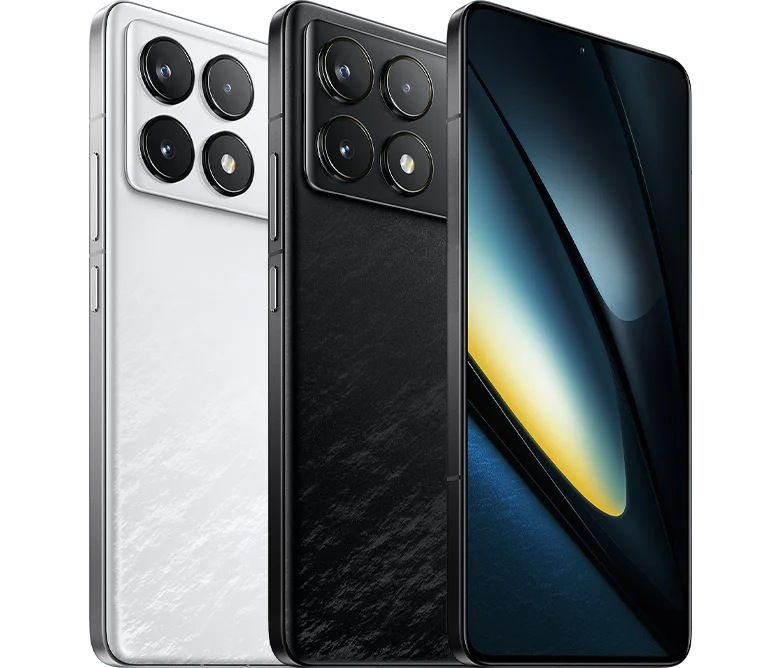
The Realme GT 6 adopts a modern flagship-inspired design with gently curved edges and a slim profile that makes its relatively large size feel surprisingly manageable. The rear camera module is integrated cleanly into the back panel, giving the device a refined appearance without becoming overly flashy.
The POCO F6 Pro takes a more understated approach. Its flatter design and symmetrical lines give it a slightly more premium, industrial character. It feels reassuringly solid in the hand and will likely appeal to buyers who prefer a minimalist aesthetic over bold styling.
One practical difference lies in durability. While neither phone is built for underwater use, the Realme GT 6 carries an IP65 rating compared to the IP54 rating of the POCO F6 Pro, offering better protection against dust and water splashes.
Does it matter?
For most users, build quality won’t be the deciding factor because both devices are well constructed. The choice comes down to whether you prefer the curved, modern feel of the Realme or the flatter, more traditional flagship styling of the POCO.
🏆 Design Winner: POCO F6 Pro
While the Realme GT 6 offers better ingress protection, the POCO F6 Pro edges ahead with its more premium in-hand feel and cleaner industrial design.
Display
Display quality has become one of the biggest differentiators in this price segment, and it’s immediately clear that Realme has invested heavily here.
The Realme GT 6 features a 6.78-inch LTPO AMOLED panel capable of dynamically adjusting its refresh rate between 1Hz and 120Hz. Beyond smooth scrolling, LTPO technology improves power efficiency by lowering the refresh rate when high frame rates aren’t needed. The panel also boasts an exceptionally high advertised peak brightness, making it particularly well suited to outdoor visibility and HDR content.
The POCO F6 Pro counters with a slightly smaller 6.67-inch AMOLED display running at a fixed 120Hz refresh rate. It delivers vibrant colours, deep blacks, and excellent sharpness, providing a premium viewing experience for movies, gaming, and everyday use. However, it lacks the adaptive LTPO technology found on the Realme.
In practical terms, both displays are excellent. Indoors, the differences are subtle. Outdoors, especially under direct sunlight, the Realme GT 6’s brighter panel and adaptive refresh technology give it a noticeable advantage.
Does it matter?
If you spend much of your day indoors, you’ll likely be satisfied with either display. But if you frequently navigate, photograph, or watch videos outdoors, the Realme GT 6 offers a more comfortable viewing experience.
🏆 Display Winner: Realme GT 6
Its LTPO technology, higher advertised peak brightness, and adaptive refresh rate make it one of the strongest displays in its class.
As you continue comparing phones, you might also find our OnePlus 13 vs Xiaomi 15: Which Premium Android Phone Should You Buy? comparison useful if you’re considering stepping up to the flagship segment.
Performance & Gaming
Performance is where this comparison becomes genuinely interesting. Unlike many mid-range rivals that use the same chipset, the Realme GT 6 and POCO F6 Pro take different paths.
The Realme GT 6 is powered by Qualcomm’s Snapdragon 8s Gen 3, a chipset designed to bring flagship-inspired performance to a more affordable price segment. It shares many architectural improvements with Qualcomm’s premium lineup while prioritizing efficiency and AI processing.
The POCO F6 Pro, meanwhile, relies on the Snapdragon 8 Gen 2—a processor that previously powered flagship smartphones. Although it’s from an earlier generation, it remains one of Qualcomm’s most capable chips, with proven performance across gaming, multitasking, and demanding applications.
On paper, neither chipset completely outclasses the other. Instead, they excel in different areas.
Everyday Performance
For everyday tasks, distinguishing between these phones is almost impossible.
Opening apps, switching between multiple social media platforms, editing photos, attending video meetings, and browsing with dozens of Chrome tabs all feel fast and responsive on both devices.
Animations remain fluid, app launch times are nearly identical, and both phones handle heavy multitasking without noticeable slowdowns.
For the average user, performance alone won’t be the deciding factor.
Gaming Performance
Mobile gamers will naturally gravitate toward these two phones, and for good reason.
Both comfortably handle demanding titles such as:
- BGMI
- Call of Duty: Mobile
- Genshin Impact
- Honkai: Star Rail
- Asphalt Legends Unite
The difference lies less in peak performance and more in how each phone manages long gaming sessions.
The POCO F6 Pro benefits from the maturity of the Snapdragon 8 Gen 2 platform. Developers have spent years optimizing games for this chipset, resulting in stable frame rates and excellent compatibility across popular titles.
The Realme GT 6, however, counters with Qualcomm’s newer Snapdragon 8s Gen 3 architecture, which brings stronger AI capabilities and improved power efficiency. In everyday gaming, most players are unlikely to notice a significant performance gap.
Unless you’re chasing benchmark scores or competitive esports performance, both devices deliver a flagship-like gaming experience.
Sustained Performance
Peak performance is only half the story. The real challenge is maintaining that performance during extended workloads.
Whether you’re recording long 4K videos, rendering footage, or gaming continuously, efficient thermal management becomes increasingly important.
Realme equips the GT 6 with a large cooling system designed to maintain stable performance while minimizing excessive heat buildup.
POCO also incorporates an advanced cooling solution, reflecting the brand’s long-standing focus on performance-oriented smartphones.
Without standardized hands-on testing under identical conditions, declaring one device definitively superior would be misleading. Based on their hardware and cooling strategies, both are well-equipped for sustained heavy workloads.
Thermal Management
No flagship-grade processor remains completely cool under prolonged stress, and these phones are no exception.
During everyday activities such as messaging, web browsing, navigation, and media consumption, both devices remain comfortably cool.
As workloads become more demanding—extended gaming sessions, large file exports, or continuous camera use—it’s normal for temperatures to rise. What matters is how effectively each phone manages that heat without significantly impacting responsiveness.
Both manufacturers have invested in larger vapor chamber cooling systems to help maintain stable performance over time.
For most users, thermal performance is unlikely to become a deciding factor.
RAM & Storage
Modern flagship-level performance also depends on memory and storage speeds.
Both smartphones feature LPDDR5X RAM paired with UFS 4.0 storage, ensuring rapid app launches, quick installations, and smooth multitasking.
| Feature | Realme GT 6 | POCO F6 Pro |
|---|---|---|
| RAM | Up to 16GB LPDDR5X | Up to 16GB LPDDR5X |
| Storage | Up to 512GB UFS 4.0 | Up to 1TB UFS 4.0 |
One notable advantage for the POCO F6 Pro is its availability in configurations with up to 1TB of storage, making it a stronger option for users who store large game libraries, 4K videos, or extensive photo collections directly on their device.
Software Experience
Hardware may attract buyers, but software determines how enjoyable a phone remains after months of daily use.
The Realme GT 6 ships with realme UI, which has matured significantly in recent years. The interface feels modern, responsive, and includes a growing suite of AI-powered productivity tools while maintaining a relatively clean user experience.
The POCO F6 Pro runs Xiaomi HyperOS, introducing tighter integration across Xiaomi’s ecosystem of smartphones, tablets, wearables, and smart home products. HyperOS also improves resource management and system-wide animations compared with earlier MIUI releases.
Neither interface is objectively better, but they cater to different preferences.
- realme UI prioritizes simplicity and fluidity.
- HyperOS emphasizes ecosystem connectivity and deeper customization.
AI Features
Artificial intelligence has become a major selling point in modern smartphones, extending well beyond voice assistants.
Both phones include AI-driven features designed to improve everyday productivity, including:
- AI photo editing
- Smart object removal
- AI writing assistance
- Live translation
- Intelligent image enhancement
- Productivity shortcuts
The exact feature set may vary depending on software updates and regional availability, but both manufacturers continue expanding their AI capabilities through regular updates.
Long-Term Software Support
Long-term software support is becoming just as important as hardware.
Realme and Xiaomi have both improved their update commitments for recent premium devices, providing multiple Android version upgrades alongside ongoing security patches.
If you typically keep your phone for four or five years, software support should be considered alongside hardware specifications when making a purchasing decision.
🏆 Performance Winner: Tie
The Realme GT 6 offers newer architecture and impressive efficiency, while the POCO F6 Pro benefits from the proven strength of the Snapdragon 8 Gen 2. For the vast majority of users, both deliver a flagship-level experience with no meaningful compromise.
🏆 Software Winner: Realme GT 6
While HyperOS has improved considerably, realme UI currently offers a cleaner, more intuitive experience with less visual clutter, making it the easier recommendation for users who value a streamlined Android interface.
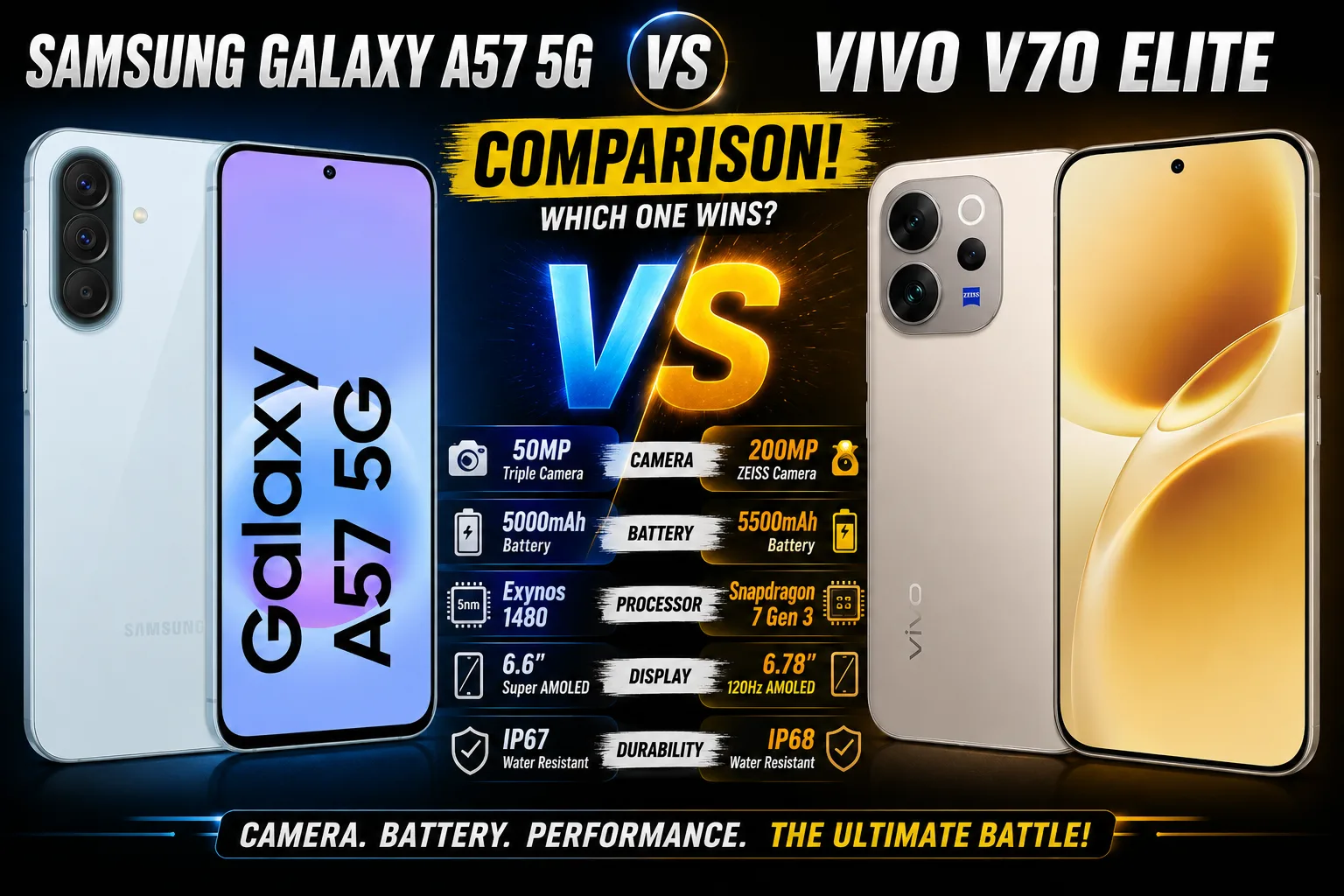
If software updates and long-term usability are among your priorities, our Samsung Galaxy A57 5G vs vivo V70 Elite Comparison: Camera, Battery, Performance explores how different Android manufacturers approach software features and overall user experience in the upper mid-range segment.
Camera Comparison
The camera system is where these two phones reveal very different priorities. While both promise flagship-inspired photography, their hardware tells a different story.
Realme has invested in a more versatile setup by including a dedicated telephoto camera alongside its primary sensor, whereas POCO focuses on delivering a capable main camera while keeping costs under control with simpler secondary sensors.
For buyers who regularly switch between standard, portrait, and zoom photography, that difference is likely to matter more than the megapixel count printed on the spec sheet.
Main Camera
Both smartphones use a 50MP primary camera, but image quality depends on much more than resolution. Sensor size, image processing, HDR tuning, and software optimisation all influence the final result.
The Realme GT 6 aims for balanced colours with good dynamic range and a natural look that works well across different lighting conditions. Images generally appear detailed without pushing saturation too aggressively.
The POCO F6 Pro produces vibrant, punchy photos that are immediately suitable for sharing on social media. Colours are often slightly more saturated, creating eye-catching images, although users who prefer a more natural look may favour Realme’s processing.
For everyday photography, both deliver results that comfortably exceed expectations for this price segment.
Telephoto and Zoom Photography
This is one of the biggest practical differences between the two phones.
The Realme GT 6 includes a dedicated 50MP telephoto camera, allowing it to capture portraits and zoomed shots with greater optical quality. Instead of relying primarily on digital cropping, it provides cleaner detail and more natural background separation when photographing distant subjects.
The POCO F6 Pro does not include a dedicated telephoto lens. Zoom photography therefore relies more heavily on the main sensor and computational processing.
If portrait photography, travel, or event photography is important to you, the Realme GT 6 offers greater flexibility.
Ultra-Wide Photography
Ultra-wide cameras are useful for landscapes, architecture, and group shots.
Both phones include an ultra-wide camera, but neither positions it as the headline feature. They perform well in favourable lighting, maintaining good colour consistency with the primary camera, though fine detail naturally falls behind the main sensor.
For occasional use, both are perfectly adequate, but buyers who primarily shoot with the ultra-wide camera are unlikely to see a dramatic difference between them.
Selfies
The front camera is often overlooked in spec comparisons, yet it’s one of the most frequently used cameras for video calls and social media.
The Realme GT 6 features a 32MP front camera, while the POCO F6 Pro uses a 16MP sensor.
In practice, Realme’s higher-resolution sensor gives it more room to preserve facial detail and crop images without a noticeable loss in quality. Both phones support portrait selfies and HDR processing, but Realme has the advantage for users who regularly create content or attend video meetings.
Video Recording
Modern smartphones are expected to do far more than capture still photos, and both devices support high-resolution video recording with optical and electronic stabilisation.
Whether you’re recording travel videos, family events, or social media content, both produce smooth footage with good detail. The difference lies in consistency rather than capability.
The Realme GT 6’s stronger camera hardware gives it greater flexibility across different focal lengths, while the POCO F6 Pro delivers dependable video quality through its primary camera.
🏆 Camera Winner: Realme GT 6
The dedicated telephoto camera gives the Realme GT 6 a genuine advantage that extends beyond the specification sheet. It offers greater versatility for portraits and zoom photography while its higher-resolution front camera also benefits selfie enthusiasts and content creators.
Battery Life
Battery endurance remains one of the most important factors when choosing a smartphone, particularly for gamers, travellers, and professionals who spend long hours away from a charger.
The Realme GT 6 includes a 5,500mAh battery, while the POCO F6 Pro features a 5,000mAh battery.
A larger battery doesn’t automatically translate into dramatically longer endurance because software optimisation, chipset efficiency, and display technology also play important roles.
However, the Realme GT 6’s combination of a larger battery and LTPO display gives it a stronger foundation for longer usage between charges.
For typical daily tasks—including messaging, navigation, photography, streaming, and web browsing—both phones are capable of lasting a full day.
Heavy users, however, are more likely to appreciate the additional capacity offered by the Realme.
Charging Speed
Fast charging has become a defining feature of this category, and both manufacturers continue to impress.
| Feature | Realme GT 6 | POCO F6 Pro |
|---|---|---|
| Wired Charging | 120W SUPERVOOC | 120W HyperCharge |
On paper, charging speeds are virtually identical.
Both phones can rapidly replenish their batteries, reducing the need to remain connected to a charger for extended periods.
In everyday use, the difference between the two is negligible, making this category effectively a draw.
🏆 Battery Winner: Realme GT 6
The larger battery capacity, combined with its adaptive LTPO display, gives the Realme GT 6 the edge for users who prioritise endurance.
🏆 Charging Winner: Tie
Both devices deliver genuinely flagship-level wired charging speeds, making either an excellent choice for users who value quick top-ups.
Connectivity and Extra Features
Connectivity has become increasingly important as smartphones evolve into productivity devices.
Both phones include flagship-grade essentials such as:
- 5G connectivity
- Wi-Fi 7 support
- Bluetooth 5.4
- NFC
- USB Type-C
- Dual-SIM support (market dependent)
- In-display fingerprint scanner
- Stereo speakers
Neither device leaves buyers feeling short-changed in this department.
The decision here is less about connectivity itself and more about which ecosystem you already use.
If you’re considering alternatives at a lower price point, our Best 5G Phones Under ₹30,000 in India (April 2026): The New Endurance Kings highlights several devices that continue to offer excellent value without entering the premium mid-range segment.
Audio and Multimedia
Both smartphones provide stereo speaker setups capable of delivering clear, immersive audio for movies, gaming, and music.
Combined with their AMOLED displays and high refresh rates, they offer an enjoyable multimedia experience that comfortably competes with many flagship devices.
While dedicated audiophiles may still prefer wireless earbuds or external speakers, neither phone disappoints for everyday entertainment.
Pricing and Value
Price is ultimately where this comparison becomes most interesting.
The Realme GT 6 justifies its positioning with a brighter LTPO display, a dedicated telephoto camera, and a larger battery. Those upgrades provide tangible everyday benefits rather than simply improving benchmark scores.
The POCO F6 Pro, meanwhile, focuses on delivering dependable flagship-level performance with generous storage options and a premium design, making it an appealing choice when available at aggressive promotional pricing.
If both phones are similarly priced, the Realme GT 6 offers the more complete overall package.
However, if the POCO F6 Pro is available at a meaningful discount, its value proposition becomes significantly stronger.
🏆 Value Winner: Realme GT 6 (at similar retail pricing)
Its stronger camera versatility, brighter LTPO display, larger battery, and cleaner software experience make it the more rounded smartphone for most buyers.
Category Scorecard
| Category | Winner | Why |
|---|---|---|
| Design & Build | 🏆 POCO F6 Pro | Premium construction and minimalist flagship-inspired design give it a slightly more refined in-hand feel. |
| Display | 🏆 Realme GT 6 | LTPO AMOLED panel, adaptive refresh rate, and exceptionally high peak brightness improve outdoor usability. |
| Performance | 🤝 Tie | Snapdragon 8s Gen 3 and Snapdragon 8 Gen 2 both deliver flagship-class everyday performance. |
| Gaming | 🤝 Tie | Both comfortably handle demanding titles with stable performance and effective cooling systems. |
| Software | 🏆 Realme GT 6 | Realme UI feels cleaner and more intuitive, while still offering useful AI-powered features. |
| Camera | 🏆 Realme GT 6 | Dedicated telephoto camera and higher-resolution selfie camera provide greater versatility. |
| Battery Life | 🏆 Realme GT 6 | Larger 5,500mAh battery combined with LTPO technology delivers stronger endurance. |
| Charging | 🤝 Tie | Both support 120W wired charging, making charging speed a non-issue for most users. |
| Connectivity | 🤝 Tie | Both include modern flagship essentials such as 5G, Wi-Fi 7, Bluetooth 5.4, NFC, and stereo speakers. |
| Value for Money | 🏆 Realme GT 6 | Offers a more complete feature set at similar pricing, especially for users who value cameras and battery life. |
Which Phone Should You Buy?
Choosing between these two smartphones isn’t about identifying a “bad” device—both offer excellent value. The better choice depends entirely on what you expect from your next phone.
Buy the Realme GT 6 if you:
- Want one of the brightest displays in its class for outdoor use.
- Frequently take portrait or zoom photos and value a dedicated telephoto camera.
- Need longer battery life for gaming, travel, or heavy daily usage.
- Prefer a cleaner software experience with practical AI features.
- Want a well-rounded smartphone with very few compromises.
Buy the POCO F6 Pro if you:
- Prefer a more premium, understated design.
- Need up to 1TB of internal storage for games, videos, or large files.
- Already use Xiaomi products and want tighter ecosystem integration through HyperOS.
- Find the phone at a significantly lower promotional price than the Realme GT 6.
⚡ TechularZtrix Scan
📌 Bottom Line
The Realme GT 6 and POCO F6 Pro prove that buyers no longer need to spend flagship money to enjoy premium smartphone experiences. Both deliver outstanding performance, excellent displays, and ultra-fast charging, but they appeal to different priorities.
The Realme GT 6 focuses on providing the most balanced overall package, while the POCO F6 Pro leans toward enthusiasts who prioritize premium hardware and storage flexibility.
🏆 Biggest Win – Realme GT 6
A brighter LTPO display, dedicated telephoto camera, larger battery, and polished software combine to create one of the most complete smartphones in its price segment.
🏆 Biggest Win – POCO F6 Pro
Proven flagship-grade performance, premium construction, and generous storage options make it an excellent choice for power users seeking maximum performance per rupee.
📈 Why It Matter
Competition in the premium mid-range segment has shifted away from simple specification battles. Buyers now expect flagship-level displays, cameras, software support, and charging speeds without paying flagship prices. Both devices demonstrate how far this category has evolved.
🌍 India Reality Check
Pricing is likely to be the deciding factor for many Indian buyers. During festive sales and bank offers, the gap between these two phones can narrow considerably. Before purchasing, compare exchange bonuses, cashback offers, bundled accessories, and after-sales service in your area, as these can significantly influence long-term value.
🔍 Our Recommendation
If both phones are available at similar prices, the Realme GT 6 is the stronger recommendation for most buyers. Its brighter LTPO display, versatile camera system, larger battery, and refined software experience make it a more complete all-round package.
The POCO F6 Pro remains an excellent alternative for users who prefer Xiaomi’s ecosystem, want additional storage, or find it at a significantly lower price.