AMD Ryzen AI Halo Finally Launches to Challenge Nvidia DGX Spark AI Workstations
Quick Highlights
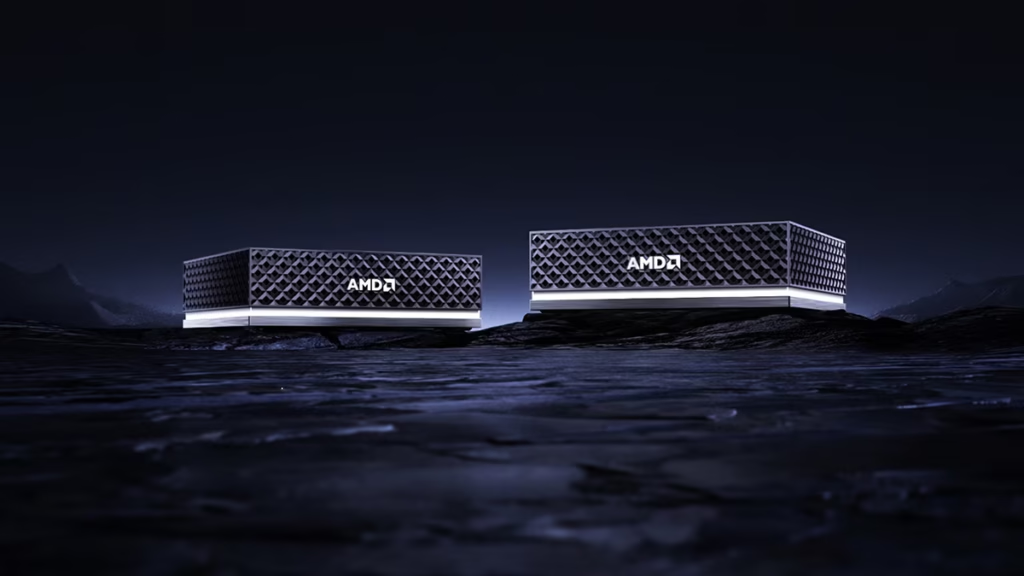
As artificial intelligence development increasingly shifts toward local execution rather than cloud-only deployments, hardware makers are racing to build compact AI workstations capable of handling large language models directly on the desktop. Nvidia gained an early advantage with the DGX Spark, while Apple found success among developers using high-memory Mac mini configurations.
Now AMD is officially entering the fight.
The company is preparing to launch the Ryzen AI Halo Developer Platform, a compact AI workstation powered by the Ryzen AI Max+ 395 processor and equipped with up to 128GB of unified memory. While AMD first unveiled the platform earlier this year, preorders are finally expected to begin in June through Micro Center in the United States.
The launch positions AMD as a direct challenger to Nvidia’s growing dominance in local AI development hardware.
AMD Ryzen AI Halo Arrives Months After Its Rivals
AMD first showcased the Ryzen AI Halo platform during CES 2026, but the product has taken several months to reach market availability.
That delay is significant because Nvidia’s DGX Spark has already established itself among developers looking for compact AI systems capable of running advanced models locally. Meanwhile, enterprise customers have also gained access to alternatives such as HP’s Z2 Mini G1a and other Ryzen AI Max-based systems.
Despite arriving later than many expected, AMD believes its new platform can still attract developers seeking a flexible AI workstation that supports both Windows and Linux environments without requiring a cloud-first workflow.
The growing demand for local AI processing is also visible across other computing segments. Recent announcements such as Qualcomm Announces Snapdragon C for Entry-Level Windows Laptops and Intel Arc G-Series Chips Announced for Next-Gen Gaming Handhelds With Ray Tracing and XeSS 3 show how major chipmakers are increasingly integrating AI-focused hardware into a broader range of devices.
Ryzen AI Halo vs Nvidia DGX Spark
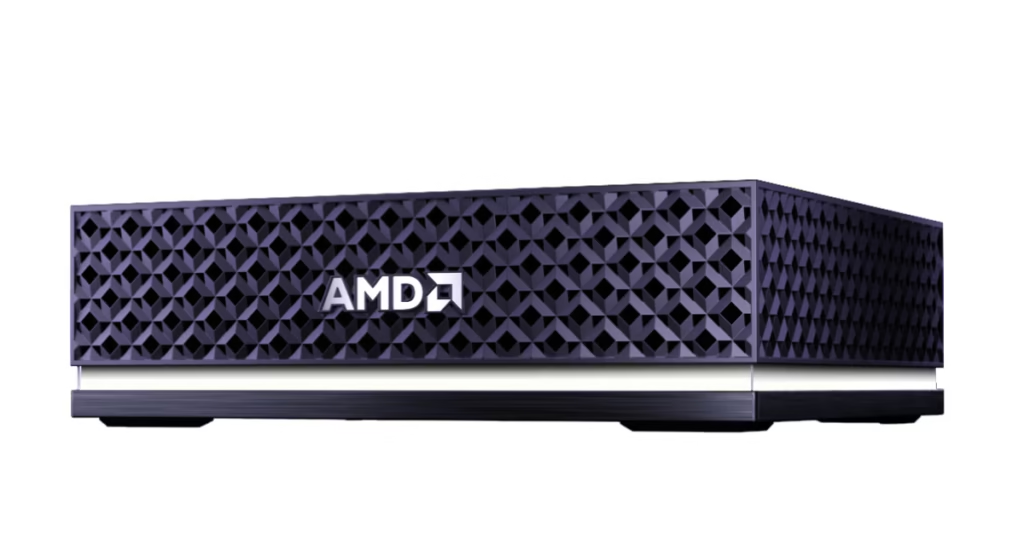
The most obvious comparison for AMD’s new system is Nvidia’s DGX Spark.
Both machines target developers, AI researchers, and businesses looking to run large language models locally without relying entirely on cloud infrastructure.
AMD’s platform features the Ryzen AI Max+ 395 processor, built around the company’s Zen 5 architecture. The system includes 16 CPU cores, integrated AI acceleration, and up to 128GB of unified memory.
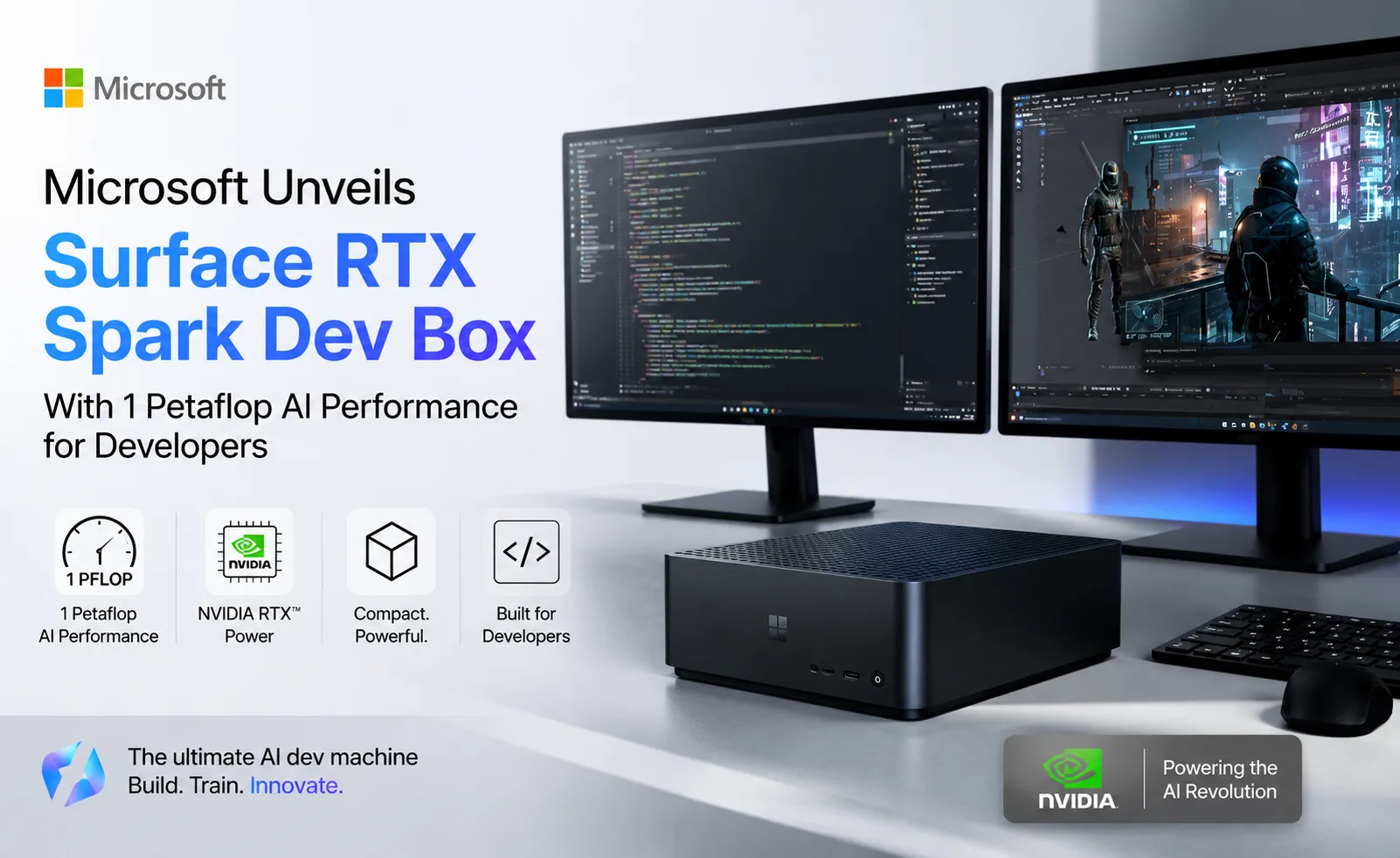
Nvidia’s DGX Spark, meanwhile, relies on the GB10 platform and offers up to 1 petaFLOP of FP4 compute performance. It also supports advanced networking capabilities through Nvidia’s ConnectX technology, allowing multiple systems to be linked together for larger AI workloads.
AMD counters with broader operating system flexibility and claims lower power consumption per generated token for several AI models. Internal AMD benchmarks also suggest performance advantages ranging from four to fourteen percent in select workloads, although real-world testing will ultimately determine how meaningful those gains are.
Hardware Specifications and Features
One of the strongest selling points of Ryzen AI Halo is its memory configuration.
Like the DGX Spark, AMD’s workstation ships with 128GB of unified memory, making it capable of handling significantly larger AI models than typical consumer PCs.
The system is powered by the Ryzen AI Max+ 395 processor, which operates at a 120W TDP. AMD has also included Wi-Fi 7, Bluetooth 5.4, a 10Gb Ethernet port, and support for modern AI frameworks across Windows and Linux.
Storage tops out at 2TB, while the compact design focuses on delivering workstation-class AI performance in a significantly smaller footprint than traditional tower systems.
AMD’s pricing strategy places the Ryzen AI Halo Developer Platform at $3,999, positioning it between enterprise-grade AI servers and premium desktop workstations.
Can AMD Still Compete in the AI Developer Market?
The timing of AMD’s launch is arguably its biggest challenge.
Nvidia has spent months building momentum around DGX Spark, while many enterprise customers have already adopted AI development workflows based on existing Nvidia hardware ecosystems. CUDA remains deeply entrenched across AI software development, creating a substantial advantage for Team Green.
However, AMD’s opportunity lies in offering developers a credible alternative.
Not every AI workload requires the highest-end Nvidia hardware, and not every developer wants to be locked into a single ecosystem. By delivering 128GB unified memory, modern AI acceleration, Linux support, and a competitive price point, AMD could attract users seeking flexibility and lower operational costs.
The broader AI hardware market is also expanding rapidly. Rather than fighting for a fixed customer base, AMD is entering a segment that continues to grow as local AI development becomes more common.
AMD has published the full specifications and platform details for the Ryzen AI Halo Developer Platform on its official website, where developers can review supported AI frameworks, hardware requirements, and preorder availability as rollout begins in select markets.
TechularZtrix Take
The Ryzen AI Halo Developer Platform is less about outperforming Nvidia in raw specifications and more about giving developers another serious option in a market that has become increasingly dependent on Nvidia hardware. While AMD may be arriving later than many expected, the company understands that long-term success in AI computing will depend on ecosystem diversity rather than a single dominant vendor.
What makes Ryzen AI Halo interesting is its balance. The platform combines a large unified memory pool, modern Zen 5 architecture, Linux compatibility, and a compact workstation design without pushing pricing into enterprise server territory. For developers building and testing AI models locally, that combination could prove more valuable than headline benchmark numbers alone.
The biggest hurdle remains software adoption. Nvidia’s ecosystem advantage is still substantial, and AMD will need strong developer support, optimized frameworks, and long-term platform updates to gain meaningful traction. Even so, the launch of Ryzen AI Halo is a positive sign for the industry. More competition generally leads to better pricing, faster innovation, and greater flexibility for developers choosing where to build their AI workloads.